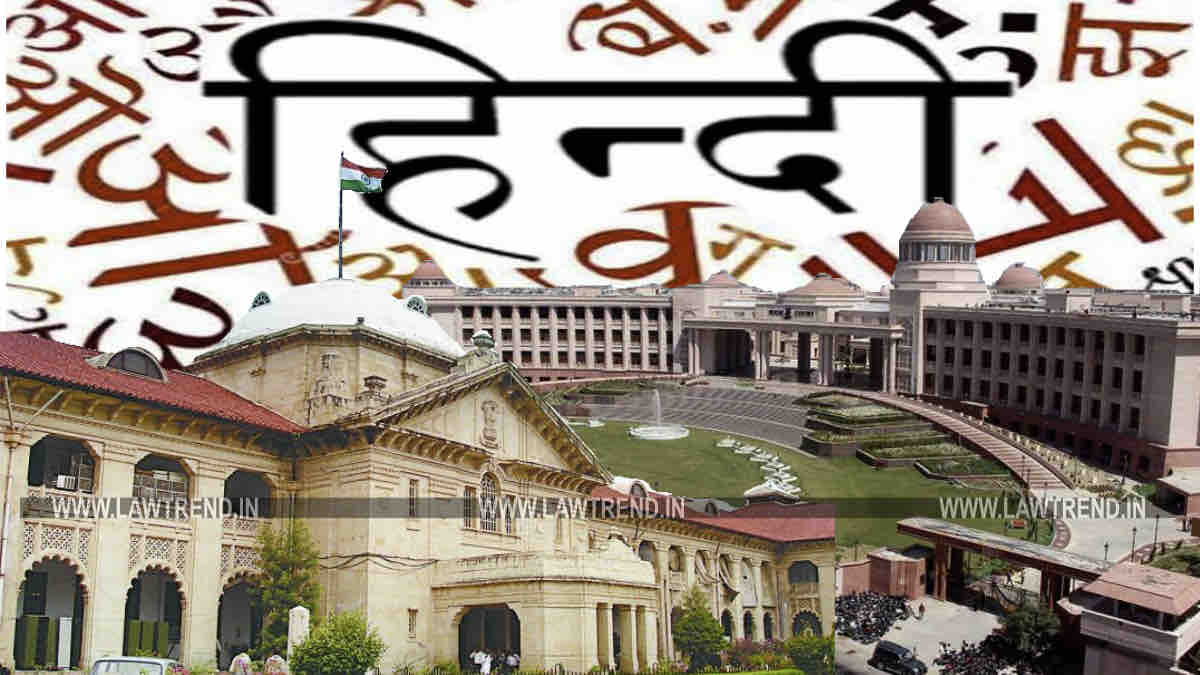
PRAYAGRAJ: Marking a transformative milestone in judicial accessibility, the Allahabad High Court has announced that all non-AFR final judgments and orders delivered from March 17, 2026, onwards will be translated into Hindi. This initiative, coinciding with the Court’s 160th Establishment Day, aims to bridge linguistic barriers for litigants and the general public.
A Landmark Establishment Milestone
The Court has framed March 17, 2026, as a pivotal “establishment milestone,” noting the institution’s actual founding in 1866. To commemorate 160 years of its judicial legacy, the Court is positioning this date as the foundation for the commencement of Hindi translations for all non-AFR final judgments and orders delivered by all Benches (both Allahabad and Lucknow).
Scope and Implementation of the Project
In a groundbreaking move to enhance transparency, the High Court will commence the translation of all non-AFR final judgments or orders that run into three pages or more. This is in addition to the existing practice regarding AFR judgments of the High Court.
Furthermore, the scope of this initiative extends to the judgments of the Hon’ble Supreme Court in cases arising from the states of Uttar Pradesh, Maharashtra, and Andhra Pradesh. All translated versions will be made digitally available on the official website of the High Court.
Administrative Oversight
The translation project is being executed by the SUVAS Cell at both the Allahabad and Lucknow Benches. The initiative is being carried out under the patronage of the Hon’ble Chief Justice and the strategic guidance of the AI-Assisted Legal Translation Advisory, the e-AHCR (Electronic Allahabad High Court Reports), and the ILR (Indian Law Reports) Committee.
The decision comes in response to the growing demand for multilingual judicial resources in a linguistically diverse state like Uttar Pradesh. By providing judgments in the primary language of the region, the Court seeks to ensure that justice is not only delivered but is also understood by every citizen, regardless of their linguistic background.