

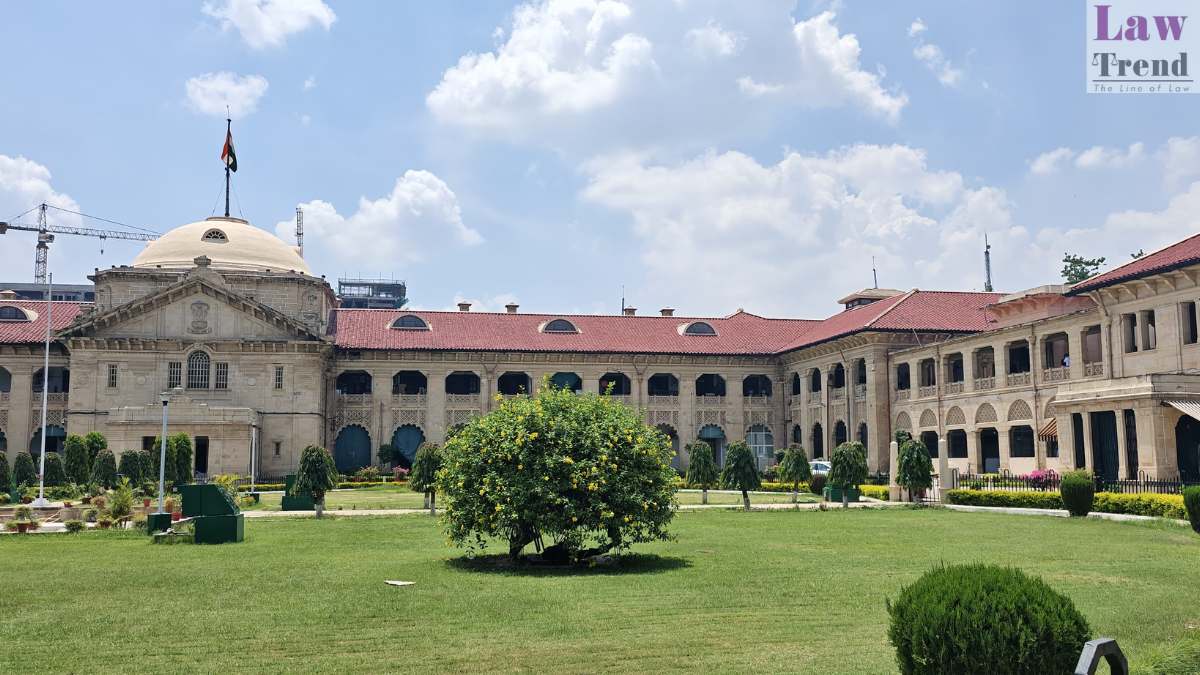
The Allahabad High Court has quashed a criminal trial under the state’s Gangsters Act while delivering a sharp critique of the Uttar Pradesh Police, ruling that the force’s leadership exhibits greater loyalty to the political establishment than to the Constitution.
In a decision concerning a petition filed by Rajendra Tyagi, Justice Diwakar nullified the proceedings against the accused under the Uttar Pradesh Gangsters and Anti-Social Activities (Prevention) Act, 1986. While the High Court declined to issue a definitive ruling on the validity of the 1986 legislation itself—noting that the Supreme Court is currently examining the law—it extensively detailed systemic administrative and operational failures within the state’s law enforcement apparatus.
Systemic Failure Of Due Process
The court observed that a significant portion of the police officer cadre views the rule of law as an operational hurdle rather than a binding constitutional obligation. According to the ruling, police personnel routinely bypass statutory procedural safeguards established under the Code of Criminal Procedure and the newly implemented Bharatiya Nagarik Suraksha Sanhita.
The court further noted that arrests are frequently conducted without proper legal procedures, first information reports (FIRs) are selectively registered or suppressed for ulterior motives, and preventive detention measures are applied arbitrarily based on the personal preferences of officers. Justice Diwakar stated that judicial directives are often met with superficial compliance while being effectively undermined in practice.
Call For Independent Administrative Review
Addressing executive oversight, the High Court censured the state’s home secretary and directed the Uttar Pradesh government to perform an independent evaluation of the suitability and performance of its senior administrative officers.
The ruling pointed out that certain officials who climbed to the rank of Home Secretary had operated as channels for personal and self-serving interests. The court observed that administrative decisions, including official postings, departmental disciplinary approvals, and formal legal responses to court proceedings, have frequently been influenced by external calculations rather than objective, constitutionally sound judgment. The bench emphasized that the state machinery must remain strictly accountable to the law and the Constitution rather than any temporary ruling administration.
Failure Of Accountability In Bikru Raid
To highlight the prevailing culture of impunity within the state’s police force, the High Court cited the outcomes of the fatal raid in Bikru village, which targeted the now-deceased local gangster Vikas Dubey. The botched operation resulted in the deaths of eight police personnel, including a deputy superintendent of police.
The court expressed concern that the supervisor responsible for overseeing the failed raid received only a minor formal caution. Justice Diwakar remarked that such a lenient disciplinary outcome is difficult to reconcile with the scale of the supervisory failure, adding that this lack of accountability reinforces a politically patronized and feudal administrative system.




