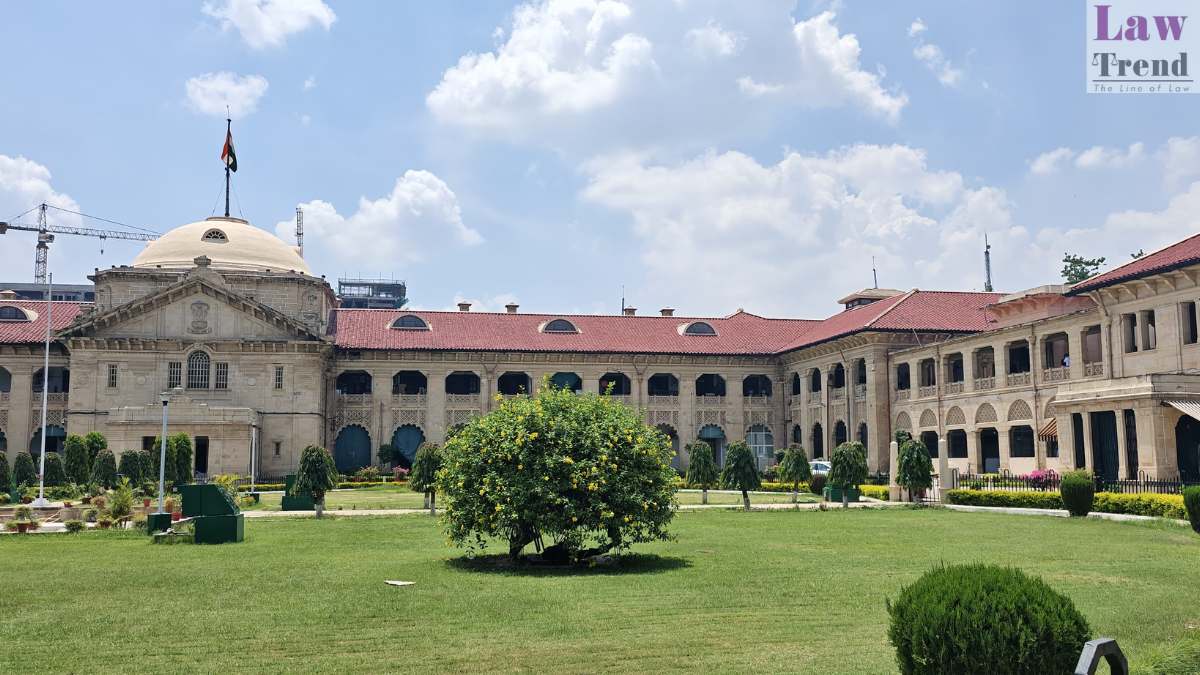
The Allahabad High Court has held that retired government employees cannot claim immunity from inquiries into alleged corruption or irregularities committed during their service, stressing that protecting such conduct would only encourage the rise of corrupt practices in public departments.
Justice Manju Rani Chauhan made the observation while dismissing a petition filed by Vipin Chandra Verma, a retired technical junior engineer, who had challenged an inquiry initiated against him months after his retirement.
Verma, who retired on 30 June 2025, questioned a September 2025 show-cause notice issued to him regarding alleged irregularities between 2015 and 2022. The notice followed an April 2025 complaint lodged before the Speaker of the UP Legislative Assembly by a relative of a sitting MLA, prompting the district magistrate to order an inquiry.
His counsel argued that the complaint was politically motivated and that the Rules of Procedure and Conduct of Business of the UP Legislative Assembly, 1958, were bypassed. It was further contended that once he retired, the employer-employee relationship ended, and therefore no such notice could be issued.
A key argument raised was that Regulation 351-A of the Civil Service Regulations prohibits departmental proceedings against a retired official for events older than four years. Since the inquiry period stretched back to 2015, the petitioner claimed the notice was time-barred.
The state pointed out, however, that the inquiry report dated 23 August 2025 recorded irregularities at Serial No. 15 related specifically to the year 2022. This brought the matter well within the four-year window.
Justice Chauhan agreed with the state’s position, observing there was “no force” in the contention that the proceedings were hit by limitation.
The court underlined that public servants work not just for salary but also contribute to “nation building”, and therefore carry a high degree of responsibility. It added that the public — or their elected representatives — must be free to point out negligence or misconduct by officials, whether still in service or retired.
Rejecting the argument of political vendetta, the judge noted that an MLA, as a public representative, is exposed to numerous public grievances at the ground level. “Every complaint cannot be termed politically motivated,” the court said, adding that allegations cannot be disregarded merely because they originate from an MLA or their family member.
The court further held that a writ petition against a mere show-cause notice is not maintainable, since such notices do not inflict any legal injury and only seek an explanation.
Directing Verma to cooperate with the inquiry in accordance with rules applicable to retired public servants, the court dismissed the petition.