

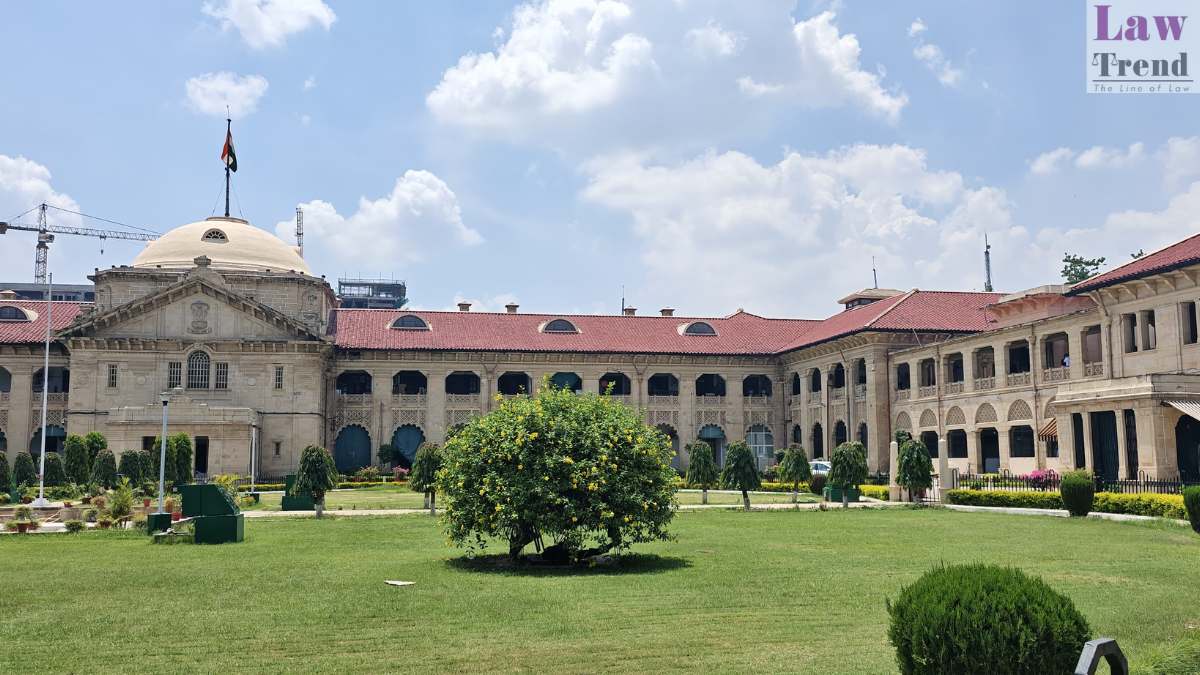
The Allahabad High Court has rejected bail applications filed by 19 primary accused in a multi-state network involving the illicit diversion, hoarding, and distribution of codeine-based cough syrups, ruling that medicines diverted for recreational intoxication fall squarely under anti-narcotics legislation.
Delivering the order on Tuesday across a batch of 78 connected bail pleas, Justice Arun Kumar Singh Deshwal drew a strict boundary between commercial traffickers and minor logistic handlers. While principal operators remained in custody, the court extended bail to several transport workers, vehicle helpers, and small-scale retailers, observing that they had merely conveyed sealed consignments without knowledge that syrup bottles were concealed within the cargo.
Application of Narcotics Law to Medicinal Products
Clarifying the statutory boundary under the Narcotic Drugs and Psychotropic Substances Act, the bench observed that syrups containing codeine remain outside the law’s punitive scope as long as they are handled strictly for therapeutic healthcare. Licensed distributors and chemists who transport or retail formulations bearing codeine concentrations beneath the legal threshold of 0.2 per cent for legitimate medical use are exempt from narcotics prosecution.
The bench held, however, that regulatory shields cease when therapeutic syrups are diverted, stockpiled, or retailed as intoxicants, regardless of whether the enterprise operates under an official drug licence. When medicinal stocks are trafficked using fictitious commercial entities, forged invoices, or unverified documentation, authorities are empowered to treat entire consignments as illicit narcotics and initiate prosecution under Section 21 of the legislation.
Evidence of Fraudulent Networks and Cross-Border Diversion
Court records indicated that the 19 primary operators established shadow enterprises and generated fraudulent e-way bills running into crores of rupees. Through these mechanisms, hundreds of thousands of syrup bottles were redirected away from standard healthcare channels and funnelled into open markets across various states and neighbouring countries for substance abuse.
Among those denied bail were Bhola Prasad of Shaili Traders, Divesh Jaiswal of DSA Pharma, and Ankush Singh of Mahakal Medical, alongside Abhinav Kumar Yadav, Badal Arya, and Harsh Agrawal.
Relief for Unwitting Transport Handlers
In contrast to the syndicates directing the distribution chains, the court held that low-level logistics staff lacked criminal culpability. The bench noted that drivers, assistants, and small-scale vendors who accepted sealed freight packages without being privy to the hidden contraband could not be placed on equal footing with the organisers behind the diversion scheme.




