

Admission to Training Course Does Not Guarantee Appointment: Supreme Court Sets Aside Allahabad HC Order
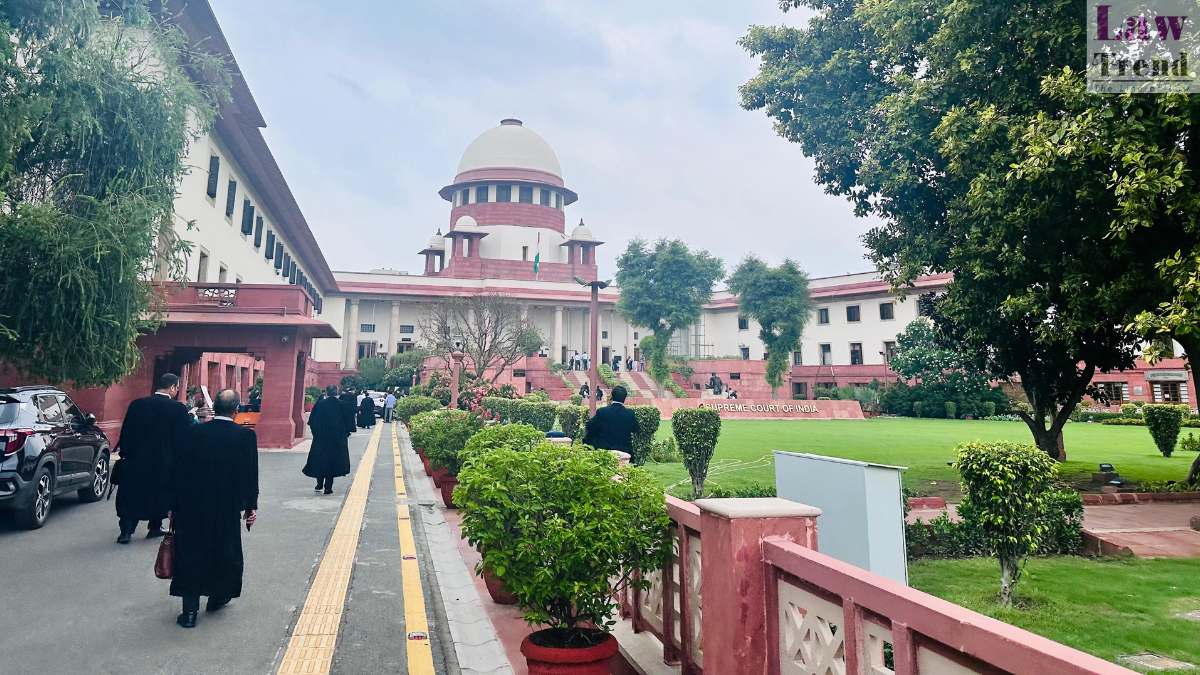

The Supreme Court has ruled that mere admission to a training course does not confer an indefeasible right to appointment on a government post. A Division Bench comprising Justice Rajesh Bindal and Justice Manmohan set aside the judgment of the Allahabad High Court, which had directed the State of Uttar Pradesh to consider the candidature of Ayurvedic Nursing Training Course pass-outs for appointment as Ayurvedic Staff Nurses. The Apex Court held that the doctrine of legitimate expectation could not be applied where there was a material change in government policy and selection procedures.

The Supreme Court was hearing appeals filed by the State of Uttar Pradesh against a Division Bench judgment of the Allahabad High Court dated January 17, 2025. The High Court had ruled in favor of the respondents (Bhawana Mishra and others), holding that their case fell within the principles of legitimate expectation because the erstwhile policy of appointing candidates immediately after training had been followed for several years. The Supreme Court reversed this decision, emphasizing that the increase in the number of candidates due to the permission granted to private institutions and the subsequent entrustment of recruitment to the Uttar Pradesh Subordinate Services Selection Commission (UPSSSC) constituted a valid change in policy.

Background

The controversy dates back to a Government Order dated November 12, 1986, which specified the procedure for the selection of candidates for the Ayurvedic Nursing Training Course. Historically, the course was conducted only by a government institution with an intake of 20 students, who were generally appointed upon completion of training due to the availability of vacancies.

On September 23, 2013, an advertisement was issued inviting applications for the 2013-14 session for 20 seats in the Government Ayurvedic College and Hospital, Lucknow. Clause 9 of the advertisement stipulated that candidates selected for mandatory service would have to execute a bond to serve the State for at least five years.

However, prior to this advertisement, a notification dated October 21, 2011, had permitted private institutions to conduct the Ayurvedic Nursing Training Course. Consequently, the number of pass-outs increased significantly. On December 15, 2014, the State issued a notification directing that the selection process for the post of Ayurvedic Staff Nurse would henceforth be conducted by the UPSSSC.

READ ALSO  SC Asks Centre to Notify Appointment of 9 Presiding Officers of Industrial Tribunals by Aug 31

The respondent, who completed her training in 2017, sought appointment based on the past practice. Her representation was rejected by the competent authority on September 25, 2019, on the grounds that there were no notified service rules at the time and that recruitment now fell within the purview of the UPSSSC. The High Court subsequently allowed the respondent’s writ petition and the intra-court appeal filed by the State was dismissed, leading the State to approach the Supreme Court.

Arguments of the Parties

The State argued that the Government Order of 1986 prescribed a procedure for selection to the training course, not for appointment to the service. It was submitted that with the grant of permission to private colleges, the number of candidates increased manifold, necessitating a proper selection process. The State contended that the “issue of legitimate expectation will not be applicable in the case in hand as the process of selection changed later on.” It was further argued that no appointments were made under the old system after December 15, 2014, except for a few candidates from the 2010-11 batch pursuant to a High Court order.

The Respondents contended that from 1972 to 2015, the State consistently followed the practice of appointing candidates who completed the course. It was argued that the respondent had a legitimate expectation at the time of admission, having witnessed previous batches being appointed. They emphasized that they had passed out from a government institution, not a private one, and that the bond requirement implied a guarantee of service. Reliance was placed on the Supreme Court’s judgment in N. Suresh Nathan and Anr. Vs Union of India and Ors.

Court’s Analysis

The Supreme Court rejected the contention that admission to the course conferred a right to appointment. The Court observed:

READ ALSO  सुप्रीम कोर्ट ने 25 साल से जेल में बंद व्यक्ति को रिहा किया, 1994 में अपराध के समय उसे किशोर पाया

“A perusal of the advertisement inviting application for the course of Ayurvedic Nursing Training, shows that no such promise had been made. Rather, Clause 9 in the advertisement clearly stated that a candidate who is finally selected for the mandatory service-training by the State Government, shall have to execute a bond in the favour of the government. It stipulated that only in case the candidate is appointed after training, he/she shall compulsorily serve the government for at least 5 years.”

On the issue of Legitimate Expectation, the Bench distinguished the present facts from the erstwhile regime. The Court noted that earlier, only one government institution with 20 seats existed, and vacancies were sufficient to accommodate the trainees. However, with the policy change in 2012 allowing private institutions, the number of pass-outs far outnumbered the vacancies.

The Court referred to the Constitution Bench judgment in Sivanandan CT and Others vs. High Court of Kerala and Others (2023), which held that the doctrine of legitimate expectation cannot serve as an independent basis for judicial review unless the denial leads to a violation of Article 14.

Applying this principle, Justice Bindal, writing for the Bench, observed:

“It may be far-fetched to apply the principle of legitimate expectation to the case in hand as there was a change in policy and scheme of government. The existing facts and circumstances underwent a substantial shift from the year 2012… As noted above, the candidates pursuing the aforesaid course had grown exponentially and all such candidates could not be recruited after training due to limited vacancies.”

Regarding the allegation of Discrimination, the Court found no violation of Article 14. It held that the State had established that no appointments were made under the old system for any candidate admitted after the 2010-11 session.

READ ALSO  Dying Declaration to Doctor is Sufficient for Conviction Despite Minor Discrepancies in Other Evidence: SC Upholds Life Sentence

“The essence of discrimination is the unequal treatment of equals; however, the State has clearly established that no appointments were made under the old system for any candidate admitted after the 2010-11 session… The respondent has failed to point out a single candidate from her own batch or subsequent batches who was directly appointed by the State, thereby rendering the plea of discrimination factually and legally unsustainable.”

Decision

The Supreme Court held that the direction issued by the High Court mandating the State to consider the candidature of the respondents for appointment could not be legally sustained. The Court concluded that the respondents must compete through the selection process notified by the UPSSSC.

Accordingly, the appeals filed by the State of Uttar Pradesh were allowed, and the impugned judgment of the High Court was set aside.

Case Details:

Case Title: State of Uttar Pradesh and Ors. v. Bhawana Mishra (and connected appeals)

Case No.: Civil Appeal No. 14250 of 2025 (Arising out of S.L.P. (C) No. 19707 of 2025)

Bench: Justice Rajesh Bindal and Justice Manmohan

Law Trend
Law Trendhttps://lawtrend.in/
Legal News Website Providing Latest Judgments of Supreme Court and High Court

Related Articles

Latest Articles

