“A Judge is a Judge, Wherever Placed in Hierarchy”; Delhi HC Rebukes Counsel for Attempting to Overawe Trial Court
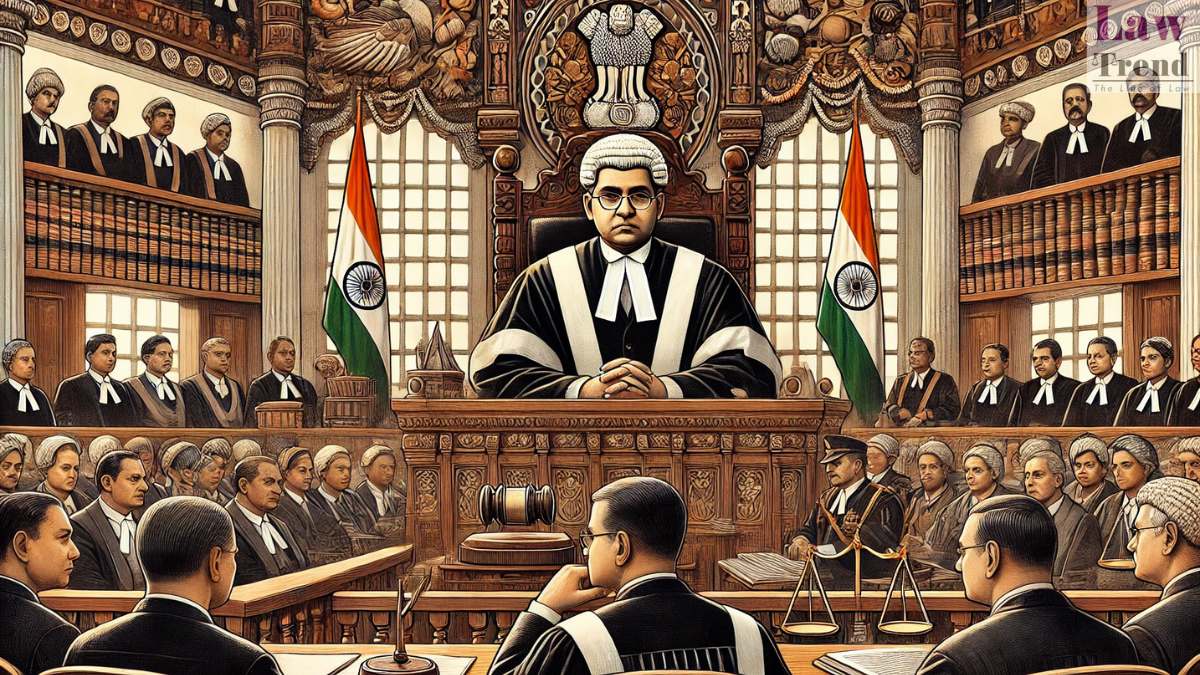

The Delhi High Court has emphatically observed that a judge, regardless of their placement in the judicial hierarchy, cannot be treated with disrespect. While dealing with a petition challenging the closure of defense evidence, the Court reprimanded the conduct of a counsel who attempted to “overawe” a District Court judge.

The Bench of Justice Girish Kathpalia held that the supervisory jurisdiction under Article 227 of the Constitution includes a duty to ensure that decorum in the District Courts is not “dented in any manner.”

Background of the Case

The petitioner, Sandeep Kumar, approached the High Court challenging the orders dated November 7, 2025, and November 18, 2025, passed by the learned Trial Court. The underlying suit had been filed in 2016.

By way of the order dated November 7, 2025, the Trial Court closed the petitioner’s (defendant’s) evidence after noting that despite multiple opportunities, no evidence was led. Subsequently, the petitioner filed an application under Section 151 of the Code of Civil Procedure (CPC) seeking to reopen the evidence. The Trial Court dismissed this application via a detailed order on November 18, 2025, terming it frivolous and vexatious.

READ ALSO  "Only Property Belonging to Proclaimed Person Can Be Attached" Allahabad High Court Quashes Property Attachment Order in POCSO Case

Arguments and Proceedings Before the Trial Court

The petitioner contended before the High Court that the impugned orders should be set aside in the “interest of justice” to allow him an opportunity to lead evidence. It was argued that the matter had been referred to mediation, and thus evidence should not have been closed.

The Trial Court’s record, however, revealed a different sequence of events. The suit had been pending for defense evidence since April 5, 2023. Multiple adjournments were sought on various grounds. On November 7, 2025, the defendant submitted that a settlement had been arrived at. Upon further questioning by the Trial Court, he retracted the statement, admitting that no settlement had occurred and that he only had a verbal conversation with his erstwhile counsel.

When the application to reopen evidence was argued before the Trial Court, the petitioner’s counsel sought an adjournment on the grounds of being recently engaged. The Trial Court noted that despite being advised calmly, the counsel spoke in a “high pitch tone,” stating that he practices in the Supreme Court where opportunities are granted. When the Trial Court offered to hear arguments later the same day, the counsel expressed his inability to argue and stated that the “court is free to hear arguments.”

READ ALSO  यदि परिस्थितियों की श्रृंखला की कड़ी में कोई संदेह तो इसका लाभ आरोपी को मिलना चाहिए: दिल्ली हाईकोर्ट

The High Court’s Observations

Justice Girish Kathpalia termed the petition “completely frivolous” and filed with “oblique purposes.” The Court noted that the petitioner had been protracting the trial for more than two years.

Addressing the conduct of the legal counsel, the High Court made significant observations regarding courtroom decorum. The Court noted:

“In the recent past, it is being observed that when there is no case on merits or the judge concerned is not indulgent and ensures that neither party is able to protract the proceedings, efforts are done by some (though thankfully not all) lawyers to somehow overawe the judge, especially a judge in the District Courts.”

The Court termed the counsel’s behavior “highly deplorable,” noting that he continued to address the court in a high pitch despite being asked to calm down and audaciously refused to argue when offered a passover.

READ ALSO  Revision under Section 115 of CPC is not maintainable against the dismissal of an application filed under Order IX Rule 13 of the CPC to set aside an ex-parte decree: SC

In a stern rebuke regarding the respect due to the judiciary, Justice Kathpalia observed:

“In my considered view, the supervisory jurisdiction under Article 227 of the Constitution of India must also include a duty vested in this Court to supervise and ensure that decorum in the District Courts also is not dented in any manner. A judge is a judge, wherever she/he is placed in the judicial hierarchy and cannot be treated in the manner as was done in the present case.”

Decision

During the course of dictation of the order, the counsel for the petitioner expressed remorse over his conduct before the Trial Court. On instructions from his client, he sought permission to withdraw the petition to avoid a dismissal on merits.

Consequently, the High Court dismissed the petition and accompanying applications as withdrawn. A copy of the order was directed to be sent to the learned Trial Court.

Law Trend
Law Trendhttps://lawtrend.in/
Legal News Website Providing Latest Judgments of Supreme Court and High Court

Related Articles

Latest Articles