

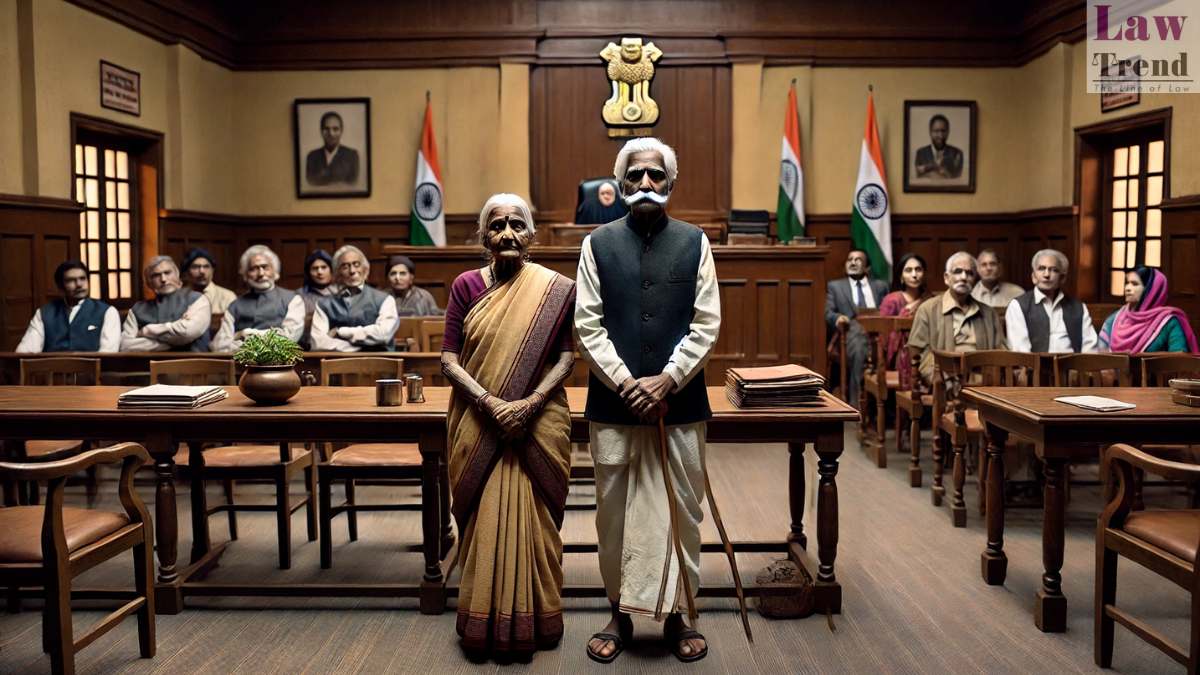
The Bombay High Court has said that senior citizens who place their life’s savings with banks should not have to approach courts again and again to get relief, and that litigation should be a last resort. The Court made the observations while disposing of a writ petition filed by an 80-year-old former employee and customer of Bank of Baroda. By then the bank had paid him ₹1,47,67,508 as a full and final settlement.
A Bench of Chief Justice Mahesh Chandra Tripathi and Justice Advait M. Sethna said banks should adopt a pragmatic and humane approach in such matters, in accordance with law.
Background
The petitioner said Bank of Baroda had deducted ₹89,01,253 from his fixed deposits on March 31, 2023, unilaterally and without any basis in law. A further ₹31,18,695 was deducted from his interest for the period from April 1, 2023 until the deposits matured. In all, ₹1,20,19,948 was deducted.
His complaint to the RBI Ombudsman was closed on December 18, 2023 as not maintainable under the Reserve Bank – Integrated Ombudsman Scheme, 2021, on the ground that it involved an employer-employee dispute. He then challenged that order under Article 226 of the Constitution.
While the petition was pending, the petitioner, who is seriously ill, was admitted to hospital and was on ventilator support for some time. The Court recorded his condition and heard the matter on several dates.
Bank Given Repeated Opportunities
On October 21, 2026, the Court was told that the bank’s Chairman and Managing Director could grant relief only up to ₹35 lakh, and that a larger amount had to go before the Board. The Court gave the bank time to place the matter before its Board.
On November 4, 2026, counsel for the bank sought more time because the Board meeting could not be convened. The Court recorded that it was “shocked, much less surprised” that no application for extension had been moved and no satisfactory explanation had been given.
Looking at the merits prima facie, the Court noted the bank’s explanation: an additional 1% interest meant only for retired staff had been extended to the petitioner by clerical oversight. However, the record showed that the petitioner had been eligible for that benefit since 2011 and had availed it after the bank verified his eligibility. The Bench said it found it “difficult to accept prima facie that Respondent No.3 – Bank can belatedly contend that such unilateral deduction of the said amount was attributable to some clerical error.”
The Court warned that continued non-compliance could lead to contempt proceedings, and that it could direct the bank’s Managing Director and CEO to appear in person.
Settlement and Disposal
The bank then filed an additional affidavit dated November 20, 2026, offering ₹1,47,67,508. This comprised the deducted principal of ₹1,20,19,948 plus ₹27,47,560 as interest at 10.55% per annum for 26 months, from September 2024 to November 2026. On November 26, 2026, the Court was told the amount had been credited to the petitioner’s account after deduction of TDS. Through his counsel, the petitioner accepted the settlement.
The Court recorded its appreciation for the counsel, who it said had assisted it “primarily as Officers of this Court, in the true sense.” Advocate Sagar A. Rane appeared for the petitioner. Advocate Huzan Bhumgara, with Advocates Pradeep Mane and Shubhi Dotiya, appeared for the Reserve Bank of India and the Ombudsman. Advocate Abhijit Ranjan, with Advocate Rithika Yerra, appeared for Bank of Baroda and its fourth respondent.
The Court disposed of the petition as worked out. Given the peculiar facts, it clarified that the order would not be cited as a precedent as a matter of course.
Bombay High Court on Senior Citizens and Banks
Before parting, the Bench observed that senior citizens, despite being long-standing customers, often face inconvenience, hardship and apathy from banks and financial institutions. It said that “they ought not to knock the doors of Courts time and again. This should be the last resort, an exception and not a rule.”
The Court gave KYC validation as an example of situations in which senior citizens are made to run from pillar to post. It said that “a more pragmatic solution based humane approach albeit in accordance with law, is the key.”
Calling for an approach anchored in responsibility and accountability, the Bench observed, “The fate of otherwise law-abiding persons, particularly senior citizens, in such transactions, cannot merely be contingent upon protracted litigation.”
Case Title: Ashwin Shantilal Khandwala v. The Reserve Bank of India & Ors.
Case No.: Writ Petition No. 3669 of 2025
Bench: Chief Justice Mahesh Chandra Tripathi and Justice Advait M. Sethna
Date: November 26, 2026


