

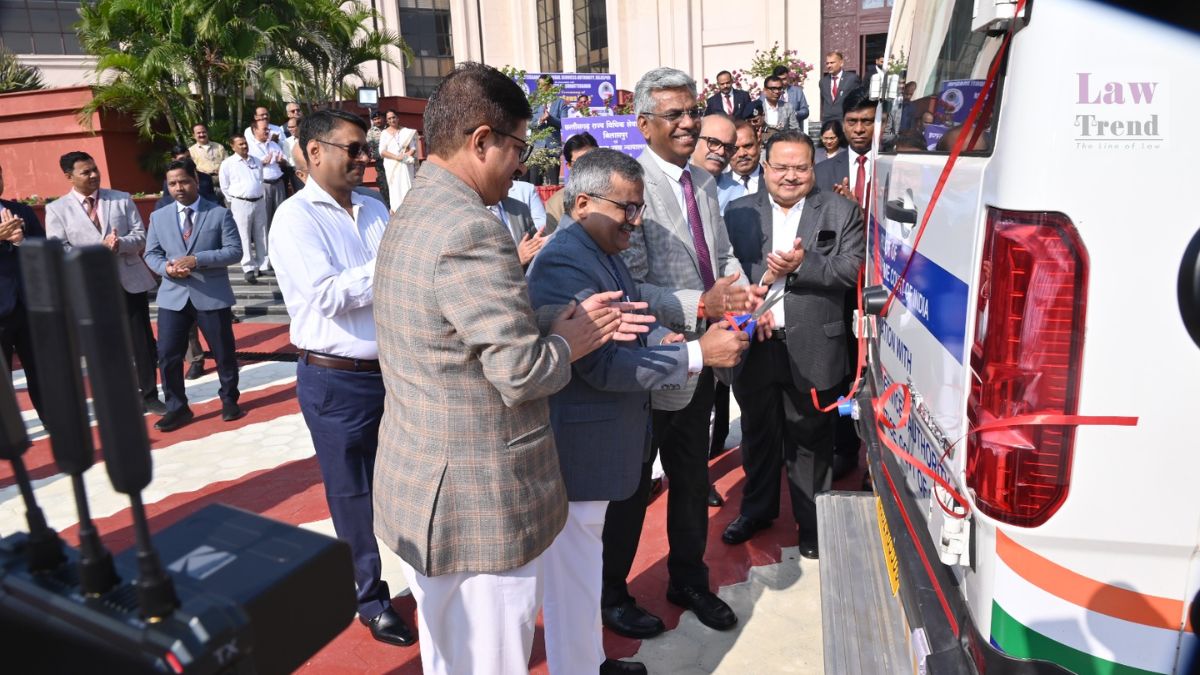
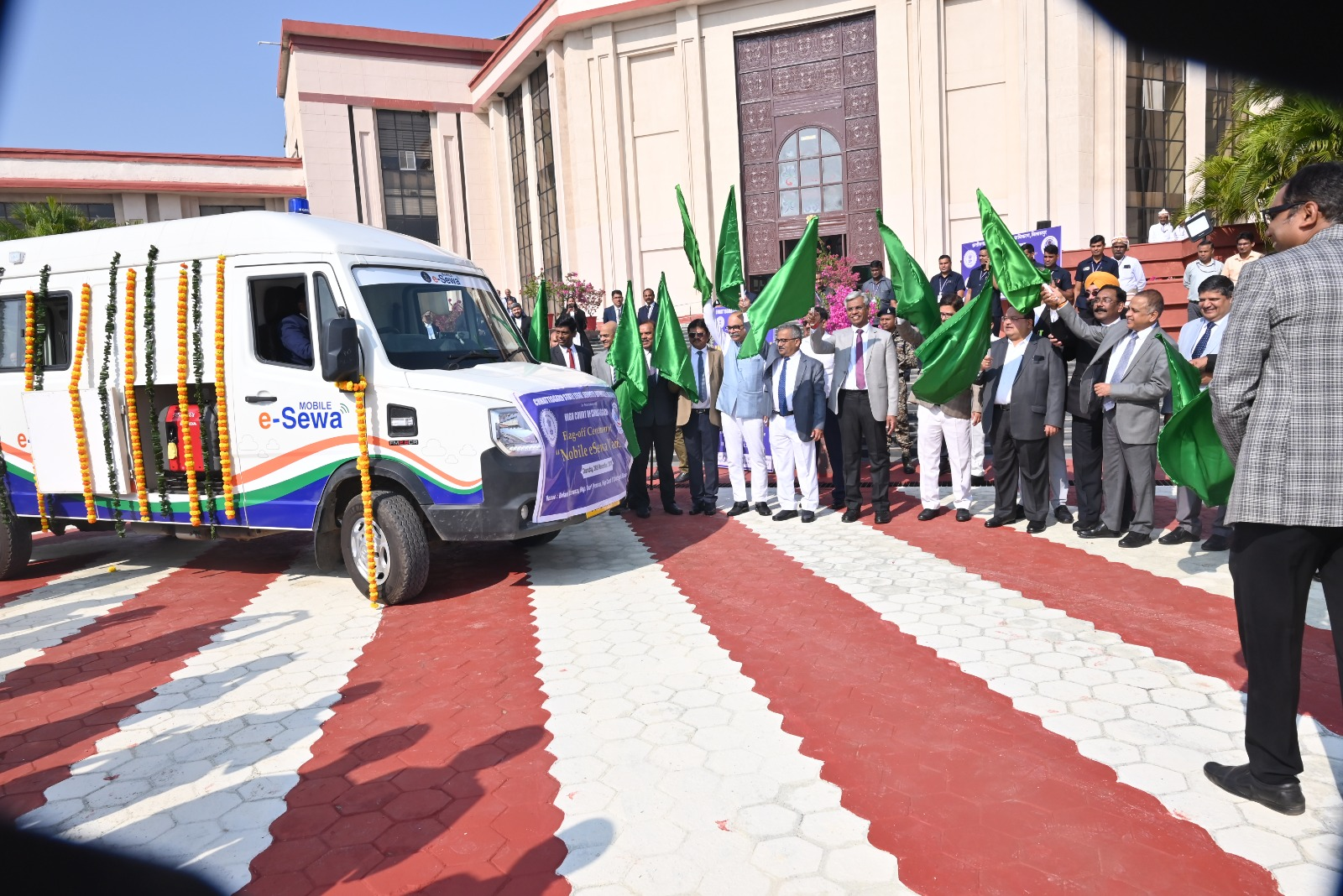
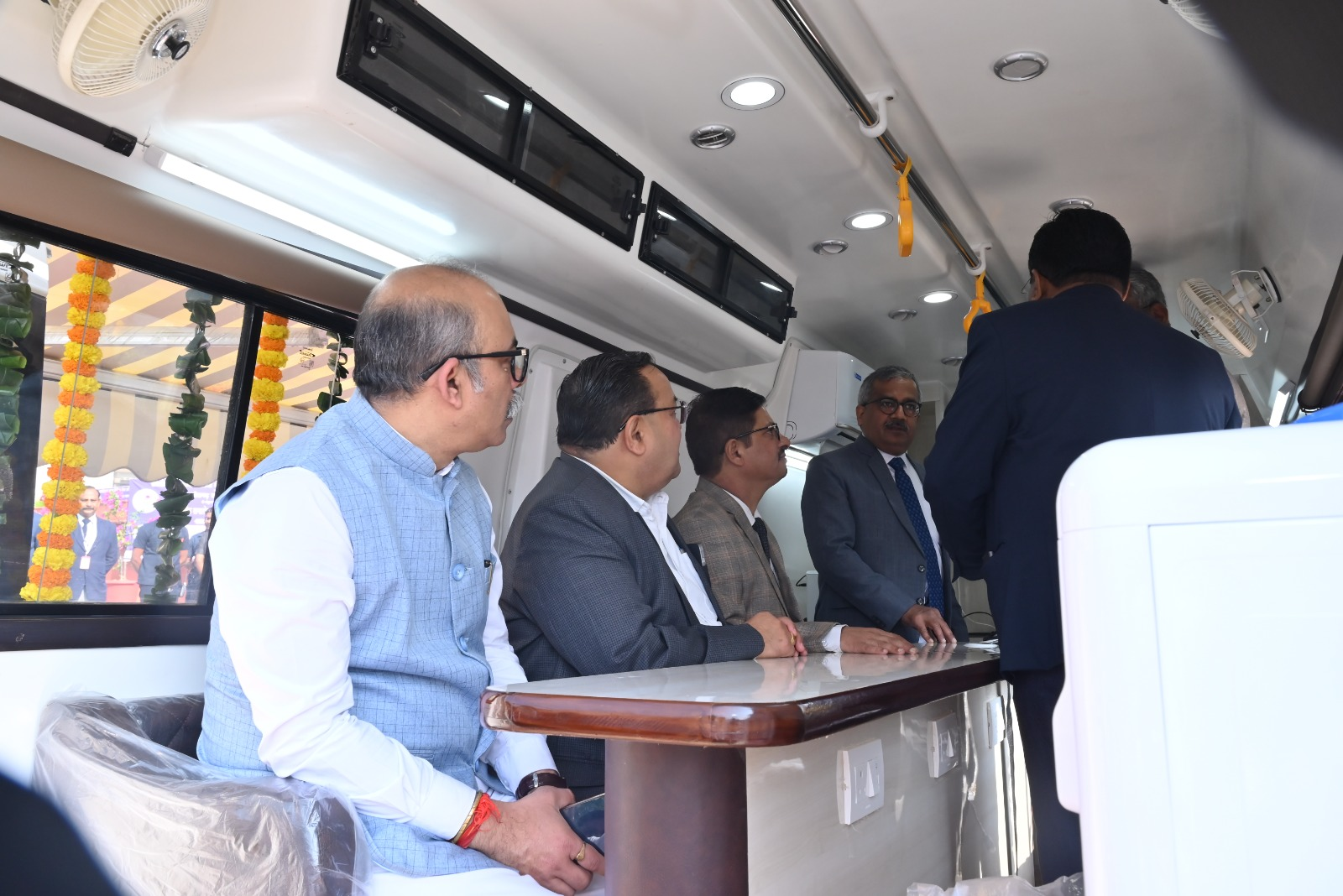
Bilaspur, November 26th, 2026: On the occasion of Constitution Day, Hon’ble Mr. Justice Krushna Ram Mohapatra, Chief Justice, High Court of Chhattisgarh and Patron-in-Chief, Chhattisgarh State Legal Services Authority (CGSLSA), flagged off three Mobile e-Sewa Vans in a significant initiative aimed at strengthening access to justice and extending technology-enabled legal services to the remotest corners of the State. The occasion was marked by a ribbon-cutting ceremony, following which the Hon’ble The Chief Justice inspected the Mobile e-Sewa Vans and was apprised of their various features and facilities designed to facilitate the delivery of legal services. He also reviewed the technological amenities available in the van to ensure accessible and efficient legal assistance for citizens.
At present, the three Mobile e-Sewa Vans have been deployed for Ambikapur, Raipur and Jagdalpur, with the objective of taking judicial and legal services closer to citizens, particularly litigants, rural and tribal populations, marginalised communities and residents of geographically remote and underserved areas.
The Mobile e-Sewa Van initiative is a joint technology and justice outreach venture under the umbrella of the eCourts Project, being implemented through close institutional coordination among the National Legal Services Authority (NALSA), High Courts, State Legal Services Authorities (SLSAs) and District Legal Services Authorities (DLSAs), in collaboration with the Department of Justice, Government of India. The initiative seeks to bridge the digital divide and promote inclusive access to justice by bringing technology-enabled legal services directly to the doorsteps of citizens. It is envisaged as a mobile service delivery platform integrating digital legal facilities, legal aid, dispute resolution mechanisms and legal awareness activities.
The Mobile e-Sewa Vans are designed to function as mobile facilitation and service delivery centres, providing a range of citizen-centric services. These include extending eCourts digital services to remote, rural, tribal and underserved geographical regions, thereby enabling citizens to access essential judicial information and services. The vans will also facilitate Mobile Lok Adalats and special drives for pre-litigation settlements, promoting amicable dispute resolution and reducing the burden on conventional courts. It will facilitate special drives for disposal of Motor Vehicles Act (MV Act) challans and other suitable matters through appropriate legal service mechanisms.
As mobile digital service delivery centres, the vans will provide facilities for accessing court case status, cause lists, e-filing and other relevant eCourts services, enabling litigants to obtain judicial information without having to travel to the court premises. They will also serve as platforms for conducting legal awareness campaigns and implementing various programmes and schemes of NALSA and SLSA, particularly for vulnerable and marginalised sections of society. Further, the vans will provide technological infrastructure for remote witness deposition through high-definition video conferencing facilities, thereby facilitating judicial proceedings and reducing logistical difficulties associated with the physical appearance of witnesses.
Built on a Force Motors vehicle platform, each Mobile e-Sewa Van has been comprehensively retrofitted and equipped with specialised technological and operational infrastructure to ensure effective service delivery, including in remote locations. The vans are equipped with specialised power backup facilities, audio-visual display systems, high-definition video conferencing equipment and high-speed multi-network connectivity. The onboard facilities include Bluetooth speakers, intercom, 32-inch and 43-inch television displays, water dispenser, 1-ton split air conditioner, generator, camera, router, webcam and fire extinguisher, along with other essential equipment. This infrastructure will enable the vans to function as self-contained mobile facilitation units for digital legal services, legal awareness programmes, virtual interaction and remote judicial connectivity.
To ensure the effective, uniform and accountable utilisation of these facilities, the Chhattisgarh State Legal Services Authority has issued a Standard Operating Procedure (SOP) governing the use, operation and monitoring of the Mobile e-Sewa Vans. The SOP lays down the operational framework and responsibilities for their effective deployment, coordination and monitoring, ensuring that the facilities serve their intended objectives and reach the maximum number of beneficiaries.
The flag off ceremony was organised by the Chhattisgarh State Legal Services Authority, in association with the High Court of Chhattisgarh, at the Buland Darwaza, High Court premises, High Court of Chhattisgarh.
The programme was graced by the presence of Hon’ble Mr. Justice Parth Prateem Sahu, Executive Chairman, Chhattisgarh State Legal Services Authority along with Hon’ble Mr. Justice Narendra Kumar Vyas, Hon’ble Mr. Justice Naresh Kumar Chandravanshi, Hon’ble Mr. Justice Sachin Singh Rajput, Hon’ble Mr. Justice Rakesh Mohan Pandey, Hon’ble Mr. Justice Sanjay Kumar Jaiswal, Hon’ble Mr. Justice Ravindra Kumar Agrawal, Hon’ble Mr. Justice Amitendra Kishore Prasad, Hon’ble Mr. Justice Santosh Sharma, Hon’ble Mrs. Justice Sushma Sawant and Hon’ble Mr. Justice Sudhir Kumar.
The ceremony was also attended by the Registrar General and Officers of the Registry; the Director, Chhattisgarh State Judicial Academy, along with Officers of the CSJA; the Member Secretary, Chhattisgarh State Legal Services Authority, along with Officers of CGSLSA; Officers from the Office of the Advocate General; President and Secretary of the Chhattisgarh High Court Bar Association; Senior Advocates; the Collector; the Senior Superintendent of Police; and Members of the Bar.
The launch of the three Mobile e-Sewa Vans on the occasion of Constitution Day reaffirms the commitment of the Chhattisgarh State Legal Services Authority towards upholding the constitutional ideals of justice, equality and equal access to legal remedies. This initiative reflects the vision of making justice more accessible, inclusive and citizen-centric through the effective use of technology and strengthened institutional outreach. It seeks to ensure that geographical distance, digital exclusion or socio-economic disadvantages do not become barriers to accessing justice. The Mobile e-Sewa Vans are envisaged as an effective bridge between the justice delivery system and the people, translating the constitutional promise of justice into meaningful and accessible services at the grassroots level.


