

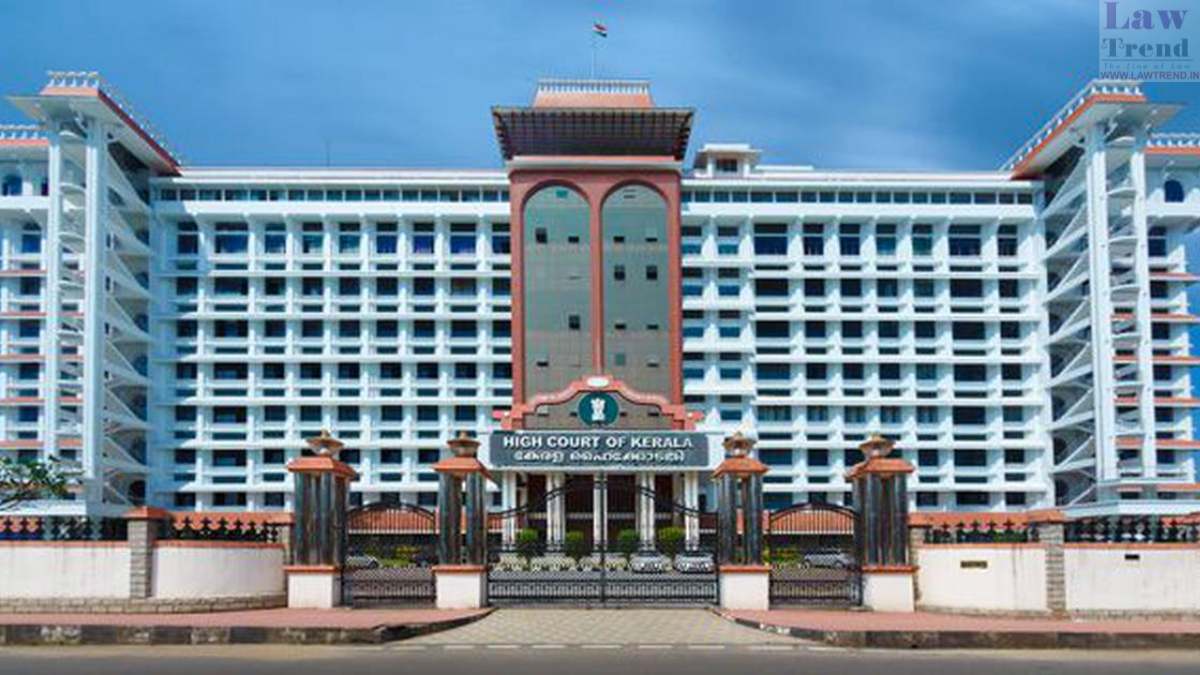
The Kerala High Court has held that a Chief Judicial Magistrate hearing an application under Section 14 of the SARFAESI Act cannot decide disputed claims of tenancy. People who say they are tenants and want to resist dispossession must take their case to the Debts Recovery Tribunal under Section 17 of the Act.
Justice S. Manu dismissed a writ petition filed by three occupants of a mortgaged property in Kunnamkulam. They had challenged an order of the Chief Judicial Magistrate, Thrissur, which refused to stop their eviction.
Background
The premises are in Ward 11 of Kunnamkulam Municipality. Respondents 2 to 7 had mortgaged them to Axis Bank to secure a loan. When the loan was not repaid, the bank began proceedings under the SARFAESI Act and filed M.C. No. 45/2026 under Section 14 of the Act. An Advocate Commissioner was appointed to take physical possession of the property.
The petitioners then moved the CJM in Crl.M.P. No. 3/2026, asking for an order restraining the respondents from evicting or dispossessing them. They said their leases were entered into long before the mortgage was created, so they could not be dispossessed.
The bank opposed the application. It argued that the CJM had no jurisdiction to decide rival claims about tenancy or the validity of lease arrangements, and that the petitioners’ remedy was before the DRT under Section 17. The CJM rejected the application and held that the petitioners had to use the statutory remedy.
Arguments Before the High Court
Advocate Rajit, appearing for the petitioners along with Advocate Sruthi Rajit, argued that the petitioners had been inducted long before the mortgage was created. He said they could be evicted only under the Kerala Buildings (Lease and Rent Control) Act, 1965. He submitted that the documents produced showed the tenancies were genuine and pre-dated the mortgage. He relied on Shaji v. Federal Bank Ltd. [2015 (4) KLT 30] to argue that the CJM can consider tenancy claims in a Section 14 application.
Counsel for the bank argued that the lease periods in all the deeds relied on were limited and that the deeds had been executed long ago. He also pointed out that in some of the lease deeds, the petitioners concerned were not parties. Relying on the Supreme Court’s decision in Bajarang Shyamsunder Agarwal v. Central Bank of India and Another [(2019) 9 SCC 94], he argued that even if the petitioners were in occupation, they could only be treated as tenants in sufferance. On that basis, he said, the Rent Control Act could not be extended to them.
Court’s Findings on Section 14 SARFAESI Proceedings
The Court noted that it could interfere under Article 226 only if there was illegality or impropriety in the order or the procedure. It found that the CJM had considered the contentions of both sides and given reasons for rejecting the application.
On the tenancy claims, Justice Manu observed: “I prima facie find merit in the contention of the learned counsel for the respondent bank that the materials brought on record would not convincingly show that valid tenancies are subsisting.”
The Court then explained the limited nature of Section 14 proceedings: “It is also to be noted that the proceedings under Section 14 of the SARFAESI Act is not purely judicial proceedings. Scope of inquiry by the Chief Judicial Magistrate in a proceeding under Section 14 is constricted.”
The Court found no impropriety in the CJM’s view that deciding tenancy rights is beyond the scope of Section 14 proceedings.
DRT Is the Proper Forum
The High Court agreed with the CJM that the expression “any person” in Section 17(1) of the SARFAESI Act is wide enough to cover people other than borrowers who are aggrieved by measures taken under the Act.
Endorsing that finding, Justice Manu said: “I affirm the view of the learned CJM as it is perfectly correct. Proper remedy of the petitioners is to approach the Debts Recovery Tribunal.”
Outcome
The writ petition was dismissed. The dismissal is without prejudice to the petitioners’ right to pursue statutory remedies. The Court made it clear that its observations should not be treated as conclusive opinions on the merits of the dispute.
Case Title: Yousuf Sidique and Others v. Axis Bank Ltd and Others
Case No.: WP(C) No. 37362 of 2026
Bench: Justice S. Manu
Date: 12 November 2026


