

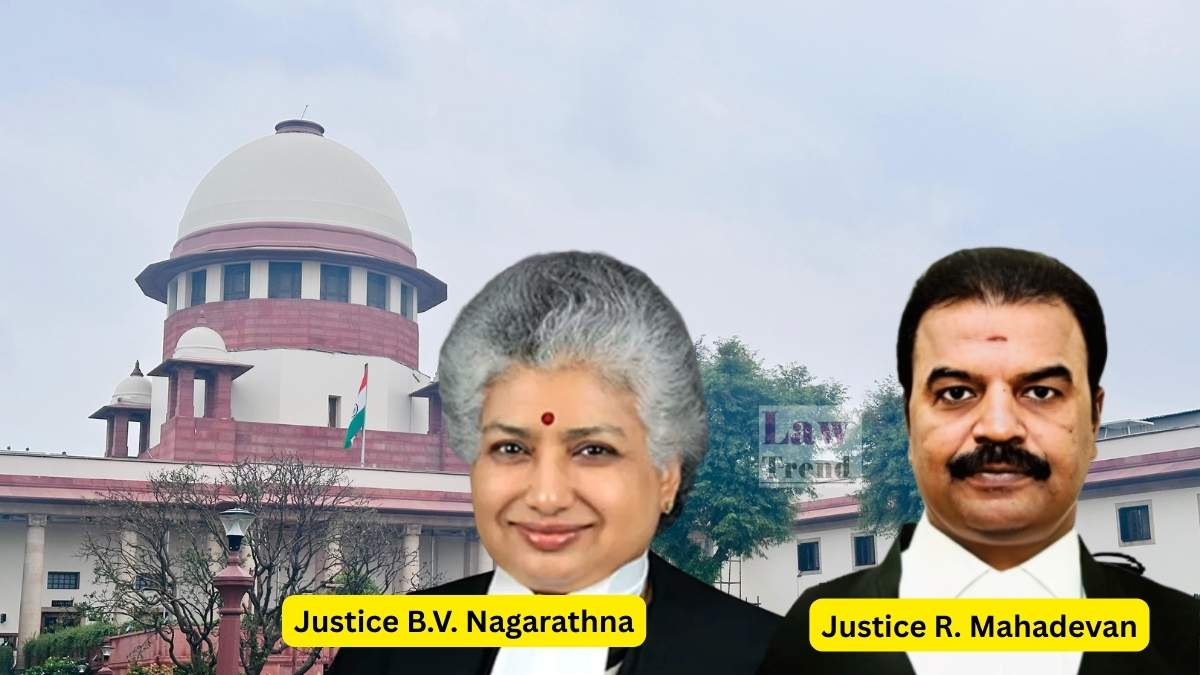
The Supreme Court on Thursday stayed criminal contempt proceedings against Punjab Chief Secretary KAP Sinha arising from the state government’s non-compliance with directions to pay pending dearness allowance (DA) and dearness relief (DR) arrears to employees and pensioners.
A bench of Justices BV Nagarathna and R Mahadevan questioned the justification for pursuing criminal contempt against the senior bureaucrat, particularly on the basis of an alleged internal departmental communication concerning compliance with court orders.
The Court restrained further proceedings in the criminal contempt case initiated by the Punjab and Haryana High Court until further orders. It clarified, however, that other proceedings could continue.
Supreme Court Questions Criminal Contempt Action
Senior advocate Vikas Singh, representing the additional chief secretary and the Punjab government, informed the bench that Sinha faced criminal contempt proceedings in connection with a matter that had already been disposed of.
The bench questioned why the contempt petitioner was seeking action that could result in the chief secretary being imprisoned. It subsequently ordered a stay on the criminal contempt proceedings.
Advocate Ravi Sharma, appearing for petitioner Manjit Singh Randhawa, referred to an alleged communication from Sinha instructing government departments that judicial orders need not be implemented.
The Supreme Court disapproved of using such internal correspondence as the basis for pursuing criminal contempt. It observed that departmental communications could not, by themselves, justify initiating criminal contempt proceedings.
The bench also questioned whether an instruction to defer compliance while the government intended to approach the Supreme Court would necessarily constitute criminal contempt.
While granting interim relief, the Court considered the High Court’s orders dated October 12 and October 13, including the direction requiring Sinha’s personal appearance on November 5. It also examined the circumstances surrounding the dispute and the subsequent contempt petition.
High Court Had Ordered Payment of DA and DR Arrears
The controversy originated from the Punjab and Haryana High Court’s August 3 directions requiring the Punjab government and Punjab State Power Corporation Limited to release outstanding DA and DR instalments to employees and pensioners.
The High Court had directed that the payments be calculated according to the rates applicable to All India Services officers posted in Punjab, following the Central government pattern.
It required the outstanding amounts to be paid within two weeks and directed payment of interest at six per cent annually on delayed dues.
When the government failed to meet the prescribed deadline, employees and pensioners initiated proceedings alleging non-compliance.
On October 12, the High Court issued a show-cause notice to Sinha concerning the initiation of criminal contempt proceedings. A subsequent order required him to appear personally before the Court on November 5.
The High Court also imposed costs of ₹1 lakh on the state government for failing to submit its reply in the contempt matter and sought an explanation from the chief secretary regarding measures taken to implement its directions.
It had emphasised that approaching the Supreme Court did not automatically suspend the obligation to comply with its order. Compliance remained necessary unless the Supreme Court stayed or modified the directions.
Punjab Government Cites Outstanding Liability of ₹32,418 Crore
The financial implications of the High Court’s directions have remained a central issue in the dispute.
In a status report submitted before the High Court, Sinha disclosed that Punjab’s outstanding DA and DR liability for the period from July 1, 2021, to September 30, 2026, amounted to ₹22,818 crore.
The report placed the state’s total outstanding liability towards employees and pensioners at ₹32,418 crore.
The Punjab government has maintained that clearing the accumulated arrears would impose a substantial burden on state finances.
During proceedings before the Supreme Court on Wednesday, counsel for the state submitted that the current government had inherited approximately ₹13,000 crore in arrears from the previous administration.
The Supreme Court’s order provides interim protection to the chief secretary against the criminal contempt proceedings while leaving other proceedings arising from the dispute unaffected.


