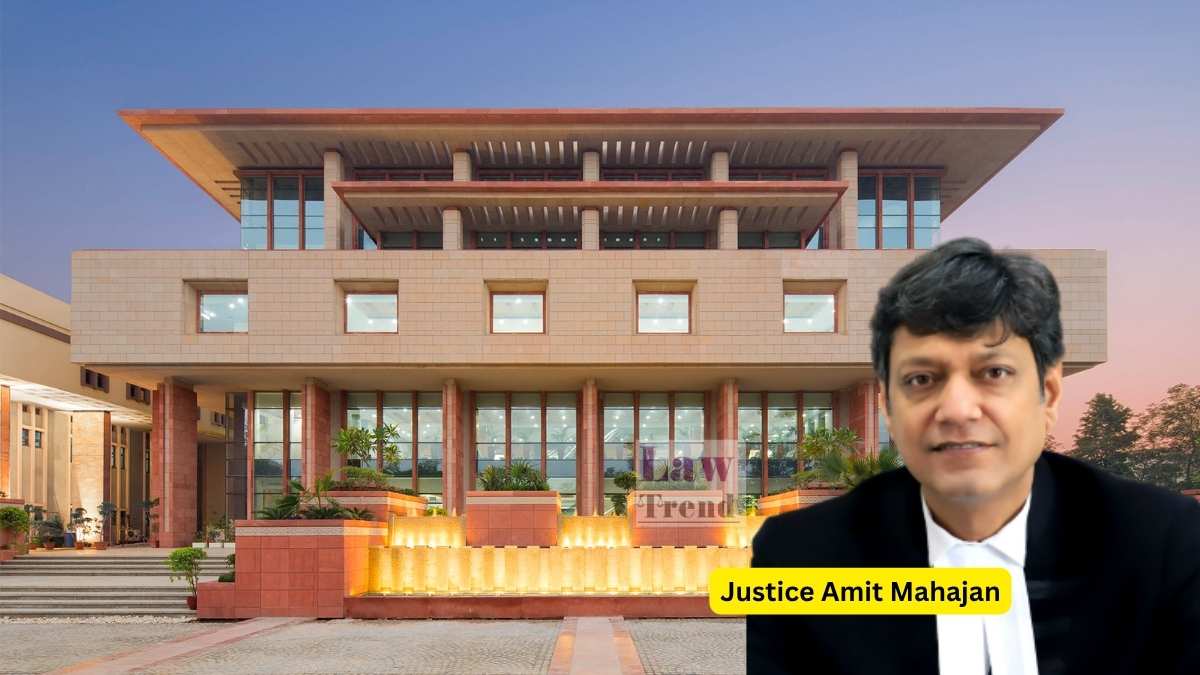
The Delhi High Court has set aside an order of the Central Information Commission (CIC) that had directed the Indian Air Force to disclose Part-II of the Special Flight Returns (SFR-II) relating to the Prime Minister’s foreign visits on IAF aircraft. Justice Amit Mahajan held that the Air Force was justified in invoking the exemptions under Sections 8(1)(a) and 8(1)(g) of the Right to Information Act, 2005, given the potential implications for national security and the life and physical safety of the Prime Minister.
Background
Commodore Lokesh K Batra (Retd.) filed an RTI application on 05.06.2018 seeking information on each foreign visit of the Prime Ministers of India undertaken on Indian Air Force aircraft from 01.04.2013 till the date of the application.
By letter dated 10.07.2018, the Central Public Information Officer, Directorate of Personal Services, Air Headquarters, informed him that former Prime Minister Manmohan Singh had no air travel on IAF aircraft from 01.04.2013 to 25.05.2014, and that Prime Minister Narendra Modi undertook three visits on IAF aircraft between 04.06.2016 and 09.07.2018. However, copies of the SFR Part-I and Part-II were denied under Sections 8(1)(a) and 8(1)(e) of the RTI Act, on the ground that they contained sensitive details, including names of Special Protection Group (SPG) personnel.
The First Appellate Authority dismissed his appeal on 20.09.2018. On second appeal, the CIC, by order dated 08.07.2020, directed the petitioner to provide certified copies of available and relevant SFR-II. The CPIO challenged this order before the High Court.
Arguments
Central Government Standing Counsel Pratima N. Lakra, appearing with Advocate Shailendra Kumar Mishra for the petitioner, submitted that SFR-II contains sensitive details including the names and particulars of passengers, aircraft, aircrew and SPG personnel accompanying the Prime Minister. She argued that the information was exempt under Sections 8(1)(a) and 8(1)(g), and that when collated with details already in the public domain, it could be used by forces inimical to the security of the State.
Advocate Prasanna S., appearing for the respondent along with Advocates Injila Muslim Zaidi, Ashish Reddy, Prasanna Balakumar and Ishita Tulsyan, submitted that the information related to expenditure on the Prime Minister’s foreign visits from public funds and was a matter of significant public interest. He contended that the respondent sought details of private persons accompanying the Prime Minister at public expense, not the identities of security personnel.
Delhi High Court’s Findings on RTI Exemption
Relying on CBSE v. Aditya Bandopadhyay, the Court noted that the right to information is not absolute and must be balanced against other interests, including confidentiality of sensitive information. Citing Supreme Court of India v. Subhash Chandra Agarwal, it noted that clauses (a) and (g) of Section 8(1) are absolute exemptions that do not permit disclosure merely on the ground of larger public interest. It also referred to Bihar Public Service Commission v. Saiyed Hussain Abbas Rizwi on the scope of Section 8(1)(g).
Accepting the petitioner’s concern that redaction would not remove the risk, the Court observed that “the disclosure of successive passenger manifests may enable sensitive aspects of the security arrangements to be reconstructed by correlating the disclosed particulars with other information in the public domain.”
On the role of security agencies, Justice Mahajan held:
“This Court or the CIC cannot sit in appeal over the subjective satisfaction of the competent security agencies as to whether disclosure of particular information could jeopardise national security or endanger the life and physical safety of the Hon’ble Prime Minister.”
Rejecting the public-funds argument, the Court said: “The mere fact that public funds have been expended on the foreign visits of the Hon’ble Prime Minister does not, by itself, justify disclosure of information which may compromise the security arrangements put in place for such visits.”
Outcome
Holding that the CIC erred in directing disclosure of SFR-II even after redaction of the names and identifying particulars of security personnel, the Court allowed the petition and set aside the impugned order. Pending applications were disposed of.
Case Title: The Central Public Information Officer, Directorate of Personal Services, Air Headquarters, Indian Air Force v. Commodore Lokesh K Batra (Retd.)
Case No.: W.P.(C) 10165/2020
Bench: Justice Amit Mahajan
Date: October 15, 2026