

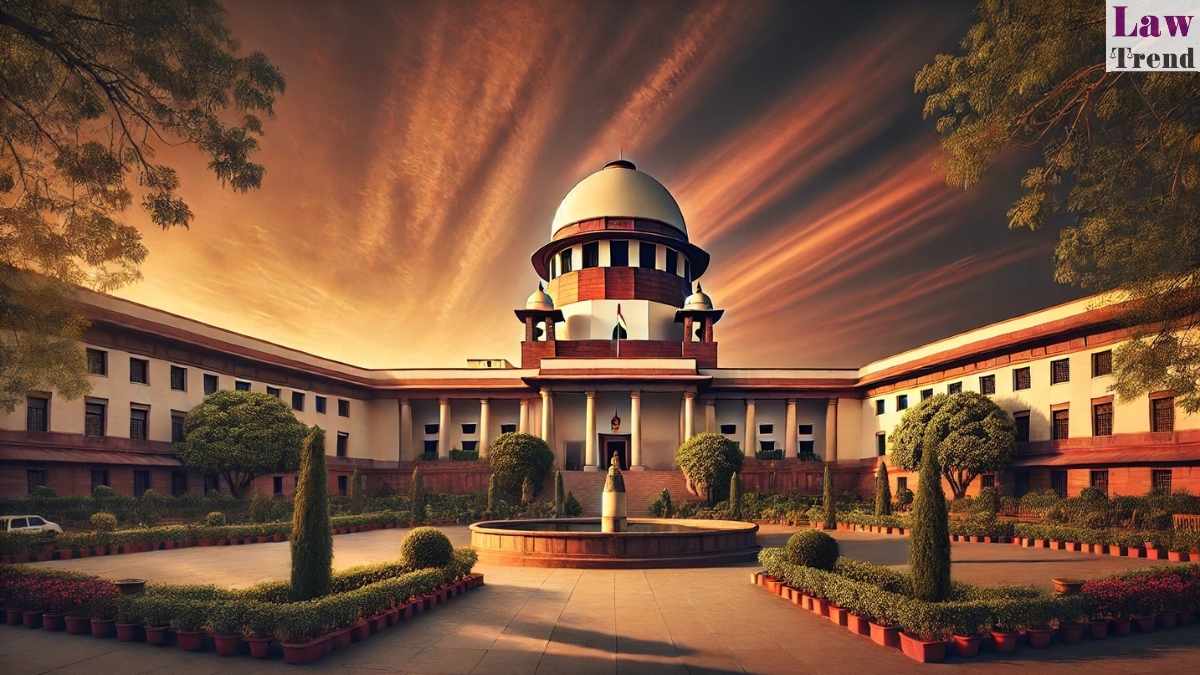
The Supreme Court on Monday directed the Union government to institute statutory regulations requiring social media companies and digital intermediaries to raise their minimum membership threshold to 18 years in accordance with Indian contract law.
A three-judge bench led by Chief Justice of India Surya Kant called on the Centre to use its existing regulatory powers to compel digital platforms to redesign their software architecture to align with domestic statutory requirements. In response, Solicitor General Tushar Mehta confirmed that the government agrees minors cannot legally enter contracts under Indian law and affirmed that the Centre is prepared to issue binding directions to intermediaries.
Chief Justice Kant indicated that the government can invoke powers under Sections 4 and 9 of the Information Technology (Intermediary Guidelines and Digital Media Ethics Code) Rules, 2021, to enforce the requirements.
Scrutiny Over Foreign Regulations In Indian Cyberspace
The bench, which also included Justices Joymalya Bagchi and V. Mohana, addressed the regulatory gap created by global technology firms applying foreign standards within India. Justice Bagchi observed that several intermediaries registered under United States law have imported American age restrictions into the Indian digital domain rather than adhering to Indian legal mandates.
Emphasizing that digital networks must be brought into compliance, Justice Bagchi urged the government to examine the intermediary framework and mandate an 18-year threshold for platform membership. Mehta concurred, stating that regulatory control over intermediaries is necessary.
Legal Inconsistencies Raised In Public Interest Litigation
The court was hearing a public interest litigation petition brought by the non-governmental organisation Just Rights for Children Alliance, filed through advocate Saksham Maheshwari. Arguing for the petitioner alongside senior advocate H. S. Phoolka, the plea highlighted a structural contradiction between platform operations and Indian statutes.
Under Section 3 of the Majority Act, 1875, an individual attains the age of majority at 18, and Section 11 of the Indian Contract Act, 1872, specifies that minors lack the legal capacity to enter into binding agreements. Despite these statutory bars, social media firms operating in India permit children as young as 13 to create and operate independent accounts merely by self-declaring their date of birth.
Mandatory Age Verification And Parental Oversight Proposed
The petition seeks a formal ban on independent user accounts for minors, urging the court to mandate robust, verifiable age-assurance mechanisms across digital services.
Rather than imposing a total exclusion from digital resources, the plea recommends a supervised model where individuals under 18 may only access educational material through accounts owned, monitored, and maintained by their parents or guardians.
The proceedings follow notices issued by the apex court on September 10 to three central ministries: the Ministry of Electronics and Information Technology, the Ministry of Law and Justice, and the Ministry of Labour.




