

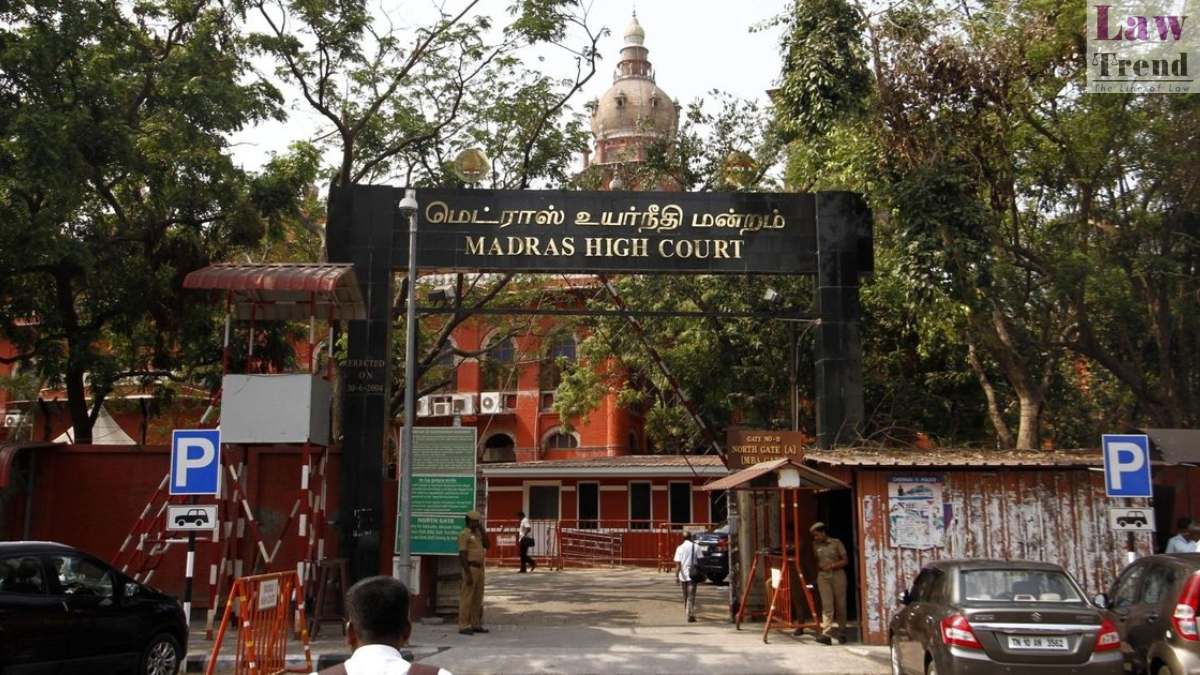
The Madras High Court has set aside an administrative order that invalidated the Scheduled Caste community certificate of a senior Chennai Customs department official, ruling that the scrutiny panel relied on unsubstantiated conclusions and irrelevant factors, including the official’s physical appearance and language proficiency.
Justice D. Bharatha Chakravarthy ruled that the Tiruvannamalai District Level Vigilance Committee must re-examine the case of Assistant Commissioner M. Ravikumar. In the order passed on September 11 and uploaded on September 18, the court clarified that it was not making a final determination on Ravikumar’s communal status, but remitted the matter for a fresh inquiry after finding major flaws in the committee’s earlier proceedings.
Ravikumar secured his employment based on a Hindu Adi Dravidar community certificate issued in December 1986. The vigilance committee launched a verification process shortly before his scheduled retirement on May 30, 2026, and issued an adverse ruling on May 4 declaring the certificate not genuine.
Flawed Grounds And Irrelevant Considerations
In rejecting the vigilance committee’s determination, the High Court observed that several of the panel’s key findings lacked factual foundation. The committee had cited the family’s physical characteristics, noting they were fair, tall, well-built, had curly hair, and conversed in both Tamil and English. The judge remarked that these physical and linguistic traits were not introduced through any anthropological evaluation and held no relevance to determining caste identity.
The court also pointed out clear factual contradictions in the committee’s findings, such as an entry claiming that a 1994 ration card listed Ravikumar’s daughter under a Christian name. Ravikumar demonstrated that his eldest daughter was born only on November 10, 1998, rendering the state’s claim unsustainable. Additionally, the judge found that the committee had offered no concrete evidence or detailed reasoning to substantiate its claim that the local community had refused to accept Ravikumar.
Family Background And History Of Reconversion
The dispute centered on whether Ravikumar had genuinely reconverted to Hinduism and gained acceptance within the Adi Dravidar fold. The court noted there was no dispute that Ravikumar originally belonged to a Scheduled Caste through his lineage.
Ravikumar’s father, an Adi Dravidar Hindu, converted to Christianity in 1960, and Ravikumar was born into a Christian household in 1966 under the name A. Soundararajan. In 1983, both father and son underwent reconversion ceremonies at the Arya Samaj Centre in Chennai, changing their names to R. Munusamy and M. Ravikumar. This sequence of conversion and reconversion was explicitly recorded when the authorities granted Ravikumar his community certificate in 1986.
Conflicting Claims On Religious Practice
During the vigilance inquiry, the state and counsel for the Customs commissioner argued that the family retained their Christian faith and claimed Hindu status primarily to secure employment reservations. They pointed to the father’s burial in a Christian cemetery, the continued appearance of his father’s Christian name on certain documents after 1983, and a church letter that retained their former names. The state also cited the fact that Ravikumar lived in Chennai and Bengaluru, while his mother lived outside the local Adi Dravidar settlement.
Ravikumar countered these claims by presenting evidence of an observant Hindu lifestyle. He stated that his household worshipped Hindu deities and raised his children within the faith. His submissions included photographic proof of his marriage conducted under Hindu rites, tonsuring and ear-piercing ceremonies for his children, his daughter’s Hindu wedding, and observations from an anthropologist who had verified a Hindu prayer room in his home. His counsel also explained that the father’s burial arrangements were made by Ravikumar’s younger brother, who had remained a practicing Christian while caring for their father. While the court observed that the burial could be a relevant factor for examination, it could not stand alone against uncorroborated allegations.
Directions For Fresh Inquiry
Citing Supreme Court precedents, the High Court emphasized that establishing Scheduled Caste status following reconversion requires demonstrating both an unequivocal adherence to the religion and social acceptance by the community, rather than relying solely on formal reconversion procedures.
The court instructed Ravikumar to appear before the Tiruvannamalai District Level Vigilance Committee within four weeks of receiving a copy of the order. He has been permitted to submit photographs and supplementary evidence demonstrating his religious observance and acceptance by the community. The committee has been directed to grant him a personal hearing, collect any further necessary material, and issue a fresh decision within eight weeks of his appearance.




