

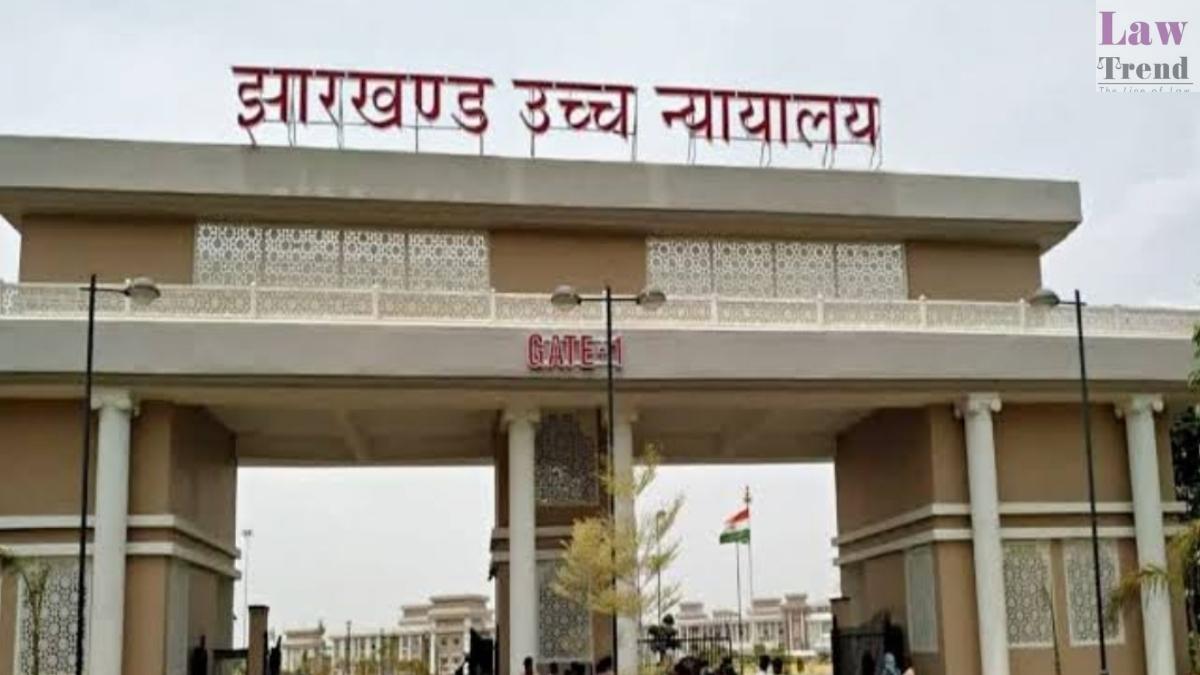
The Jharkhand High Court has upheld the conviction of a former railway parcel clerk in a 1995 bribery case involving Rs 100, holding that a public servant cannot avoid criminal liability merely by describing money demanded over and above the lawful fee as an “extra” charge rather than expressly calling it a bribe.
Justice Pradeep Kumar Srivastava held that money demanded by a public servant beyond the legally payable charge for performing an official duty amounts to illegal gratification. While maintaining the conviction, the court reduced the sentence to one year after considering the appellant’s age, health, dismissal from service and the prolonged pendency of the proceedings.
The court did not interfere with the total fine of Rs 10,000 imposed by the trial court, which had already been deposited.
Demand And Acceptance Of Rs 100 Proved
The case arose from an incident at Hatia Railway Station on April 27, 1995. According to the complainant, he approached the parcel clerk to book his motorcycle for transportation to Samastipur, Bihar, through the Maurya Express.
The clerk allegedly asked him to pay Rs 203 as the prescribed booking charge and complete the required form. In addition, he demanded Rs 100.
When questioned about the additional amount, the clerk allegedly told the complainant that the motorcycle would not be booked unless the extra Rs 100 was paid. The complainant subsequently approached the CBI, which registered an FIR.
A trap was then conducted, during which the accused was caught while demanding and accepting Rs 100. He was arrested following the recovery of the amount.
The trial court convicted him and, by an order dated May 28, 2004, imposed imprisonment along with a total fine of Rs 10,000. The former railway employee challenged the conviction before the High Court.
Use Of Word ‘Extra’ Does Not Change Nature Of Demand
In its September 10 order, the High Court found that the foundational facts concerning demand, acceptance and recovery of the illegal gratification had been established beyond doubt.
The court held that any amount sought by a public servant beyond the lawful charge for carrying out an official duty constitutes a demand for a bribe or illegal gratification. It further held that the appellant could not escape liability simply because he had used the word “extra” rather than directly describing the payment as a “bribe”.
Appellant Sought Reduction In Sentence
Advocate Sameer Saurabh, appearing for the appellant, sought reduction of the sentence to the statutory minimum. He submitted that his client was 75 years old, suffered from several ailments and had already endured proceedings extending over three decades.
The defence also argued that the punishment imposed was disproportionate to the offence.
Additional Solicitor General of India Prashant Pallav, appearing for the CBI, opposed the appeal. He submitted that the appellant’s status as a public servant was undisputed and that reliable evidence established the demand, acceptance and recovery of the bribe.
Three-Decade Pendency Considered While Reducing Sentence
While deciding the question of sentence, the High Court noted that the incident occurred in 1995 and the trial court decided the case in 2004, around nine years later. The appeal itself remained pending for more than two decades.
The court also considered that the appellant was over 75 years old, suffered from age-related ailments, had been dismissed from railway service and was a first-time offender.
Taking these circumstances into account, the court concluded that imposing the minimum sentence prescribed for the offences would meet the ends of justice.
Accordingly, the High Court reduced the sentence to one year while leaving the conviction and fine unchanged. The former railway employee was directed to surrender before the trial court within two months to undergo the sentence.




