

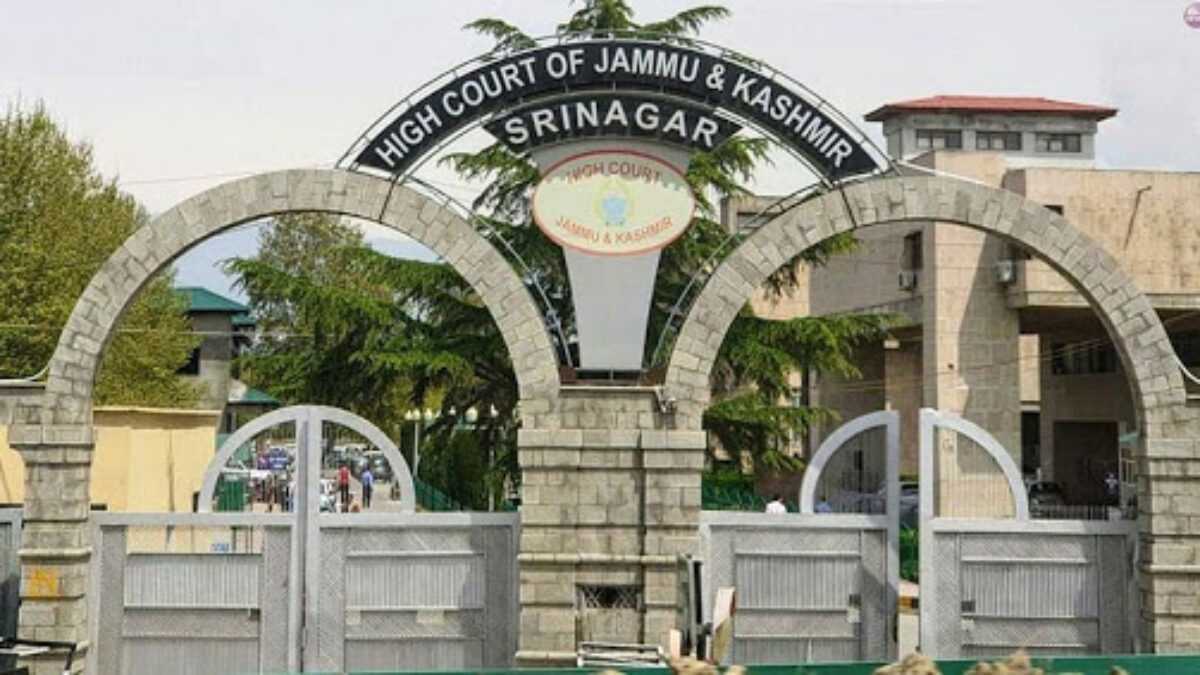
The High Court of Jammu and Kashmir and Ladakh has overturned the discharge of an accused in an 11-year-old anti-terror case, holding that chanting secessionist slogans while leading a mob alongside the chief of a banned separatist organization prima facie constitutes unlawful activity.
A division bench presided over by acting Chief Justice Sanjeev Kumar allowed an appeal filed by the state, reinstating the chargesheet against Mohammad Yousuf Lone. The decision sets aside an earlier discharge order passed by the Additional District and Sessions Judge in Kupwara, who presided over the designated Special Court under the National Investigation Agency Act. The High Court has remitted the matter back to the trial court to consider framing charges afresh against the accused.
Trial Court Order Set Aside
The bench observed that leading a crowd in the company of the leader of a proscribed separatist outfit, shouting slogans demanding secession, and inciting crowds to attack security forces fall squarely within the statutory definition of unlawful activity at a preliminary stage.
The judges held that the material compiled in the chargesheet—including recorded slogans, Lone’s alleged leadership role during the protest, and the subsequent violence—established strong suspicion warranting a full trial. The court emphasized that the determination of whether the allegations can be proven must occur during trial proceedings rather than through a dismissal at the threshold.
Critique Of Unreasoned Discharge
Faulting the special court’s approach, the division bench pointed out that the trial judge had dismissed the case in a single sentence, stating merely that the facts did not satisfy Section 2(o) of the Unlawful Activities (Prevention) Act. The High Court held that this amounted to a bare conclusion devoid of legal reasoning, as the lower court failed to examine the specific allegations, witness statements, or site plans against the statutory requirements of Section 13 read with Section 2(o) of the Act.
The bench stressed that an order of discharge requires an active application of judicial mind to the case records. When the material presented by investigators indicates prima facie involvement in an offense, the trial court cannot close the case without assigning valid legal grounds, the judges stated.
The High Court clarified that its ruling neither determines Lone’s guilt or innocence nor reflects an opinion on the final outcome of the prosecution.
Allegations From The 2013 Kupwara Protest
The prosecution’s case stems from an incident on November 8, 2013, when a crowd allegedly led by Lone and the late Syed Ali Shah Geelani, then chairman of the banned Hurriyat Conference, emerged from the Jamia Masjid in Kupwara.
According to investigators, the leaders instigated the public against the sovereignty and territorial integrity of India, raised anti-national slogans against the central government, and threw stones at police and security forces personnel deployed in the area.


