

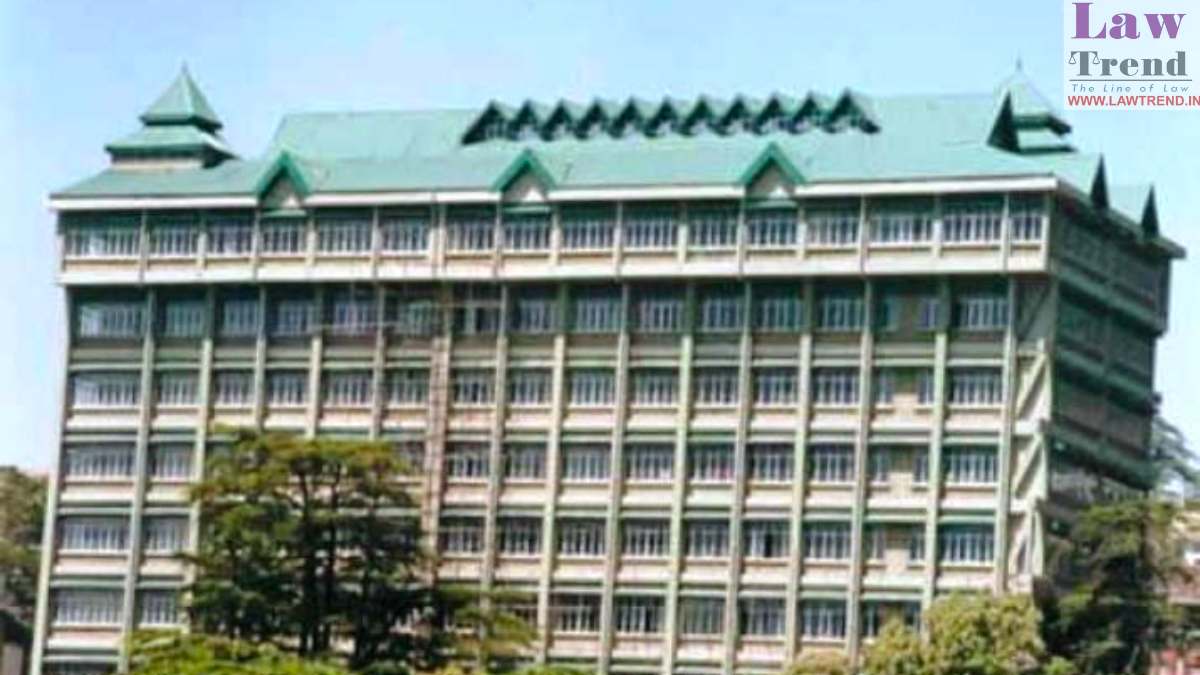
The Himachal Pradesh High Court has affirmed that a divorced woman who has not remarried holds an absolute right to maintenance from her former husband, ruling that legal provisions under criminal procedure are designed to secure social justice and prevent women from being pushed into destitution.
A division bench comprising Justice Vivek Singh Thakur and Ranjan Sharma dismissed a petition challenging a lower court order and held that a decree of divorce does not relieve a man of his statutory maintenance responsibilities. Upholding a monthly maintenance award of Rs 4,000 to the woman, the court directed the man to release the outstanding amount within four weeks in terms of an order dated January 23, 2024, after accounting for any adjustments from payments made under other statutes.
The bench observed that Section 125 of the Code of Criminal Procedure exists to provide swift financial relief to wives, children, and parents so they can live with dignity rather than being reduced to penury. The judges emphasised that a healthy and able-bodied spouse capable of earning cannot evade this legal duty through unsubstantiated claims of physical ailments or disability, stressing that statutory maintenance rights cannot be curtailed unless the spouse incurs a specific disqualification recognised by law.
Background Of The Dispute
The couple was married on December 21, 1997, and had three children. The woman alleged that persistent mistreatment, abuse, and the denial of basic necessities forced her out of the matrimonial home in 2009. The marriage was formally dissolved on the grounds of cruelty on November 22, 2021.
Prior to the dissolution, the woman had approached the Family Court in May 2019 seeking maintenance under Section 125 of the Code of Criminal Procedure. She stated that she had no independent income, whereas her husband earned Rs 30,000 per month as a contractor. The husband contested the claim, describing himself as a casual labourer and asserting that his former wife was a practicing tailor capable of self-support.
The Family Court assessed the husband’s monthly income at Rs 11,250 and directed him to pay Rs 4,000 per month effective from May 18, 2019. The husband subsequently challenged the order before the High Court.
Arguments Before The Court
Before the High Court, counsel for the petitioner, Advocate Aasheesh Patial, argued that the dissolution of the marriage ended his client’s obligation to provide financial support. He further contended that the woman had left the household without sufficient justification, possessed the ability to support herself, and that the Rs 4,000 sum was disproportionate in light of the man’s age and health conditions.
Representing the woman, Advocate Tim Saran submitted that an unmarried divorcee retains the right to claim maintenance because she does not fall under any of the exclusionary provisions outlined in Section 125(4) of the Code of Criminal Procedure. Saran maintained that the woman was compelled to leave due to cruelty and pointed out that the husband had failed to furnish evidence demonstrating that she possessed sufficient means to maintain herself.
The High Court agreed with the defense, ruling that the husband had presented mere excuses without concrete medical evidence of incapacitation. Determining that an able-bodied individual has an enduring legal obligation to maintain his former wife where no statutory disqualifications apply, the bench sustained the Family Court’s original directive.




