

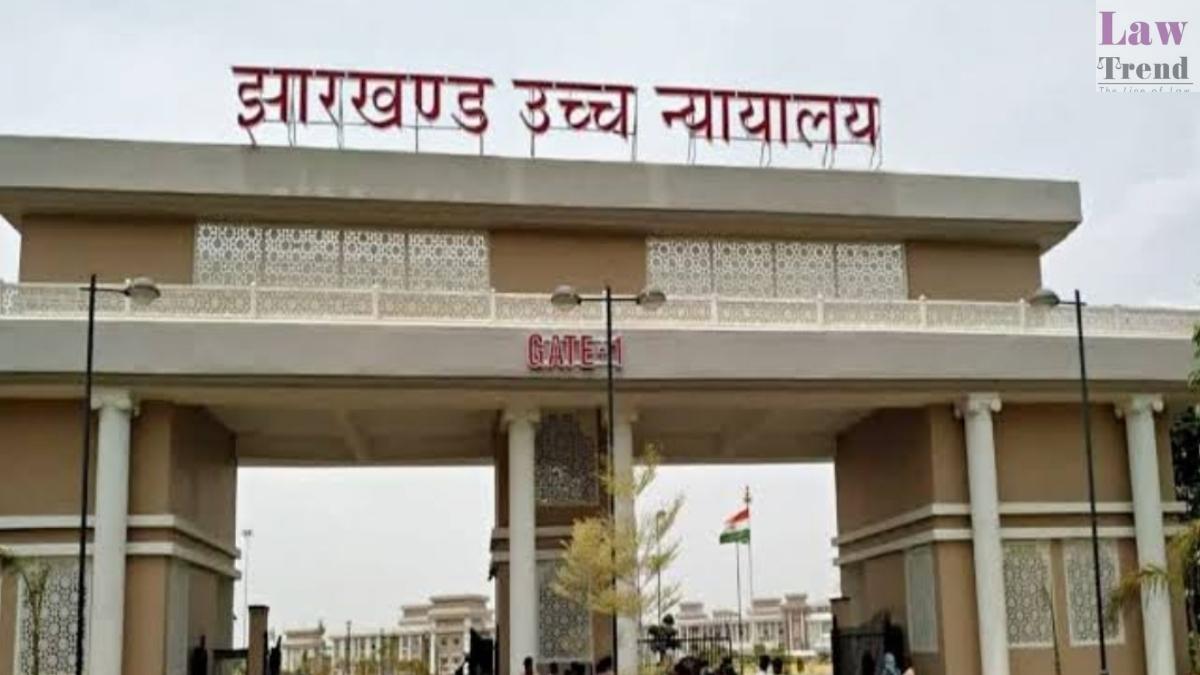
The Jharkhand High Court has increased the permanent alimony awarded to a 28-year-old divorced woman from Rs 10 lakh to Rs 40 lakh, ruling that the amount must secure her livelihood over an estimated 42-year period given her lack of independent income and her former husband’s rising salary as a government employee.
Assessment Of Future Living Costs And Earning Capacity
A division bench comprising Justice Sujit Narayan Prasad and Justice Pradeep Kumar Srivastava delivered the ruling on an August 18 appeal filed by the woman challenging a family court’s lower award. Calculating financial requirements on an average life expectancy of 70 years, the court noted that the woman required long-term sustenance for the next four decades.
The bench observed that while the ex-husband, an office assistant in a government department, earned approximately Rs 54,000 per month as of September 2024—with net earnings around Rs 40,000 following deductions—his income would consistently expand. The court highlighted prospective salary hikes through periodic dearness allowance revisions, annual increments, promotions, and future pay commissions, alongside substantial post-retirement benefits. Conversely, the former wife had no independent earnings and would have to subsist on the interest generated by her permanent alimony.
In its order, the high court emphasized that permanent alimony is legally designed to alleviate hardship for spouses lacking sufficient financial means. It noted that even though the man had remarried and acquired additional familial duties, he retained an utmost responsibility to ensure his first wife maintained the standard of living she would have enjoyed had the marriage continued.
Legal Arguments And Lower Court Award
The high court’s decision modifies a May 2023 family court decree that dissolved the couple’s marriage on grounds of cruelty and fixed alimony at Rs 10 lakh. The former husband had already paid Rs 8 lakh of that initial amount when obtaining anticipatory bail.
Appearing for the woman, advocate Ashutosh Pd Joshi argued that the family court overlooked critical factors, including her young age, her pitiable financial state, the husband’s complete asset profile—such as his provident fund and savings—and the substantial expenditure incurred during the wedding.
Defending the original award, advocate Prabhat Kumar, representing the former husband, contended that the Rs 10 lakh sum was adequate. He pointed out that his client had remarried, had a daughter from the second marriage, and had limited financial means.
Marriage Background And Abuse Allegations
According to case records, the couple married in June 2018 under Hindu rites in Hazaribagh. The woman stated that her father funded the entire wedding, provided Rs 12 lakh in cash, gave 10 bharis of gold ornaments, and supplied household items worth Rs 2 lakh.
She alleged that dowry harassment began a month after the wedding when her husband and in-laws demanded an additional Rs 5 lakh. Although the husband temporarily relocated her to his workplace district following her threats to return home, he later pressured her to request Rs 10 lakh from her father to buy an apartment.
The woman lodged a police complaint after being physically assaulted when her family warned the husband against further monetary demands. Finding that the husband showed no inclination to resume marital cohabitation, the family court dissolved the marriage.
Determining that a total sum of Rs 40 lakh constituted a just and reasonable one-time allowance, the high court directed the former husband to pay the remaining balance within one year.




