

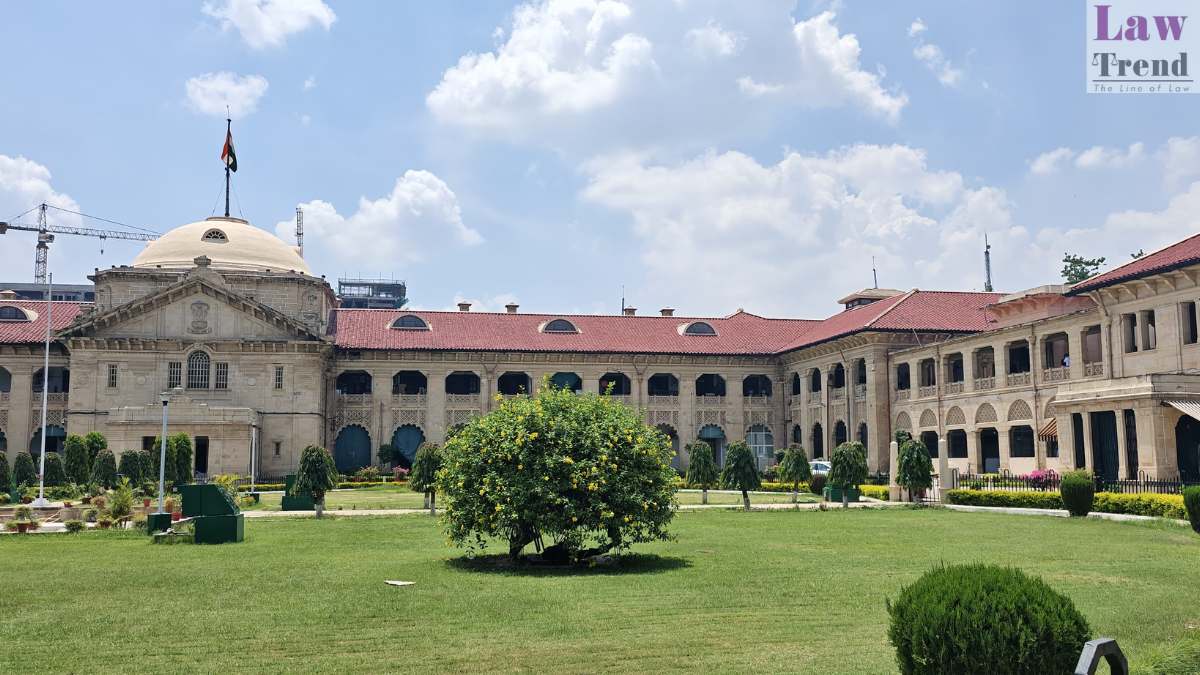
The Allahabad High Court has held that while executive clemency under Article 161 of the Constitution is a sovereign power, it remains subject to governing rules and cannot be exercised arbitrarily or on the basis of factual errors. The ruling came as the court set aside a state government order denying premature release to a convict whose period of incarceration was incorrectly calculated.
A division bench comprising Justice JJ Munir and Justice Tarun Saxena directed the Uttar Pradesh government to take a fresh decision on the premature release plea of Ram Pratap Singh within one month of receiving the court’s August 10 order. The judges emphasized that although constitutional powers under Article 161 differ from statutory remission under Section 432 of the Code of Criminal Procedure, decisions made under the constitutional provision cannot be grounded in obvious errors regarding a convict’s actual time served.
Incarceration Miscalculation Invalidates Rejection
The legal challenge centered on an order dated June 26, 2025, issued by a joint secretary of the Uttar Pradesh Prisons Administration and Reform Services in Lucknow. The order communicated the governor’s decision to refuse sentence remission to Singh under Article 161.
Upon examining the record, the high court identified a clear error in the government’s calculations. The rejection order claimed Singh had completed only 2 years and 6 days without remission, and 2 years, 1 month, and 27 days with remission. However, official jail reports showed he had actually completed 4 years, 6 months, and 6 days without remission, and 5 years and 4 months with remission out of his total seven-year term. His conduct in custody had also been recorded as satisfactory.
The bench noted that under sub-rule (iii) of Rule 4 of the Uttar Pradesh Prisoners’ Release on Probation Rules, 1938, eligible convicts in Singh’s category become eligible for premature release after serving one-third of their sentence without remission. The court observed that had accurate detention figures been submitted to the authorities, the final determination might have been different.
Background of the Case and Legal Trajectory
Singh was convicted in 2002 by the additional sessions judge in Fatehpur under Sections 307 and 34 of the Indian Penal Code for attempt to murder. He was sentenced to seven years of rigorous imprisonment along with a fine of ₹2,000.
His subsequent legal challenges were unsuccessful, with the Allahabad High Court dismissing his criminal appeal in 2019 and the Supreme Court later dismissing his special leave petition.
In September 2022, a proposal for Singh’s premature release was submitted to jail officials and the district magistrate in Fatehpur, where it remained pending. Singh filed a fresh application in February 2025 seeking a resolution on the proposal, noting that he had already served more than half of his court-mandated term. That application resulted in the now-quashed June 2025 refusal order.




