

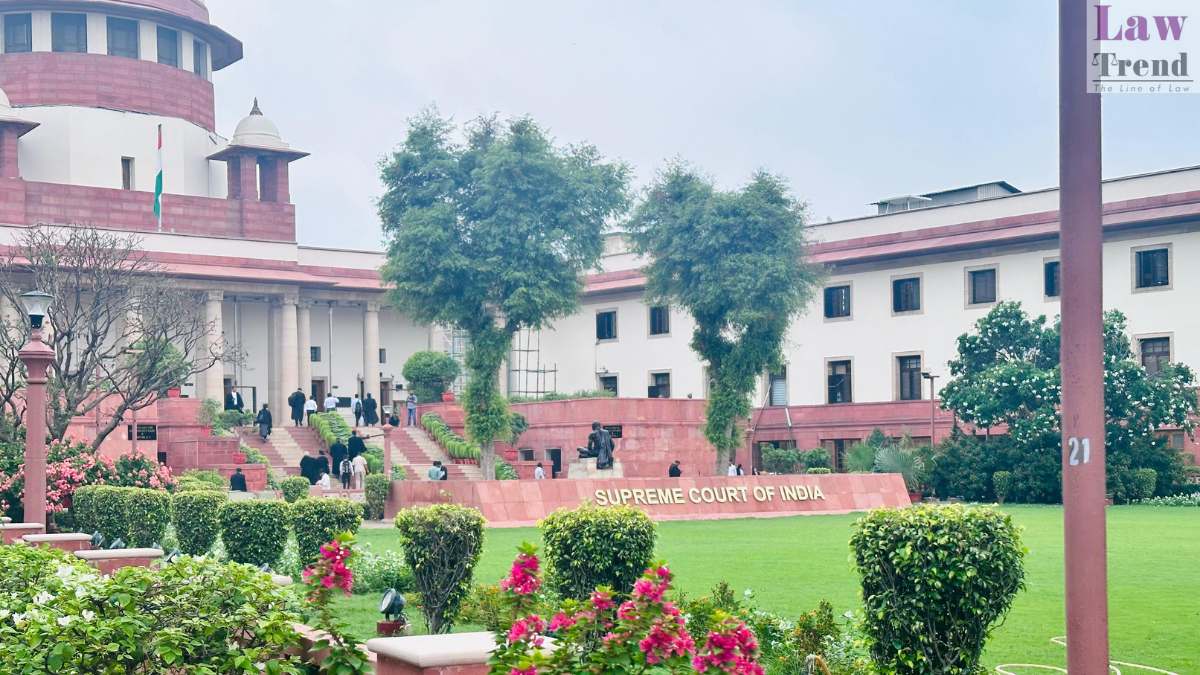
The Supreme Court on Monday rejected a petition challenging the Election Commission of India’s selection of 2002 as the base year for updating electoral rolls in Sikkim, declining to alter the framework of the ongoing nationwide revision process.
A three-judge bench comprising Chief Justice Surya Kant, Justice Joymalya Bagchi, and Justice V. Mohana dismissed the public interest litigation filed by the non-governmental organization Sikkimese Mulniwasi Surakacha Sangh. The petitioner had sought a direction requiring the poll panel to use 1993 instead of 2002 as the benchmark year for the state’s Special Intensive Revision exercise.
Uniform National Baseline
In refusing to interfere, the court emphasized that 2002 was established as the baseline for all states because the previous Special Intensive Revision was conducted during that year. The bench observed that shifting operational parameters mid-way through an active exercise was unfeasible, noting that citizens listed on the 2002 electoral rolls have consistently voted in subsequent elections.
The petition argued that voter additions recorded in 2002 conflicted with Sikkim’s demographic profile, warning that retaining 2002 as the baseline would create further electoral discrepancies.
Absence of Direct Litigants
Addressing demographic concerns, the bench acknowledged that border states routinely encounter migration patterns and shifting population dynamics. However, Chief Justice Kant highlighted that no individually aggrieved voters had approached the court, stating that setting aside the poll body’s administrative decision based solely on an organization’s request would create a risky precedent.
Alternative Administrative Remedies
While concluding that no valid grounds existed to disrupt the Election Commission’s decision, the bench indicated that the organization retains the option to approach the commission directly to seek a specialized exemption for the state.




