

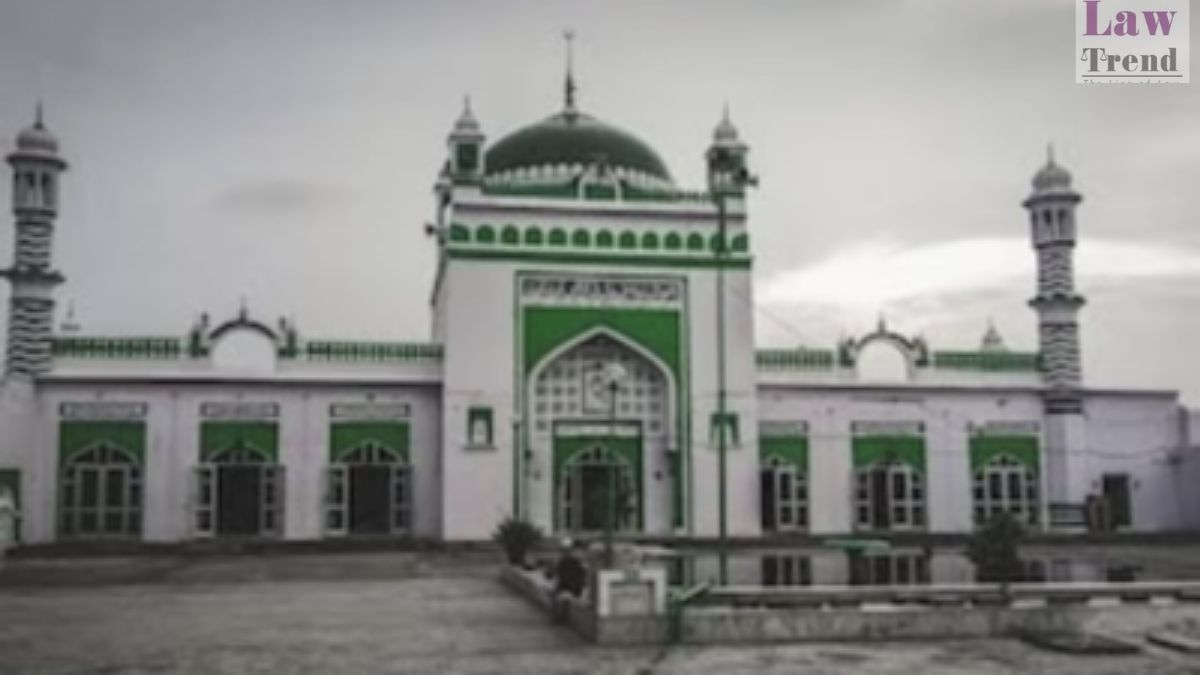
The Supreme Court on Tuesday deferred until August 18 the hearing on petitions challenging an Allahabad High Court ruling that upheld a court-ordered survey of the Shahi Jama Masjid in Sambhal, Uttar Pradesh.
A bench comprising Justice P S Narasimha and Justice Alok Aradhe granted the adjournment after noting that a letter had been circulated requesting a postponement. The apex court was scheduled to consider two distinct petitions submitted by the mosque’s management committee against the high court’s May 19, 2025 order.
Legal Challenges and Previous Directives
The mosque management committee argues that the Allahabad High Court should not have proceeded with the matter regarding the survey in light of a nationwide ruling issued by the Supreme Court on December 12, 2024. In that directive, passed during hearings on petitions challenging the Places of Worship (Special Provisions) Act, 1991, the top court restrained courts across the country from taking up new lawsuits or issuing interim or final orders in existing litigation seeking to reclaim religious sites, particularly mosques and shrines.
The 1991 legislation mandates that the religious character of any place of worship must remain as it existed on August 15, 1947, while specifically excluding the Ayodhya Ram Janmabhoomi-Babri Masjid dispute from its scope.
High Court Decision and Origin of the Dispute
In its May 19, 2025 judgment, the Allahabad High Court rejected the mosque committee’s plea against the survey, affirming the civil court’s order and ruling that both the appointment of a court commissioner and the underlying suit were maintainable.
The dispute stems from a suit filed before the Civil Judge (Senior Division) in Sambhal, which alleged that the Mughal-era structure was erected by Emperor Babur in 1526 following the demolition of the Harihar temple.
Surveys and Earlier Interim Relief
The Sambhal civil judge ordered a survey of the site on November 19, 2024, which was conducted the same day. The mosque committee subsequently challenged a second survey carried out on November 24, 2024, alleging it was illegal because it lacked authorization from the civil court.
The Supreme Court previously intervened on November 29, 2024, instructing the Sambhal court to halt proceedings regarding the mosque and its survey at Chandausi, while directing the Uttar Pradesh government to preserve peace and harmony in the town. On August 22, the apex court agreed to hear the mosque committee’s challenge against the high court ruling and directed all involved parties to maintain the status quo.




