

High Court Cannot Decide Criminal Appeal in Absence of Accused’s Counsel or Without Appointing Amicus Curiae: Supreme Court
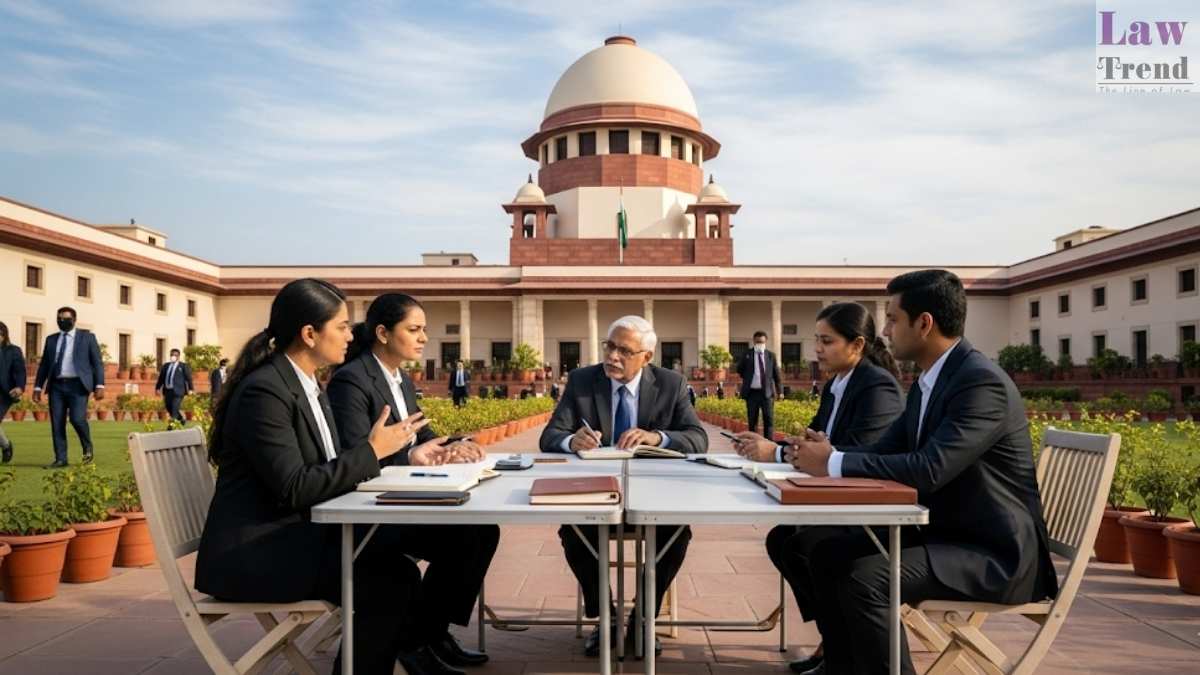

The Supreme Court of India, comprising a bench of Justice Satish Chandra Sharma and Justice N. Kotiswar Singh, has set aside an Allahabad High Court judgment that decided a criminal appeal without hearing the appellant’s counsel or appointing an Amicus Curiae to represent him. Setting aside the order on the ground of violation of natural justice, the apex court remanded the matter back to the High Court for fresh adjudication on merits.

Background of the Case

The matter originates from a judgment and order dated October 5, 2005, passed by the Additional Sessions Judge, District Bareilly, in Session Trial No. 763 of 2003. The trial court convicted the appellant, Ram Swaroop, for an offence punishable under Section 324 of the Indian Penal Code, 1860.

Aggrieved by the conviction, the appellant filed Criminal Appeal No. 4576 of 2005 before the High Court of Judicature at Allahabad. On March 30, 2026, the High Court delivered its judgment in the appeal. However, the decision was rendered in the absence of the appellant’s counsel and without appointing an Amicus Curiae to represent his defense or assist the court. The appellant subsequently challenged this decision before the Supreme Court.

Arguments of the Parties

When the matter came up before the Supreme Court, learned counsel appearing for the appellant argued at the outset that deciding the appeal in the absence of legal representation violated the principles of natural justice and fair play.

The sole prayer made on behalf of the appellant was for the matter to be remanded back to the High Court so that he could be permitted to engage a counsel to argue his appeal. In support of this prayer, counsel for the appellant relied upon the judgment delivered by the Supreme Court in K. Muruganandam and Others v. State represented by the Deputy Superintendent of Police and Another [(2021) 20 SCC 642].

READ ALSO  In a Rare Instance, Supreme Court Converts Petition Under Article 32 into SLP Under Article 136: Supreme Court

Learned counsel appearing for the respondent, the State of Uttar Pradesh, did not object to the prayer made by the appellant.

Court’s Analysis

After carefully examining the record, the Supreme Court observed that the High Court had indeed decided the matter without hearing the appellant or ensuring legal representation on his behalf.

Highlighting this procedural flaw, the bench observed:

“After carefully gone through the record, we are of the opinion that as the judgment has been delivered without hearing the appellant and as nobody has appeared on his behalf, the judgment delivered in the matter deserves to be set aside and is accordingly set aside.”

Decision of the Court

The Supreme Court condoned the delay, granted leave, and set aside the High Court’s judgment dated March 30, 2026. The apex court remanded the matter back to the High Court of Judicature at Allahabad for deciding the appeal afresh on merits after hearing the parties.

To guarantee proper legal representation for the accused, the Supreme Court added:

READ ALSO  Bonafide Requirement of Landlord is to be Determined Irrespective of Demand of Increase of Rent: Supreme Court

“It is needless to observe that in the event the appellant is unable to engage a counsel, the High Court is requested to appoint an Amicus Curiae to represent him and argue the matter on his behalf.”

The court directed both parties to appear before the High Court on August 24, 2026, and accordingly disposed of the appeal.

Case Title: Ram Swaroop v. State of U.P.
Case No.: Criminal Appeal No. of 2026 (Arising out of SLP (Crl.) No. of 2026 @ Diary No. 42188/2026)
Bench: Justice Satish Chandra Sharma, Justice N. Kotiswar Singh
Date: August 04, 2026

READ ALSO  General and Omnibus Allegations- Karnataka High Court Quashes FIR Against In-Laws in Dowry Harassment Case
Ad 20- WhatsApp Banner

Law Trend
Law Trendhttps://lawtrend.in/
Legal News Website Providing Latest Judgments of Supreme Court and High Court

Related Articles

Latest Articles

