

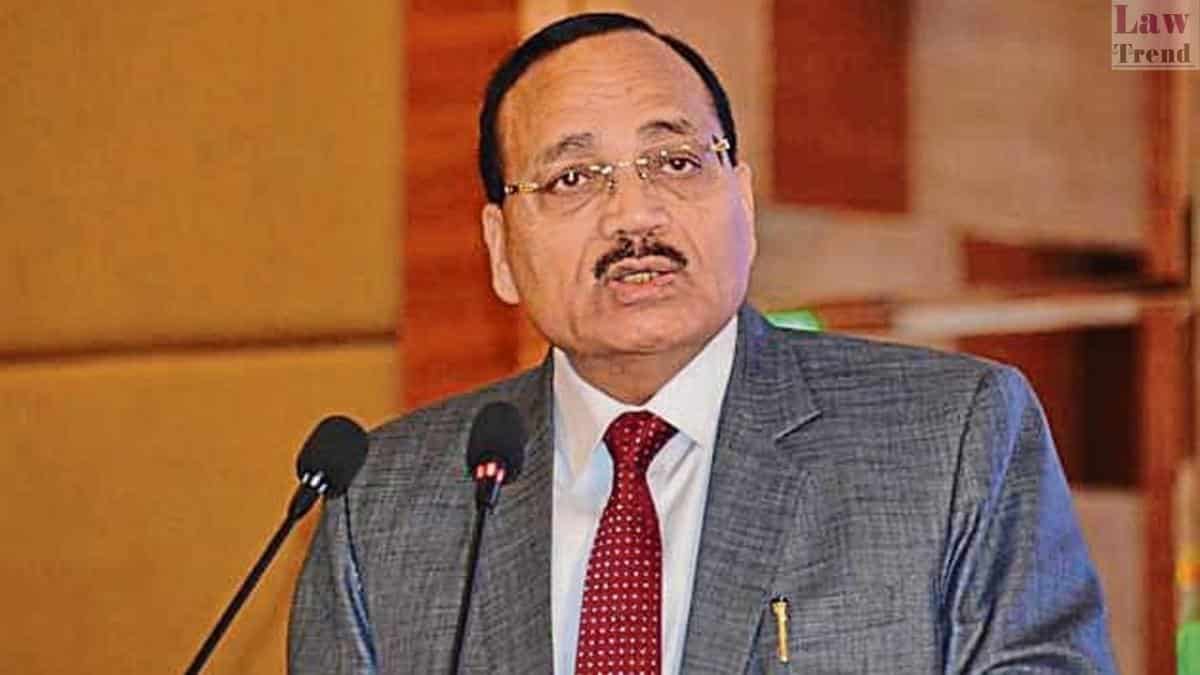
New judicial infrastructure aimed at expediting trials under anti-terror, narcotics, and organised crime statutes was launched in the national capital on Monday with the inauguration of Special Exclusive Courts by Chief Justice of India Surya Kant.
Located at the Rouse Avenue Court Complex, the newly established courts will exclusively adjudicate cases registered under the National Investigation Agency (NIA) Act, the Unlawful Activities (Prevention) Act (UAPA), the Narcotic Drugs and Psychotropic Substances (NDPS) Act, and the Maharashtra Control of Organised Crime Act (MCOCA).
Focus On Complex Statutory Offences
Addressing the gathering at the inauguration, Chief Justice Kant highlighted the necessity of dedicated judicial mechanisms for handling high-complexity prosecutions. He noted that matters falling under the NIA Act, UAPA, NDPS Act, and MCOCA frequently feature multi-jurisdictional elements, extensive documentary and electronic evidence, forensic records, national security implications, and multiple co-accused individuals.
According to the CJI, such trials demand uninterrupted judicial focus and specialized legal knowledge. He explained that when complex proceedings are repeatedly disrupted by competing cases on a court docket, adjournments become inevitable, trial momentum is lost, and the overall quality of adjudication suffers.
Addressing Systemic Delays And Trial Continuity
Chief Justice Kant emphasized that genuine access to justice requires not only the right to approach a court but also a guarantee that decisions will be delivered within a reasonable timeframe by appropriately equipped benches. Unreasonable delays, he stated, prolong uncertainty for crime victims, leave undertrial prisoners waiting indefinitely for decisions regarding their personal liberty, and lead to the degradation of evidence over time.
He added that modern judicial management has increasingly relied on specialized forums—such as commercial courts, family courts, fast-track courts, and dedicated tribunals—to address distinct legal challenges. The newly set up courts are designed to allow judges to cultivate domain expertise, maintain continuity during hearings, and streamline case management without compromising procedural fairness or due process rights.
Potential Model For National Judicial Reform
Observing that Delhi has historically served as a testing ground for judicial and administrative reforms later adopted nationwide, Chief Justice Kant expressed confidence that the Rouse Avenue initiative could serve as a national model. He noted that the lessons learned from these specialized courts could help reduce pending caseloads and ensure steady trial progress across other jurisdictions.
The CJI also called for active collaboration among all stakeholders in the legal system, including judges, prosecuting officers, investigating agencies, defense counsel, and court administrative staff, to ensure the effective functioning of the new courts.
The inauguration event was attended by Delhi High Court Chief Justice Devendra Kumar Upadhyaya, Justice Jyoti Singh, and Rouse Avenue Court Complex Principal District and Sessions Judge Dinesh Bhatt.




