

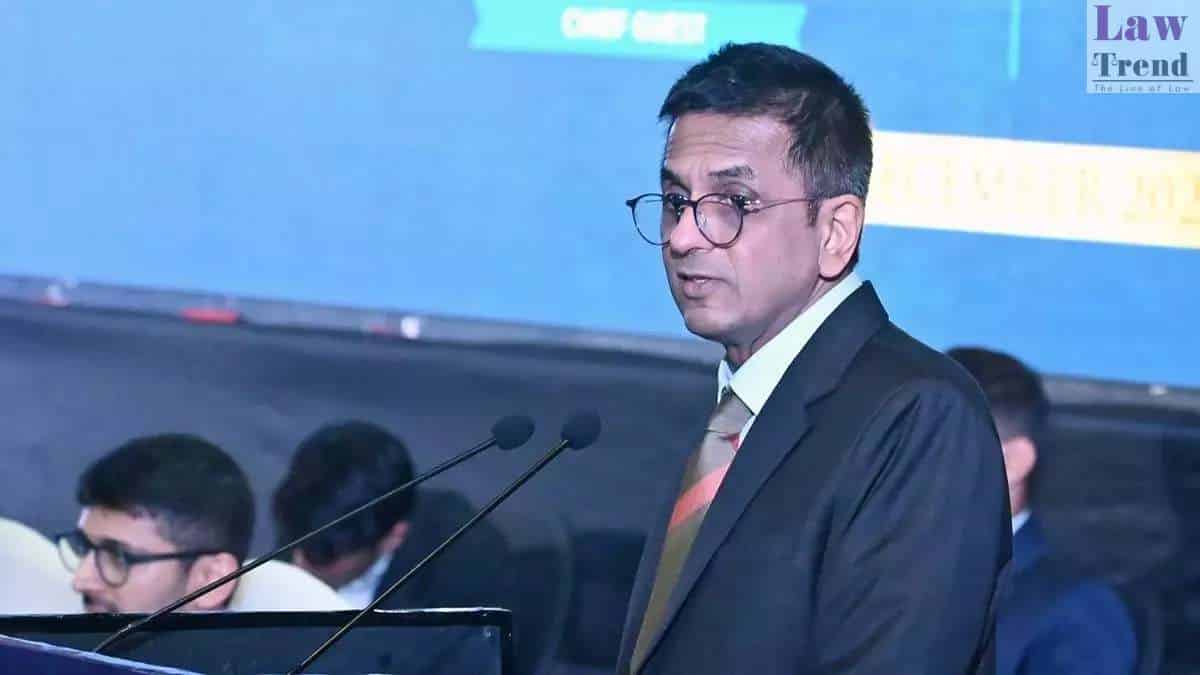
The authority of a retired judicial officer to interpret Hindu religious scriptures has been formally challenged in a legal notice sent to former Chief Justice of India Dhananjaya Y. Chandrachud. The legal action demands a public apology and a formal retraction of remarks he made regarding the participation of menstruating women in traditional rituals.
The notice, issued by Mumbai-based advocate Ghanshyam Upadhyaya, contends that Chandrachud utilized the prestige of his former constitutional office to advocate for religious reforms, thereby undermining established customs of Sanatan Dharma. Upadhyaya asserts that a retired judicial official does not possess the theological standing required to redefine or reinterpret traditional Hindu practices.
The legal dispute centers on comments Chandrachud delivered during a public interaction on May 28 in observation of Menstrual Hygiene Week. Recounting a personal experience from his son’s wedding, Chandrachud shared that he had advised his daughter-in-law to participate in a family Ganesh Utsav puja while menstruating. He told her at the time that physical impurity does not exist and that impurity is solely a state of mind, after which she joined the worship.
Theological Authority Challenged
Upadhyaya’s legal notice strongly objects to this stance, arguing that Chandrachud presented his private family decisions as a benchmark for reforming long-standing religious traditions. According to the notice, traditional practices observed by some Hindu women during menstruation are rooted in established scriptural frameworks—including Vedic, Smriti, and Agamic texts—rather than concepts of social exclusion, inferiority, or physical degradation.
The advocate argued that by publicly dismissing these customs as mere bodily misconceptions, the former Chief Justice’s comments ridiculed and devalued traditional religious beliefs.
Potential Impact On Active Litigation
The notice also raises concerns regarding the potential influence of Chandrachud’s public statements on active judicial matters. It calls on the former Chief Justice to formally clarify that his remarks were not intended to impact or influence ongoing proceedings before the Supreme Court of India, particularly the highly sensitive disputes regarding temple entry rights, such as the Sabarimala case.
Furthermore, Upadhyaya has urged the retired jurist to exercise restraint and refrain from making similar public statements in media interviews, speeches, or on social media platforms that could spark theological controversies. The notice emphasizes that faith-based practices should not be campaigned against by former high-ranking judicial figures while those very matters remain under active court review.
To date, Chandrachud has not issued a public response to the legal notice. The confrontation underscores a persistent and sensitive debate in India regarding the boundaries between personal progressive values, judicial influence, and traditional religious practices.




