

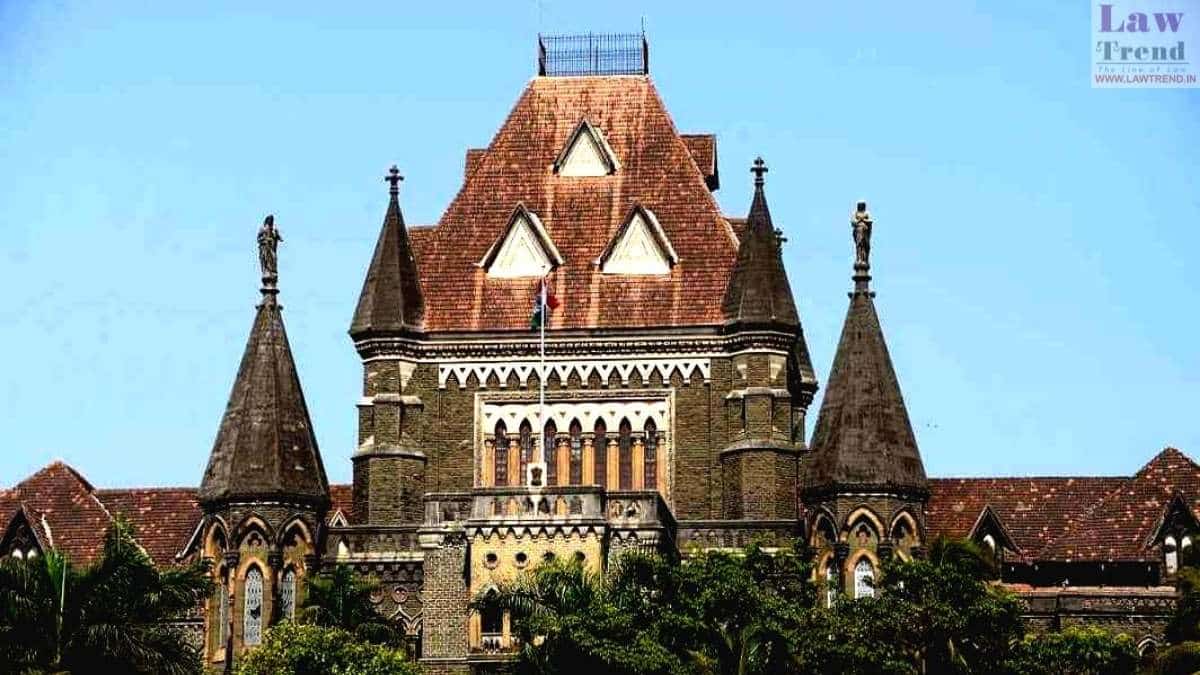
The Bombay High Court has delivered a landmark ruling affirming that a Hindu widow’s right to adopt a child under the Hindu Adoptions and Maintenance Act (HAMA), 1956, is entirely independent and does not require prior authorization or consent from her deceased husband.
In a May 22 order, Justice Rohit W Joshi settled a complex legal question that has lingered for over four decades, declaring that post-1956 statutory laws completely override ancient customary restrictions.
“The consequence of adoption is that the adopted child becomes the child of the adopted mother, i.e., the widow, as well as her deceased husband, who statutorily becomes the adoptive father of the adopted child from the date of adoption,” the Court observed. “The adoption cannot be for the widow herself or only for the husband of the widow.”
The Core of the 42-Year Legal Battle
The high-stakes dispute originated in 1984, centering on ancestral properties of a man who passed away in 1935 without issue, leaving behind his widow. Decades later, in 1971, the widow adopted a boy through a registered deed.
The validity of this adoption was challenged by the children of the deceased man’s sister. They sought to be declared the absolute owners of the ancestral property, arguing that the family was governed by the strict tenets of the Banaras School of Hindu Law. Under this traditional school, a widow could only adopt a child if she had been granted express, prior authorization by her late husband.
However, the adopted son (the respondent) maintained that the adoption was fully valid, noting that all necessary rituals had been meticulously observed and documented in the 1971 deed. He argued that because the adoption took place after the enactment of HAMA in 1956, the old customary rules of Hindu law no longer applied.
How Modern Law Overrides Ancient Custom
In its ruling, the Bombay High Court dismantled the petitioners’ arguments by highlighting the legislative transition from customary Hindu law to codified statutory law:
- Overriding Authority of HAMA: The Court noted that Section 4 of HAMA specifically provides an overriding effect (specifically referencing SA 234.15 and 143.15 – final provisions of the Act) over any prior text, rule, custom, or interpretation of Hindu law.
- The Power of Section 8: Section 8 of the Act explicitly empowers any unmarried or widowed Hindu woman to adopt a child. Crucially, the statute does not contain any requirement for prior husband authorization.
- The Rule of Section 5: Under Section 5, all adoptions made after the commencement of the Act must strictly comply with HAMA’s statutory provisions, rendering older customary limitations obsolete.
Furthermore, the Court addressed Section 12 of the Act, which establishes that an adopted child is legally transplanted into the adoptive family, severing all biological ties and assuming the status of a legal child of both the adoptive mother and her deceased husband from the date of adoption.
Deciphering the Adoption Deed
The petitioners also attempted to challenge the phrasing of the 1971 adoption deed. In the document, the widow wrote that she was adopting the boy “to continue the name and family of her husband.” The petitioners argued this proved she was adopting strictly for her late husband rather than herself.
Justice Joshi rejected this interpretation, agreeing with the trial court’s original assessment. The High Court clarified that these words merely explained her personal motivation for the adoption rather than placing a legal condition on the act itself. The text of the deed did not indicate that she was acting outside her statutory rights as an independent adoptive parent.
A Call for Expeditious Closure
While upholding the validity of the adoption and dismissing the challenge, the Bombay High Court noted with concern that the litigation has been dragging on since 1984.
To bring an end to the multi-decade dispute, Justice Joshi has directed the Nagpur-based trial court to decide the outstanding claims for property partition as expeditiously as possible. This brings the long-standing case, which previously saw a Nagpur district judge’s decree challenged under Section 100 of the Code of Civil Procedure in November 2014, one step closer to final resolution.




