

Candidate Facing Serious Criminal Charges Unsuitable For Appointment In Disciplined Force Like Police: Allahabad High Court
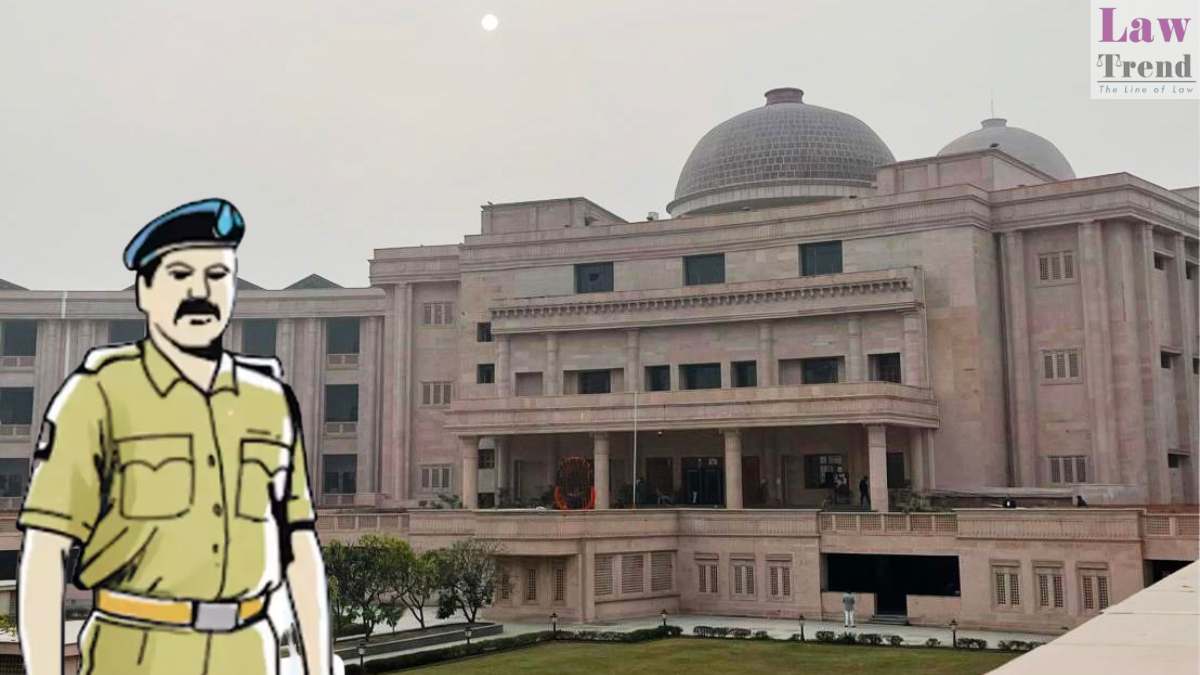

The High Court of Judicature at Allahabad, Lucknow Bench, has ruled that a candidate facing serious criminal charges cannot be deemed suitable for appointment in a disciplined force such as the civil police, even if they have truthfully disclosed the pendency of those cases during the application process.

The Court dismissed a writ petition filed by a candidate challenging the cancellation of his selection for the post of Constable (Civil Police). Justice Amitabh Kumar Rai held that the appointing authority has the duty and right to independently assess the character and suitability of a candidate, and a person with serious criminal antecedents does not meet the high standard of integrity and rectitude required for the police force.

Background of the Case

The petitioner, Shekhar, applied for the post of Constable (Civil Police) following an advertisement issued by the Uttar Pradesh Police Recruitment and Promotion Board (“Recruitment Board”). He participated in the selection process, was selected, and was recommended by the Recruitment Board for appointment.

During the subsequent police verification, it was revealed that Charge Sheet No. 140 of 2021 had been filed against him. This arose from an FIR registered on January 13, 2021, as Case Crime No. 0018 of 2021 under Sections 392, 411, 34, and 201 of the Indian Penal Code (IPC) at Police Station Kandhai, District Pratapgarh. It was also found that the petitioner was facing Case Crime No. 0156 of 2021 under Sections 2 and 3 of the Uttar Pradesh Gangsters and Anti-Social Activities (Prevention) Act, 1986.

The petitioner had disclosed the pendency of these two criminal cases in his application form. On May 21, 2025, the Superintendent of Police, Pratapgarh, sent a letter to the District Magistrate, Pratapgarh, seeking an opinion on the petitioner’s suitability in light of Government Order No. 4694/1-B-321-1947 dated April 28, 1958.

The District Magistrate, Pratapgarh, vide letter dated June 9, 2025, opined that because serious charges were levelled and charge sheets had already been filed, it would not be appropriate to appoint the petitioner. Consequently, by an office letter dated July 10, 2025, the Superintendent of Police, Ghazipur (the appointing authority), cancelled the selection and candidature of the petitioner on the grounds of unsuitability. The petitioner subsequently filed the instant writ petition to challenge this cancellation order.

Arguments of the Parties

Petitioner’s Submissions

The counsel for the petitioner argued that the mere pendency of criminal cases is not a valid ground to deny appointment, particularly when there was no suppression of facts and the candidate had truthfully disclosed the cases in his application.

READ ALSO  Misdiagnosis Cannot Be Construed as Medical Negligence on Part of Doctor: Gujarat HC

To support this contention, the petitioner’s counsel relied upon the following judgments of the Hon’ble Supreme Court:

  • Avtar Singh v. Union of India, (2016) 8 SCC 471
  • Ravindra Kumar v. State of U.P. and others (Civil Appeal No. 5902 of 2012, decided on February 22, 2024)

Respondents’ Submissions

The learned Standing Counsel for the State argued that the petitioner was rightly declared unsuitable given the serious nature of the offences. He relied upon paragraph 38 of the Supreme Court’s decision in Avtar Singh (supra) to maintain that candidates for a disciplined force must meet rigorous character standards.

The Recruitment Board, in its counter affidavit, clarified that its responsibility concluded with the declaration of the final result on March 13, 2025, and the forwarding of the select list to the Director General of Police, Uttar Pradesh, for further action. It stated that the selection process was governed by the Uttar Pradesh Civil Police Constable & Head Constable Service Rules, 2015 (as amended in 2017). Under Rule 16 of these rules, the appointing authority is mandated to verify character and may declare a candidate unfit upon finding adverse material.

Court’s Analysis and Cited Laws

The High Court framed the core issue as whether a candidate can be held unsuitable for appointment due to the pendency of criminal cases that are serious in nature but have yet to be proven in trial.

The Court referred to multiple legal provisions and judicial precedents:

  1. Government Order Dated April 28, 1958: The Court analyzed the historical and binding nature of G.O. No. 4694-II-B-321-1947, which outlines the procedure for character verification at first appointment. Paragraph 2 of this order provides:
    “The character of candidate for direct appointment must be such as to render him suitable in all respects for employment in the service or post to which he is to be appointed. It would be the duty of the appointing authority to satisfy itself on the point.” Paragraph 3(d) of the G.O. directs the appointing authority to refer cases to the District Magistrate and police authorities.
  2. Rule 11 of the Uttar Pradesh Civil Police Constable & Head Constable Service Rules, 2015: The Court highlighted Rule 11, which mandates:
    “Character-The character of a candidate for direct recruitment to a post in the service must be such as to render him suitable in all respect for employment in Government Service. The appointing authority shall satisfy itself on this point.”
  3. Ram Kumar v. State of U.P. and Others, (2011) 14 SCC 709: The Court noted that the appointing authority must satisfy itself regarding the suitability of the candidate and apply its independent mind.
  4. Avtar Singh v. Union of India, (2016) 8 SCC 471: The Court analyzed the guidelines laid down in Paragraph 38. It noted that under Paragraph 38.6, an employer may, in its discretion, appoint a candidate during the pendency of a case of a “trivial nature”. However, because the allegations against Shekhar involved robbery and gangster activities, they could not be categorized as trivial.
  5. Satish Chandra Yadav v. Union of India, (2023) 7 SCC 536: The Court cited Paragraph 93 of this judgment, emphasizing the heightened scrutiny required for the police force:
    “Each case should be scrutinised thoroughly by the public employer concerned, through its designated officials more so, in the case of recruitment for the Police Force, who are under a duty to maintain order, and tackle lawlessness, since their ability to inspire public confidence is a bulwark to society’s security.” The Supreme Court in Satish Chandra Yadav also affirmed that even if a candidate makes a truthful declaration of a criminal case, the employer retains the right to consider antecedents and cannot be compelled to make an appointment.
  6. Union of India v. Methu Meda, (2022) 1 SCC 1: The Court observed that those wishing to join a disciplined force must have impeccable credentials:
    “the respondent who wishes to join the police force must be a person of utmost rectitude and have impeccable character and integrity. A person having criminal antecedents would not be fit in this category.”

Applying these principles, the High Court observed that the charges against the petitioner were of a serious nature and that charge sheets had already been filed. The District Magistrate, Pratapgarh, had afforded the petitioner an opportunity of a hearing before arriving at his adverse conclusion.

READ ALSO  Effect and Operation of Any Interim Order Passed Is Wiped Out at the Passing of the Final Order: Allahabad HC

Decision of the Court

The High Court found no illegality in the cancellation of the petitioner’s selection. Dismissing the writ petition, the Court held:

“The post in question pertains to a disciplined force and therefore, a candidate facing serious criminal charges cannot be considered suitable for such appointment.”

The Court added:

“A person having criminal antecedents relating to serious charges cannot fit in this category. Even if the petitioner is acquitted or discharged after the conclusion of trial, it cannot be presumed at this stage that he would be honourably acquitted.”

The Court concluded that the procedure prescribed under the Government Order dated April 28, 1958, was followed in letter and spirit. The Superintendent of Police, Ghazipur, as the appointing authority, acted rightly in concurring with the recommendation of the District Magistrate, Pratapgarh, and cancelling the selection.

The writ petition was dismissed. No order as to costs was made.

READ ALSO  इलाहाबाद हाई कोर्ट के 6 जज होंगे 2022 में सेवानिवृत्त- पढ़िए पूरी रिपोर्ट

Case Details

  • Case Title: Shekhar v. State of U.P. Thru. Prin. Secy. Home Deptt. Lko. and 4 others
  • Case No.: WRIT – A No. 10936 of 2025
  • Bench: Justice Amitabh Kumar Rai
  • Date: May 15, 2026

Law Trend
Law Trendhttps://lawtrend.in/
Legal News Website Providing Latest Judgments of Supreme Court and High Court

Related Articles

Latest Articles

