

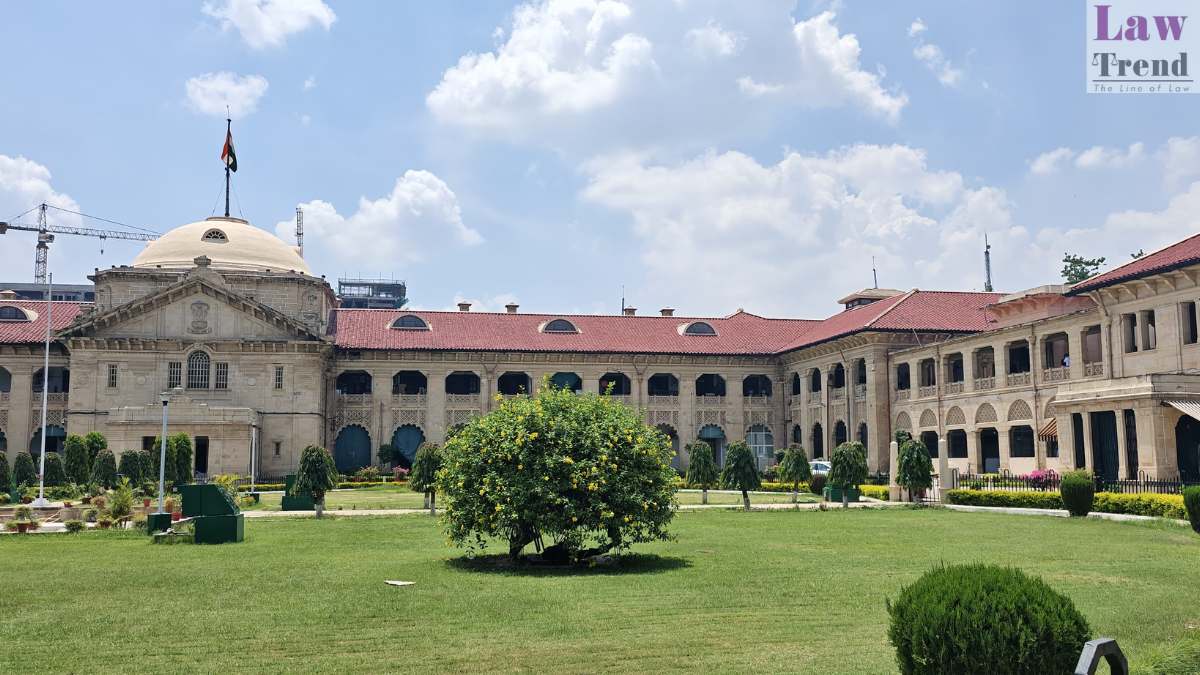
The Allahabad High Court has issued a scathing critique of the Uttar Pradesh Police’s approach to citizen security, asserting that the state’s primary responsibility is the preservation of human life rather than the mere prosecution of criminals after a tragedy has occurred.
In a strongly worded observation, a division bench comprising Justice J J Munir and Justice Tarun Saxena stated that the sensitivity of law-and-order agencies toward protecting lives has “always been low and continues to be so.”
The court’s remarks came during the hearing of a writ petition filed by Nankaram, a resident of Badaun. Nankaram approached the court seeking police protection and the registration of an FIR, citing a “severe” danger to his life from five individuals involved in a family land dispute.
The petitioner moved the High Court after receiving what he described as an “indifferent” response from local authorities. On April 6, the court directed Badaun Senior Superintendent of Police (SSP) Ankita Sharma to file a personal affidavit evaluating Nankaram’s threat perception and detailing the security measures provided.
Upon reviewing the SSP’s affidavit on May 4, the bench expressed deep dissatisfaction, labeling the document “elusive.” The court noted that the affidavit focused primarily on the origins of the land dispute and cited preventive actions taken under sections 170, 126, and 135 of the Bharatiya Nagarik Suraksha Sanhita (BNSS) against both parties.
The bench criticized the police for leaving the assessment of a life-and-death matter to lower-level officials, remarking that the understanding of the threat was likely “entrusted to the wisdom of some ‘Daroga’ to fathom.”
While the SSP’s affidavit mentioned that an FIR had been registered, a chargesheet filed, and beat constables directed to patrol the village, the court found these measures inadequate for a specific threat to life.
The bench drew a sharp distinction between maintaining general peace and addressing a specific threat to an individual’s life.
“The happening of an offence is one thing, the maintenance of peace another. But the threat perception alleged by the petitioner to his life is quite different,” the bench observed.
The judges underscored that if the petitioner were to be shot or assaulted, the initiation of standard security proceedings would be a futile exercise. “Punishing the offenders is completely different… and that, by itself, does not save a human life. It does only in theory by deterring future crimes, which experience dictates, hardly deters,” the court added.
Describing the SSP’s response as “far below standard,” the High Court has ordered the officer to file a fresh affidavit. This new document must explicitly outline specific security measures intended to protect the petitioner from potential harm, which the court noted “does not have a calendar or schedule.”
The court stated that proactive measures by the police would spare the judiciary from the “unpleasant task” of issuing direct security orders. The matter is scheduled for its next hearing on May 13.




