

Capital Punishment Can Be Imposed Only in ‘Rarest of Rare’ Cases, Otherwise Commuted to Natural Life: Chhattisgarh High Court
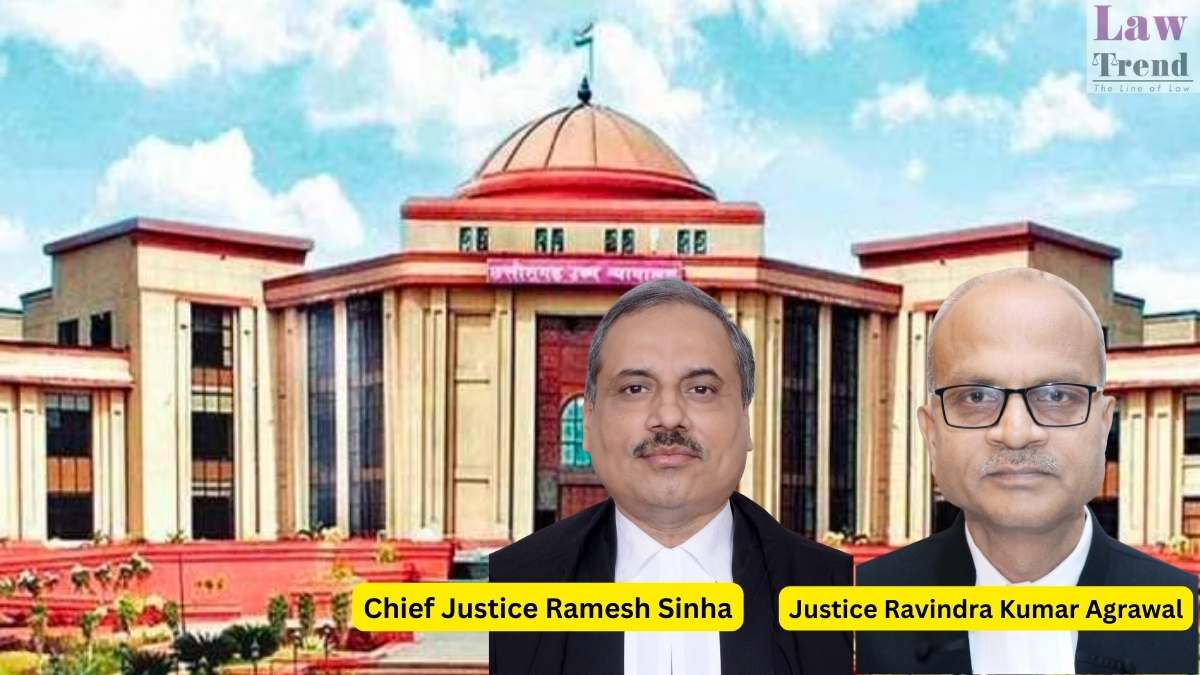

The High Court of Chhattisgarh has ruled that capital punishment can be imposed only in the “rarest of rare” cases. Where this stringent threshold is not met, the sentence of death is required to be commuted to imprisonment for life, with a further direction that such imprisonment shall continue for the entirety of the convict’s natural life. Applying this legal principle, the Court upheld a man’s conviction for kidnapping, rape, and murder, but commuted his death sentence.

Background

The case stems from the disappearance of a 25-year-old woman employed as a peon in the Family Court at Bemetara. She went missing on August 14, 2022, after leaving her native village on her Scooty. Her body was later recovered from the secluded forest area of Palgada Ghat. The accused, Shankar Nishad, who was known to the victim, was arrested after an investigation revealed he was the last person seen with her.

On December 16, 2025, the Special Judge under the Scheduled Castes and Scheduled Tribes (Prevention of Atrocities) Act in Janjgir-Champa convicted Nishad under Sections 364 (kidnapping in order to murder), 376 (rape), and 302 (murder) of the Indian Penal Code (IPC), awarding him the death penalty. The matter was subsequently placed before the High Court for confirmation of the death sentence, alongside an appeal filed by the accused challenging his conviction and sentence.

Arguments of the Parties

During the appellate proceedings, the defense counsel argued that the trial court mechanically awarded the extreme penalty of death without undertaking a structured sentencing analysis or balancing aggravating and mitigating circumstances. The defense challenged the conviction, arguing that the prosecution’s case rested solely on circumstantial evidence with serious gaps—particularly emphasizing the absence of DNA profiling to scientifically establish the charge of rape. Furthermore, the defense contended that the electronic evidence, including CCTV footage and Call Detail Records (CDRs), was inadmissible as it was not proved in strict compliance with the mandatory certification requirements under Section 65B of the Indian Evidence Act.

The State countered that the case fell squarely within the “rarest of rare” category, characterizing the crime as heinous, barbaric, and executed in a cold-blooded manner. The prosecution maintained that an unbroken chain of circumstances—including the “last seen together” testimonies, CCTV footage, CDRs placing the accused at the crime scene, and the recovery of the victim’s body at the behest of the accused—conclusively established his guilt beyond a reasonable doubt.

READ ALSO  Cheque Bounce Case Can Be Compounded Even After Conviction if Parties Settle: Madras High Court

Court’s Analysis

A Division Bench comprising Chief Justice Ramesh Sinha and Justice Ravindra Kumar Agrawal meticulously analyzed the evidence. The Court found that the prosecution had successfully established a complete and unbroken chain of circumstantial evidence.

Relying on Supreme Court precedents including Anvar P.V., Arjun Panditrao Khotkar, and Pooranmal, the Court concluded that the statutory requirements under Section 65B of the Indian Evidence Act had been fully complied with. The CCTV footage showing the accused taking the victim toward the forest and returning alone, alongside corroborating CDRs, was deemed legally admissible and of high probative value.

READ ALSO  Sec 5 Limitation Act Applies to Proceedings Under Railway Claim Tribunal Act, 198: Allahabad HC

Regarding the charge of sexual assault under Section 376 IPC, the Court noted that while the post-mortem report did not record explicit genital injuries or semen, the surrounding circumstances led to an irresistible inference of rape. The Court observed that the victim was taken to a secluded place, and the medical findings indicated signs of forceful restraint, struggle, and violent physical overpowering prior to her death by strangulation.

The ‘Rarest of Rare’ Threshold

On the question of the death penalty, the Court disagreed with the trial court’s application of the doctrine laid down in the Bachan Singh and Machi Singh cases. Highlighting the stringent threshold required for capital punishment, the High Court observed:

“although the offence committed by the accused is undoubtedly grave, heinous, and socially abhorrent, it does not meet the exceptionally high threshold required for invocation of the “rarest of rare” doctrine as propounded in Bachan Singh… The doctrine mandates not merely an assessment of the brutality or gravity of the crime, but a far deeper and more nuanced judicial inquiry into whether the alternative option of life imprisonment is unquestionably foreclosed.”

The Court found that the trial court had failed to record any cogent reason as to why life imprisonment would be inadequate. Furthermore, the Court noted the absence of material indicating the accused was beyond the possibility of reformation or posed a continuing threat to society.

READ ALSO  यौन उत्पीड़न पीड़ितों की गवाही का मूल्यांकन करते समय अदालतों को संवेदनशील, यथार्थवादी दृष्टिकोण अपनाना चाहिए: छत्तीसगढ़ हाईकोर्ट

Decision

The High Court partly allowed the criminal appeal, affirming the conviction of the appellant under Sections 364, 376, and 302 IPC. However, relying on the Supreme Court’s approach in Swamy Shraddananda (2), the Court rejected the death reference and commuted the capital punishment to ensure the sentence conformed with the principle that life imprisonment must span the entirety of the convict’s natural life when the rarest of rare threshold is not met.

The Court ruled: “the sentence of death is commuted to imprisonment for life… the sentence of life imprisonment shall mean imprisonment for the remainder of the natural life of the appellant, without remission, subject to the constitutional powers of clemency vested in the appropriate authority.”

Case Details
  • Case Title: In Reference of State of Chhattisgarh Versus Shankar Nishad / Shankar Nishad Versus State of Chhattisgarh
  • Case No.: CRREF No. 4 of 2025 / CRA No. 193 of 2026
  • Bench: Chief Justice Ramesh Sinha, Justice Ravindra Kumar Agrawal
  • Date: 01.05.2026

Law Trend
Law Trendhttps://lawtrend.in/
Legal News Website Providing Latest Judgments of Supreme Court and High Court

Related Articles

Latest Articles

