The Supreme Court of India has set aside a Delhi High Court order that had modified the ‘dismissal from service’ of a Senior Manager to ‘compulsory retirement’. The Court held that a high-ranking bank official cannot claim parity in punishment with lower-ranking co-delinquents, emphasizing that “the greater the trust reposed, the stricter the scrutiny imposed.”
Background
The respondent, Sh. Raj Kumar, joined Punjab & Sind Bank (P&SB) as a Clerk/Cashier in 1987. By December 2011, he had risen to the post of Senior Manager (MMGS-III Scale) when he was placed under suspension. Following an inquiry conducted under the Punjab and Sind Officer Employees’ (Conduct) Regulations, 1981, he was dismissed from service on November 25, 2024.
The allegations involved connivance with an officer and a gunman to misappropriate customer funds and steal bank records. While the respondent was dismissed, the co-delinquent gunman was awarded ‘compulsory retirement’ and the co-delinquent officer received a punishment of “lowering by two stages” in pay.
The respondent challenged the quantum of punishment before the High Court, arguing discrimination under Article 14 of the Constitution. A Single Judge of the Delhi High Court allowed the petition, converting the dismissal to ‘compulsory retirement’ on the grounds of parity, a decision later affirmed by a Division Bench.
Arguments of the Parties
Counsel for the Bank, Mr. Rajesh Kumar Gautam, argued that the High Court’s interference with the punishment was contrary to settled legal principles.
In contrast, Mr. G.S. Chaturvedi, representing the respondent, contended that the respondent faced “invidious discrimination.” He further pointed to a previous observation by the High Court suggesting the respondent might have deposited misappropriated funds under pressure, though this plea on merits was largely abandoned during the hearings.
Court’s Analysis and Observations
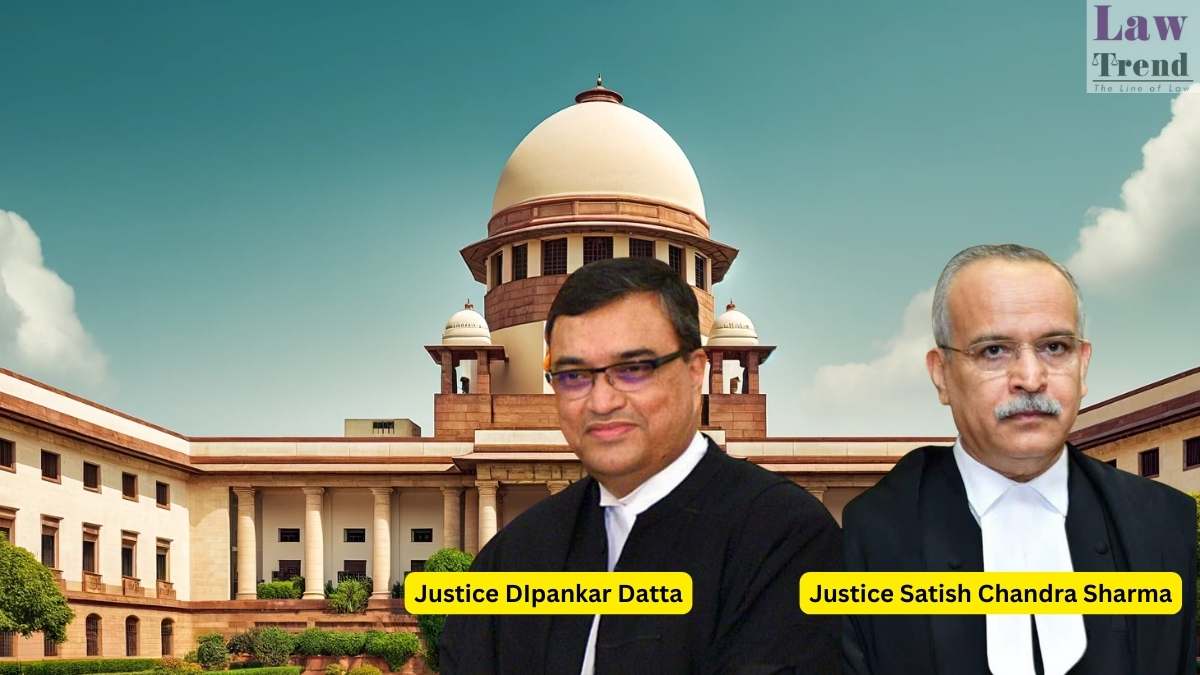
A Bench comprising Justice Dipankar Datta and Justice Satish Chandra Sharma examined whether the High Court was justified in interfering with the disciplinary authority’s discretion.
On Judicial Review of Punishment
The Court noted that judicial interference in the choice of punishment is warranted only if it “shocks the conscience of the court” or is in “outrageous defiance of logic.” Referring to Ranjit Thakur v. Union of India (1987) and B.C. Chaturvedi v. Union of India (1995), the Bench observed:
“Interference could be warranted if it appeals to the court that the disciplinary authority has ‘used a sledgehammer for cracking a nut’.”
Rejecting the Principle of Parity
The Court categorically rejected the High Court’s application of the ‘parity’ principle in this case. It noted that the respondent held a significantly higher rank than the other co-delinquents.
“Authority carries accountability; higher the authority, higher the accountability. The rank of the respondent was not merely titular; it carried with it an increased degree of responsibility and integrity.”
The Bench further remarked:
“Equating a branch manager of a bank with its gunman seems to us to be in outrageous defiance of logic and reason.”
The Court distinguished this from cases like Sengara Singh v. State of Punjab (1983), noting that the differentiation in rank and the increased trust reposed in the respondent constituted a “compelling ground for a more stringent punishment.”
Decision
The Supreme Court concluded that the punishment of dismissal was neither disproportionate nor irrational given the gravity of the misconduct and the respondent’s position.
“We have, therefore, reached the irresistible conclusion that interference by the Single Judge with the decision of the disciplinary authority, since affirmed by the Division Bench vide the impugned order, was uncalled for,” the Bench held.
The Court allowed the appeal, set aside the High Court’s orders, and restored the original punishment of ‘dismissal from service’ imposed by the Bank.
Case Details:
- Case Title: Punjab & Sind Bank vs. Sh. Raj Kumar
- Case Number: Civil Appeal No. 847 of 2026 (2026 INSC 313)
- Bench: Justice Dipankar Datta, Justice Satish Chandra Sharma
- Date: April 02, 2026