

Father Cannot Force Impleadment of Mother in Maintenance Case, But Court Must Consider Both Incomes: Allahabad High Court
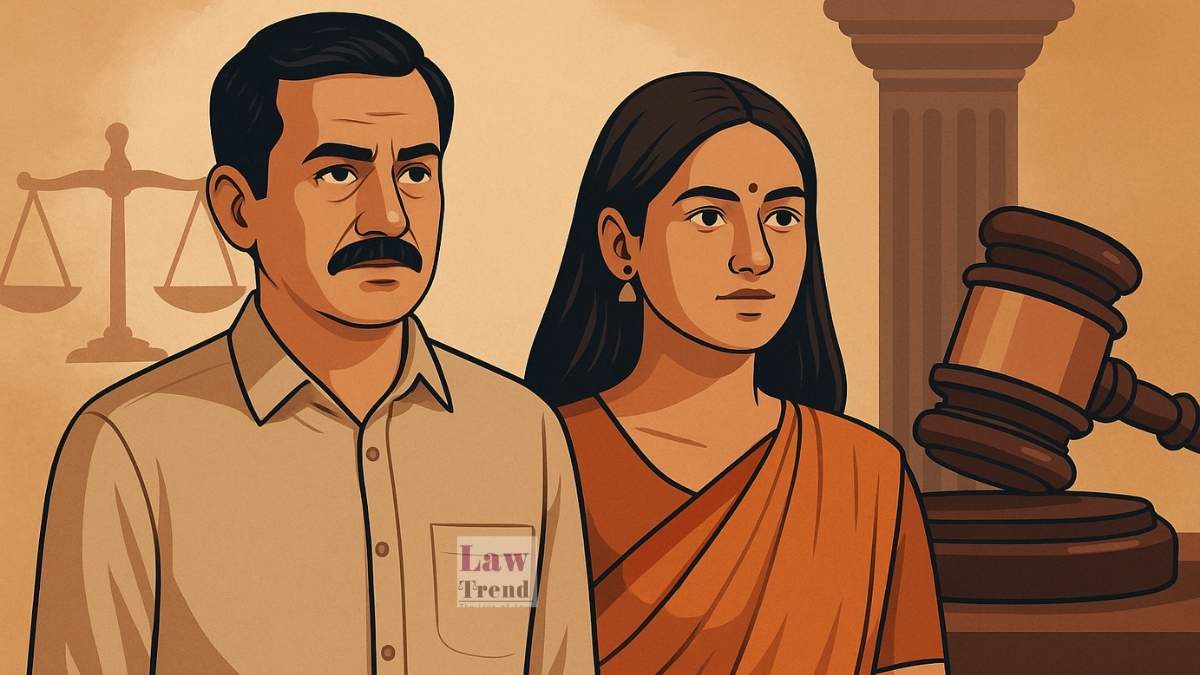

The High Court of Judicature at Allahabad has dismissed a criminal revision filed by a father seeking to implead the mother of a minor child as a party in maintenance proceedings. While the Court upheld the Family Court’s decision to reject the impleadment application, it observed that the financial capacity of both parents must be considered when determining the quantum of maintenance.

The order was passed by Justice Madan Pal Singh, in a revision challenging an order dated August 6, 2025, passed by the Principal Judge, Family Court, Azamgarh.

Background of the Case

The case originated from an application for maintenance filed on behalf of a minor child, Km. Rittika, through her maternal grandfather against her father, Arvind Kumar, under Section 144 of the Bharatiya Nagarik Suraksha Sanhita (B.N.S.S.).

During the proceedings, the father moved an application seeking to implead the child’s mother, Smt. Poonam, as a party. He argued that maintenance is a joint responsibility. The Family Court rejected this application on August 6, 2025, leading to the present revision before the High Court.

Arguments of the Parties

For the Revisionist (Father): Learned counsel Sri Ravindra Kumar Mishra contended that the minor child is the daughter of the revisionist and Smt. Poonam. He submitted that while the revisionist earns approximately ₹41,000 per month as a Railway Clerk, the mother earns about ₹55,000 per month as a Police Constable. Relying on the Supreme Court judgment in Chandu Sridevi vs. Chandu Sesha Rao, he argued that since both parents are earning, the liability to maintain the child is a “joint and shared responsibility.”

READ ALSO  भर्ती की पवित्रता भ्रष्टाचार से बचाई जानी चाहिए: इलाहाबाद हाईकोर्ट

For the Opposite Party (Child/State): Sri C.B. Singh, appearing for the opposite party no. 2, argued that the claimant is the “master of the proceedings” (Dominus Litis) and is entitled to choose the parties against whom relief is sought. He further contended that the father cannot evade his statutory obligation to maintain his child by insisting on the mother’s impleadment.

Court’s Analysis

The Court noted that the Family Court had rejected the impleadment primarily because there is no specific provision in the criminal procedure for such impleadment as contemplated under Order I Rule 10 of the CPC, and because the proceedings are summary in nature.

READ ALSO  Voluntary Retirement and Resignation Are Distinct; Employee Cannot Claim Benefits of One While Opting for the Other: Supreme Court

Affirming the principle of Dominus Litis, Justice Madan Pal Singh observed:

“It is a settled principle of law that the person initiating a legal proceeding has the absolute prerogative to choose the parties against whom they seek relief. Merely because the mother of the minor child is also earning does not absolve the father from his statutory obligation to maintain the child.”

The Court further emphasized that the father’s liability is both a “legal and moral obligation” and cannot be postponed by insisting on the mother’s presence as a party.

However, the Court also took note of the legal position established by the Apex Court regarding dual-income households:

“At the same time, this Court cannot lose sight of the legal position that when both parents are earning members, the responsibility of maintaining the child is a shared and joint responsibility…”

The Decision

The High Court found no “illegality, perversity or jurisdictional error” in the Family Court’s order and dismissed the revision.

READ ALSO  Allahabad HC Bar Association Objects to Supreme Court’s Remarks on High Court Judge’s Bail Record

However, the Court issued a significant clarification for the final determination of the case. It directed the Family Court that while deciding the main maintenance application, it must:

  1. Take into consideration the income and financial capacity of both parents.
  2. Determine the maintenance amount in a “just and reasonable manner.”
  3. Keep in view the principle of “shared parental responsibility” and the welfare of the child.

The trial court was directed to proceed with the matter expeditiously and decide the application uninfluenced by the High Court’s observations, except regarding the consideration of both parents’ incomes.

Case Details:

  • Case Title: Arvind Kumar vs. State of U.P. and Another
  • Case Number: Criminal Revision No. 5048 of 2025
  • Bench: Justice Madan Pal Singh
  • Date: March 10, 2026

Law Trend
Law Trendhttps://lawtrend.in/
Legal News Website Providing Latest Judgments of Supreme Court and High Court

Related Articles

Latest Articles

