

Defect in Unsigned Charge Is Curable Irregularity; De Novo Trial Not Warranted Without Prejudice: Supreme Court
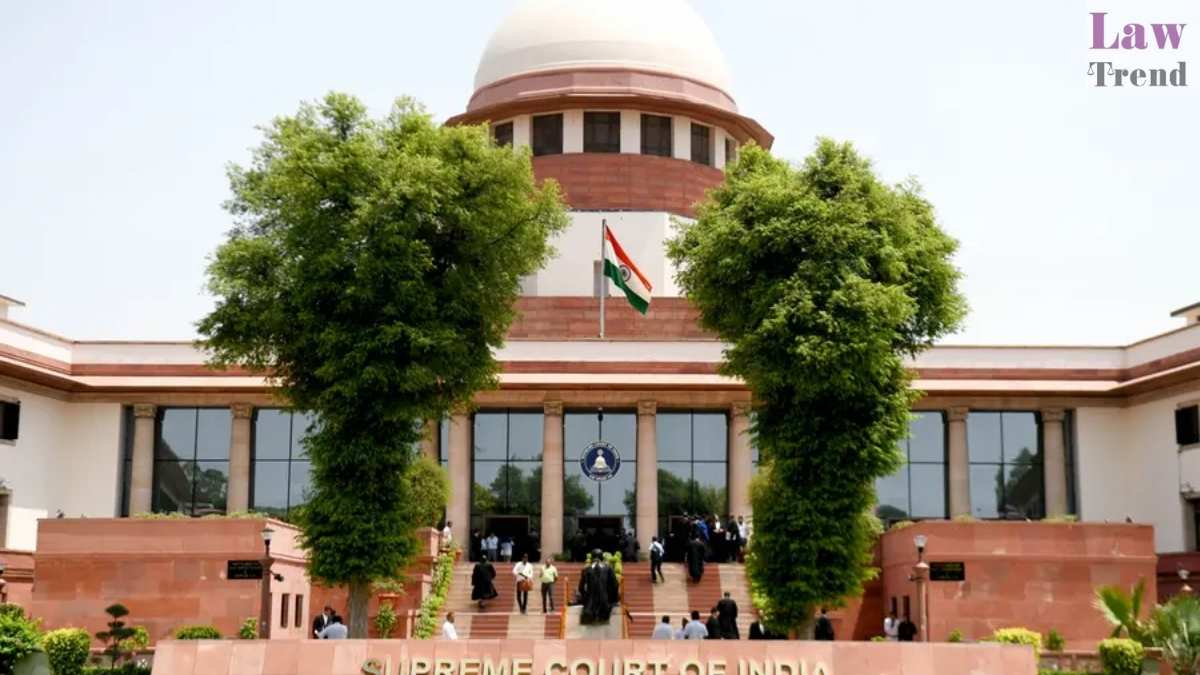

The Supreme Court of India has held that a procedural lapse, such as the omission of signatures on a formally framed charge, does not constitute a fundamental illegality vitiating a criminal trial. The Court emphasized that such defects are curable under the Code of Criminal Procedure (Cr.P.C.) unless they result in a “failure of justice.”

A Bench comprising Justice Ahsanuddin Amanullah and Justice R. Mahadevan set aside an order by the Allahabad High Court that had directed a de novo (fresh) trial in a 19-year-old murder case. The Supreme Court restored the trial court’s order to proceed from the current stage, noting that directing a fresh trial after 14 years of evidence recording—and the death of crucial witnesses—would defeat the ends of justice.

Background of the Case

The case originated from an FIR registered on January 4, 2007, involving offences under Sections 147, 148, 149, 307, 302, and 120B of the Indian Penal Code (IPC) and Section 7 of the Criminal Law Amendment Act. The prosecution alleged that nine accused persons opened fire over a land dispute, resulting in injuries and the death of one Nahar Singh.

In 2009, the trial court prepared a formal charge. However, the document remained unsigned on the first date due to the absence of one accused. On June 1, 2009, the court recorded that charges were framed in the presence of all accused and their counsel. The trial proceeded for over 14 years, with extensive cross-examination of prosecution witnesses.

READ ALSO  Deposit Condition Under NI Act Cannot Be Imposed Mechanically, Requires Reasoned Justification: Delhi High Court

In 2024, at the stage of recording statements under Section 313 Cr.P.C., it was noticed that the formal charge document had inadvertently remained unsigned. The trial court framed fresh charges on September 11, 2024, to cure the defect but allowed the prosecution’s application to proceed based on existing evidence. The Allahabad High Court, however, quashed this and ordered a fresh trial under Sections 241 and 242 Cr.P.C.

Arguments of the Parties

The Appellant (son of the deceased) and the State of Uttar Pradesh argued that the accused were fully aware of the charges and had participated in the trial for over a decade. They contended that a de novo trial would “irretrievably prejudice” the prosecution as two key eyewitnesses had passed away. They relied on Section 464 Cr.P.C., asserting that errors in charges are curable.

The Respondents (Accused) contended that the absence of signatures and the failure to strictly follow Section 228 Cr.P.C. (framing of charge) was a “patent illegality” that could not be cured. They argued that once fresh charges were framed in 2024, they had a statutory right to a fresh trial and the opportunity to seek discharge.

READ ALSO  सुप्रीम कोर्ट ने फिल्म 'फैन' के निर्माताओं को राहत दी: ट्रेलर में दिखाई गई सामग्री का फिल्म में न होना 'सेवा में कमी' नहीं

Court’s Analysis and Observations

The Supreme Court identified the core issue as whether the defect in signing charges constituted a “jurisdictional illegality” or a “curable irregularity.”

1. Substantial Compliance vs. Ritualistic Formality The Court observed that the purpose of a charge is to give the accused notice of the accusations. Referring to the Constitution Bench in Willie (William) Slaney v. State of Madhya Pradesh (1956), the Court stated:

“The Code is a code of procedure and, like all procedural laws, is designed to further the ends of justice and not to frustrate them by the introduction of endless technicalities.”

2. Absence of Prejudice The Bench noted that the accused had actively participated in the trial and cross-examined witnesses for 14 years. It held that the accused “must be” and not merely “may be” prejudiced for a trial to be vitiated.

“The omission of a signature on the charge, though a procedural lapse, does not render the proceedings invalid when the charge was in fact prepared, recorded, read over, and acted upon by the Court and the parties.”

3. Curability under Sections 215 and 464 Cr.P.C. The Court held that under Section 464 Cr.P.C., no finding or order shall be deemed invalid due to an error in the charge unless a “failure of justice” has occurred. In this case, no such failure was demonstrated.

READ ALSO  How to Interpret Tender Documents in Judicial Review? Explains Supreme Court

4. Caution Against De Novo Trials The Court emphasized that a de novo trial is an “exceptional” measure.

“Directing the trial to be conducted afresh in such circumstances would irretrievably prejudice the prosecution by depriving it of vital evidence and would defeat, rather than advance, the cause of justice.”

The Decision

The Supreme Court allowed the appeal and set aside the High Court’s order dated February 18, 2025. It restored the trial court’s order dated October 7, 2024. The trial court has been directed to proceed from the stage of recording Section 313 statements and to conclude the proceedings expeditiously.

Case Details

  • Case Title: Sandeep Yadav v. Satish & Others
  • Case Number: Criminal Appeal No. 1617 of 2026
  • Bench: Justice Ahsanuddin Amanullah and Justice R. Mahadevan
  • Date: March 25, 2026

Law Trend
Law Trendhttps://lawtrend.in/
Legal News Website Providing Latest Judgments of Supreme Court and High Court

Related Articles

Latest Articles

