

GBI for Wind Power Projects is Over and Above Determined Tariff; SC Dismisses DISCOMs’ Appeal
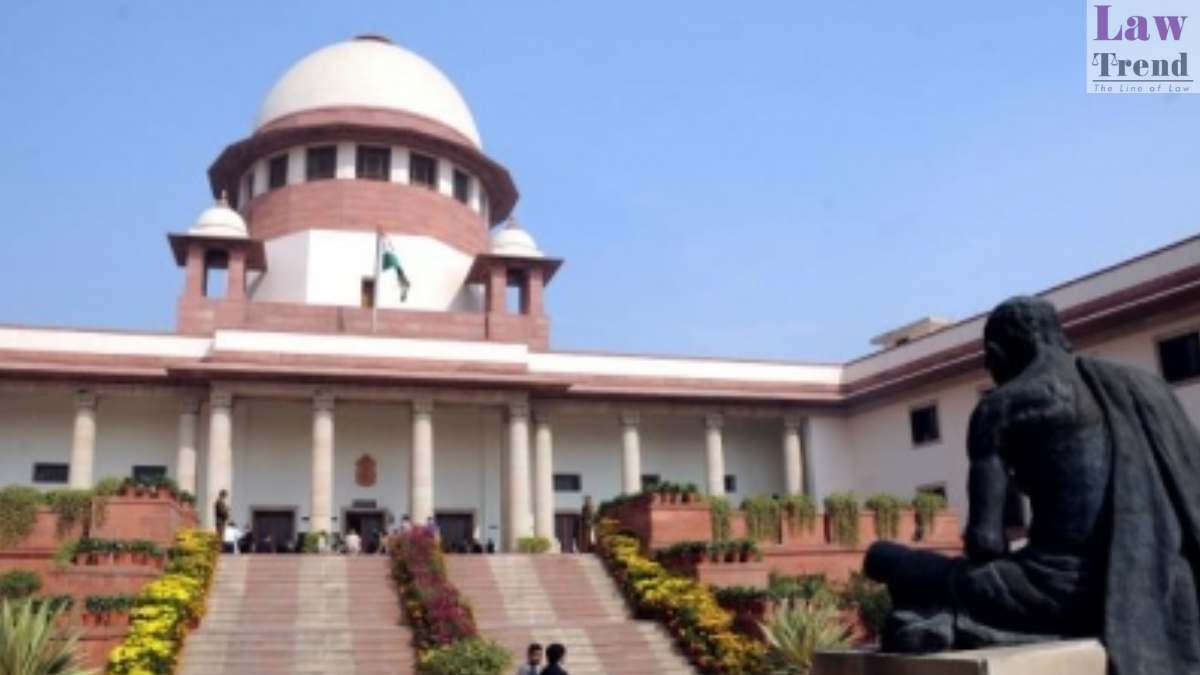
The Supreme Court of India has held that while State Electricity Regulatory Commissions (SERCs) possess the plenary power to determine electricity tariffs, they cannot factor in the “Generation Based Incentive” (GBI) granted by the Ministry of New and Renewable Energy (MNRE) to reduce the tariff payable to generating companies. The Court clarified that GBI is a generator-focused incentive designed to subserve national and international environmental policies and is intended to be disbursed to wind power generators over and above the approved tariff.

Background of the Case

The case originated from a dispute between the Southern Power Distribution Company of Andhra Pradesh Limited (DISCOMs) and various wind power generating companies (GENCOs). In 2009, the MNRE introduced a GBI Scheme providing wind electricity producers ₹0.50 per unit of electricity fed into the grid. The scheme was specifically designed to be “over and above the tariff that may be approved by the State Electricity Regulatory Commissions.”

In 2015, the Andhra Pradesh Electricity Regulatory Commission (APERC) notified Tariff Regulations, which included Regulation 20, stating that the Commission “shall take into consideration any incentive or subsidy offered by the Central or State Government” while determining tariff. Initially, the APERC issued tariff orders for 2015-16 and 2016-17 without factoring in the GBI. However, following a petition by the DISCOMs, the APERC in 2018 permitted the deduction of GBI amounts from the monthly bills payable to the GENCOs.

This order was challenged by the GENCOs before the Appellate Tribunal for Electricity (APTEL), which set aside the APERC’s decision on December 19, 2024. The DISCOMs then moved the Supreme Court.

READ ALSO  Registered Sale Deed Cannot be Casually Declared "Sham"; Registration Creates Strong Presumption of Validity: Supreme Court

Arguments of the Parties

The appellants (DISCOMs) argued that tariff fixation is the “exclusive province” of the SERCs and that Regulation 20 of the APERC Regulations makes it mandatory to take into account any subsidy or incentive. They contended that the GBI, being an executive scheme, could not overrule the statutory power of the Commission to determine tariff.

On the other hand, the respondent GENCOs, represented by Senior Advocate Mr. P. Chidambaram, argued that GBI is a Parliamentary grant under Article 282 of the Constitution. They contended that since the funds were voted on by Parliament as an expenditure for a specific “public purpose”—incentivizing generators—the SERC could not subvert this intent by converting it into a “consumer incentive” through tariff reduction. They maintained that factoring GBI into tariff would amount to altering the destination of a Parliamentary grant, which is prohibited under Article 114(2).

The Court’s Analysis

A bench comprising Justice Pamidighantam Sri Narasimha and Justice Atul S. Chandurkar analyzed the scope of the SERC’s powers.

READ ALSO  There Cannot Be Any School Without a Playground; Unauthorized Occupation and Possession of Land, Which Is Reserved for School and Playground, Cannot Be Directed To Be Legalized: SC

I. Scope of Regulatory Power The Court rejected the argument that SERCs lack the power to consider Central Government grants. It held:

“Regulatory Commissions have plenary power over tariff determination and there is no unallocated regulatory residue remaining outside its power to determine tariff… Tariff determination is the exclusive province of the Regulatory Commissions.”

The Court clarified that under Article 114(2), the prohibition is against altering the destination of the grant. Since the GBI reached the GENCOs as intended, the Commission’s act of determining tariff did not “intercept or redirect” the payment.

II. Duties and Obligations in Tariff Fixation However, the Court emphasized that regulatory power must be exercised as a “collaborative enterprise.” It observed that the Electricity Act, 2003 requires regulators to promote renewable energy under Section 61(h). The Court noted India’s international commitments under the Paris Agreement and the national target to achieve 450 GW of renewable energy by 2030.

The Court held that “taking into consideration” an incentive under Regulation 20 does not mean a mandatory deduction. The bench observed:

“If a scheme was not intended as a ‘consumer subsidy’, but as a ‘generator-focused incentive’ and the scheme is integrally linked to realization of national and international policies, the Commission must respect and give effect to it.”

READ ALSO  Punjab and Haryana HC Convicts a Person for Misusing the Premises of Gurudwara Sahib

The Court distinguished between “regulation as control” and “regulation as an enterprise,” favoring the latter approach where regulators work in coordination with other stakeholders for a larger public purpose, such as environmental preservation.

The Decision

The Supreme Court dismissed the appeal filed by the DISCOMs and upheld the judgment of the APTEL. The Court concluded that the APERC was obligated to apply the GBI in furtherance of its design—to incentivize renewable power generators.

The Court restated two key principles:

  1. Regulatory Commissions have plenary power over tariff determination, including the authority to take into account Central grants.
  2. This power must not be exercised in a manner that ignores the purpose and object of a policy or grant by other stakeholders.

The Court held that the GBI is intended to be disbursed to the GENCOs “over and above the tariff,” thereby protecting the incentives meant for the wind energy sector.

Case Details:

  • Case Title: Southern Power Distribution Company of Andhra Pradesh Limited & Anr. v. Green Infra Wind Solutions Limited & Ors.
  • Case No.: Civil Appeal No. 4495 of 2025
  • Coram: Justice Pamidighantam Sri Narasimha and Justice Atul S. Chandurkar
  • Date: March 25, 2026

Law Trend
Law Trendhttps://lawtrend.in/
Legal News Website Providing Latest Judgments of Supreme Court and High Court

Related Articles

Latest Articles


