

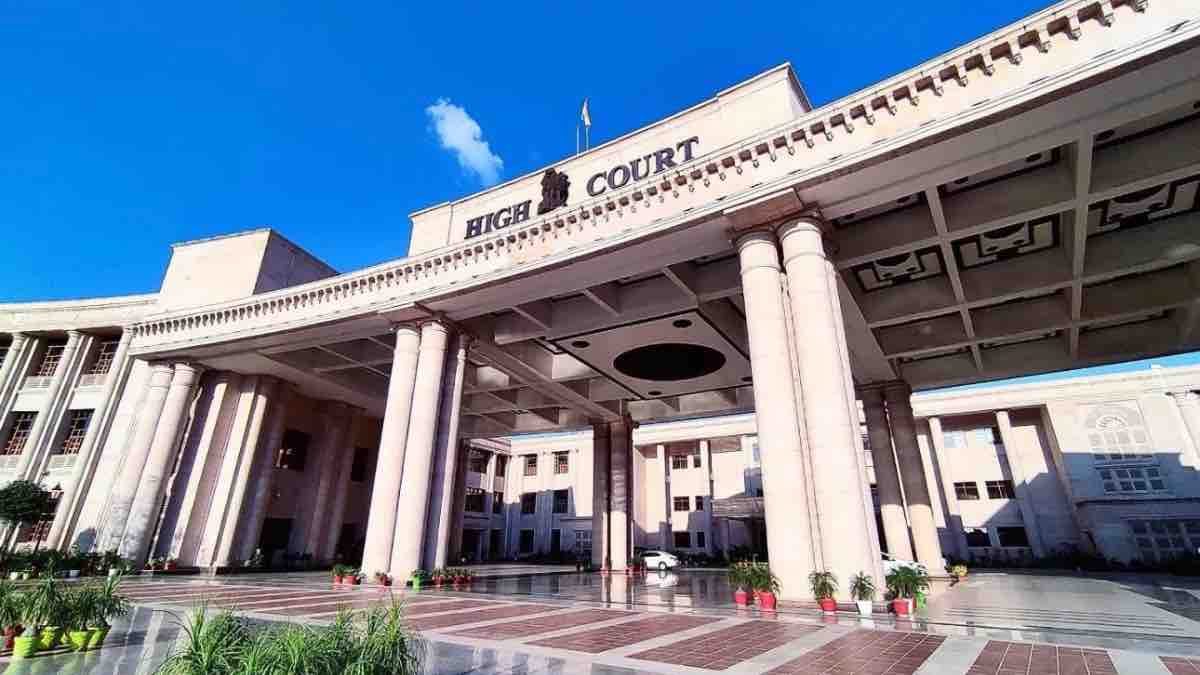
The Lucknow bench of the Allahabad High Court on Tuesday dismissed a petition filed by MLC Akshay Pratap Singh and three others, refusing to interfere with a lower court’s order in a case involving allegations of fraud and forgery. The case stems from a complaint filed by Bhanvi Singh, the wife of former cabinet minister Raghuraj Pratap Singh, also known as Raja Bhaiya.
Justice Subhash Vidyarthi, presiding as a single-judge bench, upheld the decision of the Special Judge (MP-MLA) Court, Lucknow. The High Court observed that there was no merit in the plea to set aside the special court’s order, which had previously directed a reconsideration of how the complaint should be handled.
The legal dispute centers on allegations made by Bhanvi Singh regarding her firm, M/s Sarang Enterprises. According to the complaint, Akshay Pratap Singh, along with Rohit Kumar Singh, Anil Kumar Singh, and Ramdev Yadav, allegedly conspired to usurp valuable assets belonging to the firm.
Bhanvi Singh claimed that the accused prepared and manipulated forged documents to illegally transfer the company’s properties. Seeking criminal proceedings, she had approached the judicial magistrate’s court, requesting that the Hazratganj police be directed to register an First Information Report (FIR) and initiate a formal investigation.
The matter has seen several turns in the lower judiciary:
- October 19, 2023: The judicial magistrate court opted to treat Bhanvi Singh’s application as a “complaint case” rather than ordering the police to register an FIR.
- Revision Plea: Dissatisfied with this approach, Bhanvi Singh filed a revision plea challenging the magistrate’s decision.
- February 18, 2024: The Special Judge (MP-MLA) Court set aside the magistrate’s October order and directed that the matter be reconsidered.
Akshay Pratap Singh and his co-petitioners subsequently moved the High Court to challenge this February 18 order, seeking relief from the ongoing proceedings.
In dismissing the petition, the High Court noted the “seriousness of the allegations” levelled against the accused. By declining to interfere, the High Court has effectively allowed the special court’s mandate for reconsideration to stand, moving the case closer to a potential investigation into the claims of forgery and asset misappropriation.




