

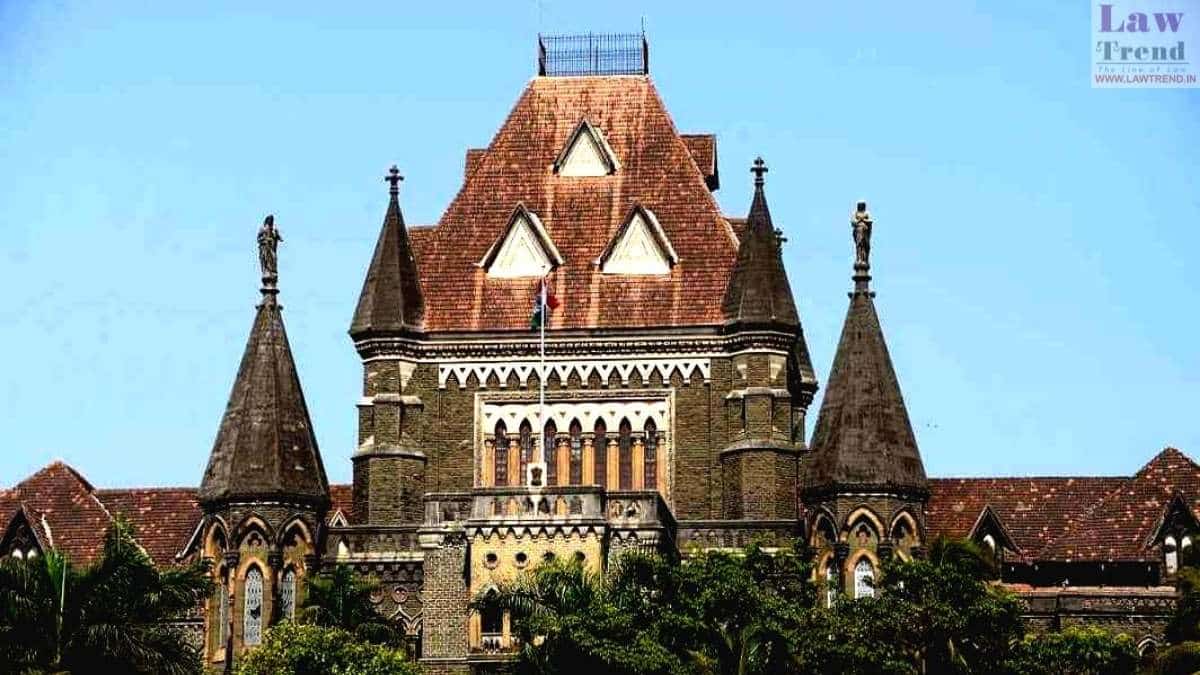
The Bombay High Court has refused to grant relief to former Vasai Virar City Municipal Corporation (VVCMC) official Y Shiva Reddy in a money laundering case, holding that accepting a bribe amounts to acquiring “proceeds of crime” under the Prevention of Money Laundering Act (PMLA). The court dismissed Reddy’s plea challenging his arrest by the Enforcement Directorate (ED) and the subsequent remand orders passed by a special court.
A bench comprising Chief Justice Shree Chandrashekhar and Justice Gautam Ankhad on Monday rejected Reddy’s petition seeking to declare his arrest illegal and to quash the remand orders issued after his arrest. Reddy, who served as the deputy director in the town planning department of the Vasai Virar City Municipal Corporation, has been in judicial custody since August last year.
In his plea, Reddy argued that the predicate offence against him under the Prevention of Corruption Act was registered only after the Enforcement Directorate carried out searches at his residences. He also contended that there was no evidence linking the cash and jewellery recovered from his home to the alleged proceeds of crime connected to the predicate offence.
However, the High Court observed that the definition of “proceeds of crime” under the PMLA is broad and covers any property obtained directly or indirectly through criminal activity. The court stated that a person who accepts a bribe effectively acquires proceeds of crime within the meaning of the law.
The case relates to allegations that between 2019 and 2023, several officials, including Reddy, permitted developers to construct 41 illegal buildings by using forged approvals and fabricated documents. According to the ED, these constructions were carried out on land reserved for a sewage treatment plant and a dumping ground.
The High Court noted that the recovery of unaccounted cash, jewellery, and other incriminating materials, along with witness statements collected during the investigation, provided sufficient grounds for the Enforcement Directorate to form a prima facie belief that Reddy was involved in money laundering.
According to the ED, Reddy allegedly used bribe money to purchase jewellery and other luxury items. The court also referred to the arrest memo, observing that it indicated the presence of credible and tangible evidence linking Reddy to the offence.
During searches conducted at Reddy’s residences on June 23, 2025, investigators recovered unaccounted cash amounting to ₹8.23 crore and jewellery valued at ₹23.28 crore. The ED later shared information with the local police, which led to the registration of an FIR on August 1, 2025.
The High Court further observed that the quantification of proceeds of crime could change as the investigation progresses.
Finding no prima facie grounds to interfere with the arrest or the remand orders, the bench concluded that the Enforcement Directorate had followed due process of law when it arrested Reddy on August 13, 2025.
The court also recorded that the ED had initiated its investigation into the alleged scam in February last year, during which Reddy’s role in granting development permissions and facilitating illegal construction on government land came to light.




