

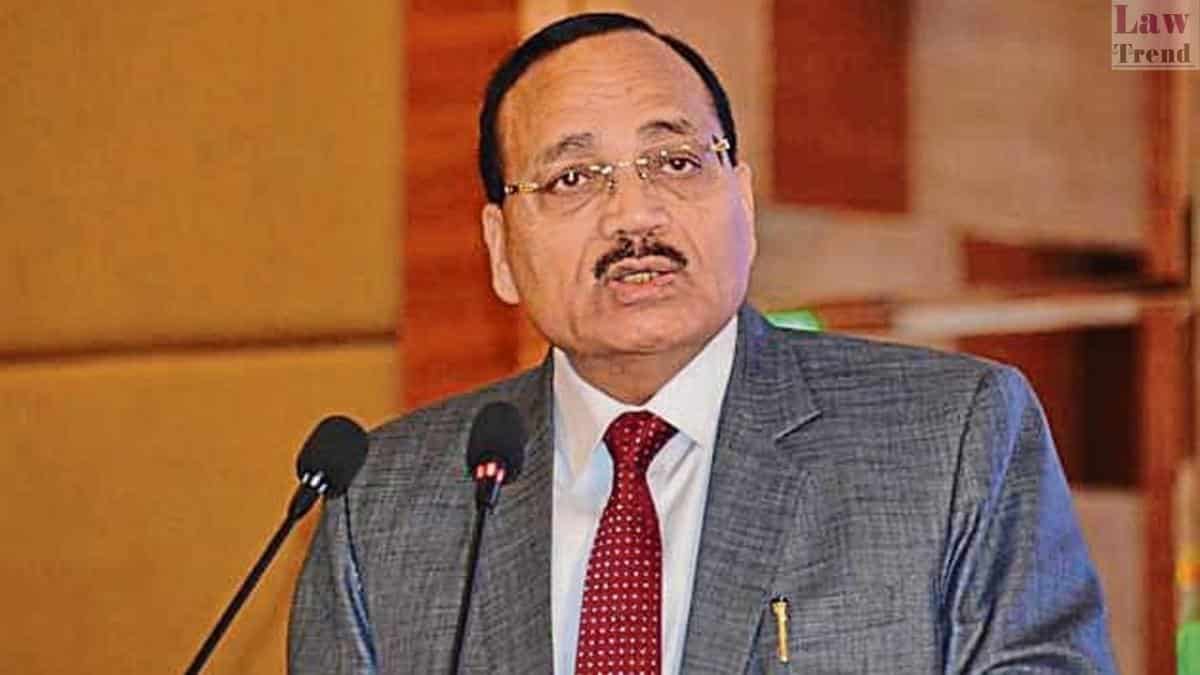
Chief Justice of India Surya Kant on Saturday said India’s arbitration ecosystem has evolved through legislative reforms and supportive judicial rulings, but warned that the country still faces key hurdles in building user trust, expanding institutional capacity and developing a trained pool of arbitration professionals. He was speaking in Ahmedabad after laying the foundation stone for the Gujarat High Court Arbitration Centre (GHAC).
Highlighting the progress made in recent years, the CJI said amendments to the Arbitration Act have promoted minimal judicial intervention, time-bound proceedings and neutrality in arbitrator appointments. He added that court decisions have strengthened party autonomy and clarified doctrinal ambiguities, contributing to the maturity of India’s arbitration framework.
However, he noted that institutional arbitration continues to occupy a limited space, with many commercial disputes still proceeding through ad hoc mechanisms and several institutional matters being routed to foreign arbitral seats. The key issue, he said, is whether Indian institutions inspire sufficient confidence to become the preferred forum for dispute resolution.
“The question we must confront is not whether arbitration is viable, the question is whether our institutional arbitration and our institutions meant for that inspire sufficient trust,” the CJI said.
On the issue of trust, he stressed that confidence in arbitration depends on neutrality in appointments, procedural integrity and effective enforcement of awards. “That trust is not built by rules on paper. It is built through consistent, transparent, and demonstrably fair practice over time,” he said, adding that institutions must assess whether they have fully earned user confidence.
Addressing capacity concerns, the CJI pointed out that the number of institutional arbitrations in India remains disproportionately low compared to the volume of commercial disputes. Parties often continue to rely on ad hoc arbitration or litigation because institutions have not sufficiently demonstrated their value, he said. Efficient infrastructure, robust case-management systems and competent administrative support are essential for institutional relevance.
He identified professionalisation as the most consequential challenge, describing arbitration as a specialised discipline requiring legal expertise, case-management skills and commercial understanding. India, he said, must invest in training arbitrators and building a coherent pipeline of qualified professionals to ensure that growth in institutions does not outpace the quality of proceedings.
The CJI said India must measure its arbitration standards against leading global arbitral seats and the expectations of parties seeking a faster alternative to litigation.
The new GHAC facility will include 16 arbitration conference rooms, seven mediation rooms and an online dispute resolution system designed for both domestic and international matters. A two-day conference on “Institutional Arbitration at Crossroads: Challenges and the Way Forward” is also being held alongside the foundation event, bringing together arbitrators, advocates and stakeholders to discuss the future of institutional arbitration.
Gujarat Chief Minister Bhupendra Patel, who also addressed the event, emphasised the growing role of institutional arbitration in India’s legal framework, particularly for a state with significant industrial and technological development.




