

CoC’s Commercial Wisdom is Paramount; Courts Cannot Second-Guess Economic Decisions: Supreme Court

The Supreme Court of India, in a significant judgment delivered on February 27, 2026, has dismissed a batch of civil appeals filed by unsuccessful resolution applicants—Torrent Power Ltd., Vantage Point Asset Management Pte. Ltd., and Jindal Power Limited. The appeals challenged the approval of Sarda Energy and Minerals Limited’s (SEML) resolution plan for SKS Power Generation (Chhattisgarh) Limited.

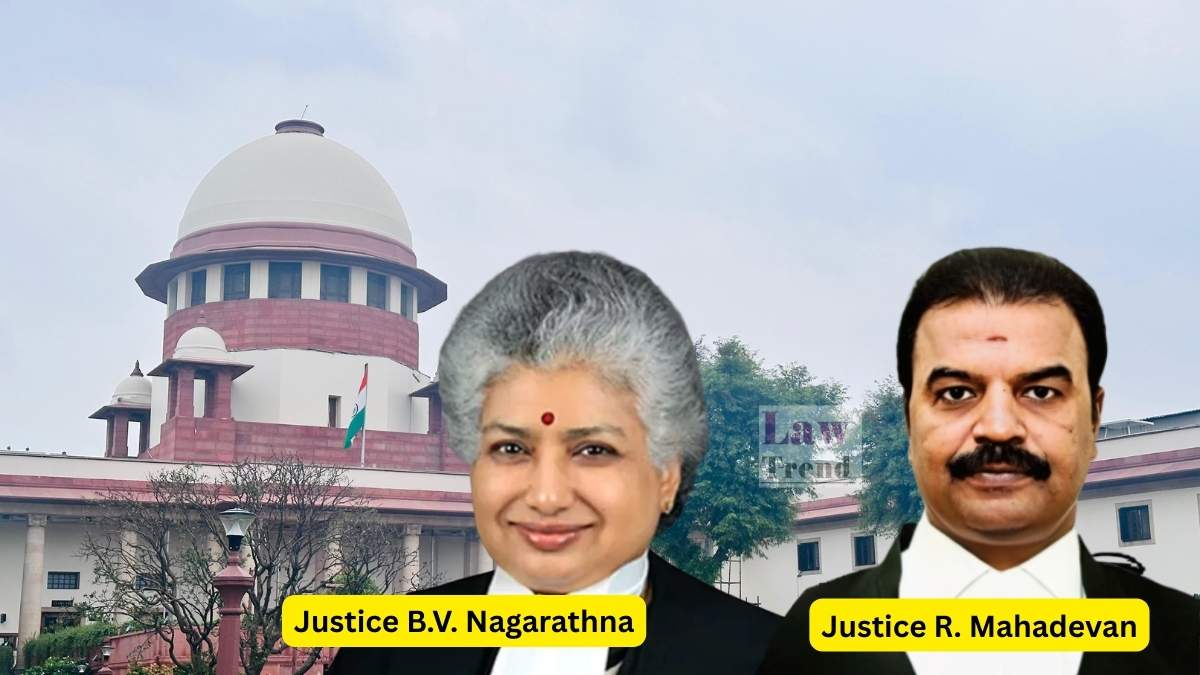
A bench comprising Justice B.V. Nagarathna and Justice R. Mahadevan affirmed the order of the National Company Law Appellate Tribunal (NCLAT), ruling that the “commercial wisdom” of the Committee of Creditors (CoC) is non-justiciable and cannot be supplanted by judicial review.

Background of the Case

The Corporate Insolvency Resolution Process (CIRP) against SKS Power Generation (Chhattisgarh) Ltd. was initiated following an application by the Bank of Baroda. After multiple rounds of negotiations and an inter-se bidding process, the CoC, in its 31st meeting, approved the resolution plan submitted by SEML with a 100% vote share.

The appellants—Torrent, Vantage, and Jindal—contested the approval before the National Company Law Tribunal (NCLT) and the NCLAT, alleging “material irregularity.” They claimed that SEML was permitted to modify its commercial offer after the bidding process had concluded under the guise of “clarifications” sought by the Resolution Professional (RP).

Arguments of the Parties

The Appellants: The unsuccessful bidders argued that the Process Note governing the negotiation process prohibited any modification of commercial terms after April 19, 2023. They alleged that:

  • SEML modified its plan post-bid to increase its commitment toward Bank Guarantees (BGs) from ₹103.39 crores to ₹180.05 crores.
  • SEML was allowed to convert a deferred payment of ₹240 crores into an upfront payment.
  • This selective permission resulted in discrimination and a breach of the binding terms of the Request for Resolution Plan (RFRP).
READ ALSO  Firms Taking Business Loans Cannot Seek Relief Against Banks Under Consumer Protection Act: Supreme Court

The Respondents (RP, SEML, and CoC): The respondents maintained that the communications were strictly “clarifications” and not modifications. They argued:

  • Clause 6.3.14 of SEML’s original plan already provided for the return of ₹180.05 crores in margin money to secured financial creditors.
  • The ₹240 crore figure was the Net Present Value (NPV) of a deferred offer; the clarification simply confirmed that the CoC could opt for this value upfront.
  • The CoC’s decision was based on viability and feasibility, falling within its exclusive commercial domain.

The Court’s Analysis

The Supreme Court examined whether the clarifications resulted in any enhancement of SEML’s plan. Regarding the Bank Guarantees, the Court found that the Resolution Plan, from its inception, contemplated that the entire margin money of ₹180.05 crores would flow to the CoC.

READ ALSO  Non-registration of Firm is Not a Bar Under Sec 69 of Partnership Act for Initiating Arbitration Proceedings: Calcutta HC

“The payment to the CoC was ₹180.49 crores before clarification and remained ₹180.49 crores even after the clarification. All that the clarification did was address the issuing banks’ interim exposure pending formal return of these BGs.”

On the issue of upfront payment, the Court noted that SEML had offered the CoC an option to either take ₹301.64 crores over time or a discounted amount of ₹240 crores upfront. The Court held that confirming this choice did not constitute a change in commercial terms.

On Commercial Wisdom and Judicial Review: The Court reiterated that the jurisdiction of the Adjudicating Authority and the Appellate Authority is limited to ensuring statutory compliance under Sections 30(2) and 61(3) of the IBC. Citing K. Sashidhar vs. Indian Overseas Bank and Committee of Creditors of Essar Steel India Limited vs. Satish Kumar Gupta, the Court noted:

“The IBC recognises that decisions on viability, valuation, and acceptable haircuts are inherently commercial, not judicial. Courts, therefore, do not substitute their assessment for that of the CoC.”

The Bench further observed that when a Resolution Professional acts on the explicit instructions of the CoC to seek clarifications, such conduct cannot be characterized as a “material irregularity.”

The Decision

The Supreme Court dismissed all appeals, affirming the NCLAT judgment dated October 1, 2024. The Court noted that the resolution plan had already been fully implemented.

READ ALSO  Approval Without Application of Mind is Unacceptable: Allahabad High Court Quashes Income Tax Reassessment Notice

In a “word of caution,” the Court remarked on the strategic use of litigation by unsuccessful bidders:

“The appeals before us typify the growing strategic use of the judicial system by unsuccessful resolution applicants… This converts the corporate resolution process into a protracted adversarial contest and erodes the value of the Corporate Debtor.”

The Court emphasized that “predictability and finality” are essential for a robust insolvency regime and that judicial intervention beyond the narrow statutory confines undermines the economic logic of the IBC.

  • Case Name: Torrent Power Ltd. vs. Ashish Arjunkumar Rathi & Ors.
  • Case Number: Civil Appeal Nos. 11746-11747 of 2024 (with connected appeals)

Law Trend
Law Trendhttps://lawtrend.in/
Legal News Website Providing Latest Judgments of Supreme Court and High Court

Related Articles

Latest Articles

