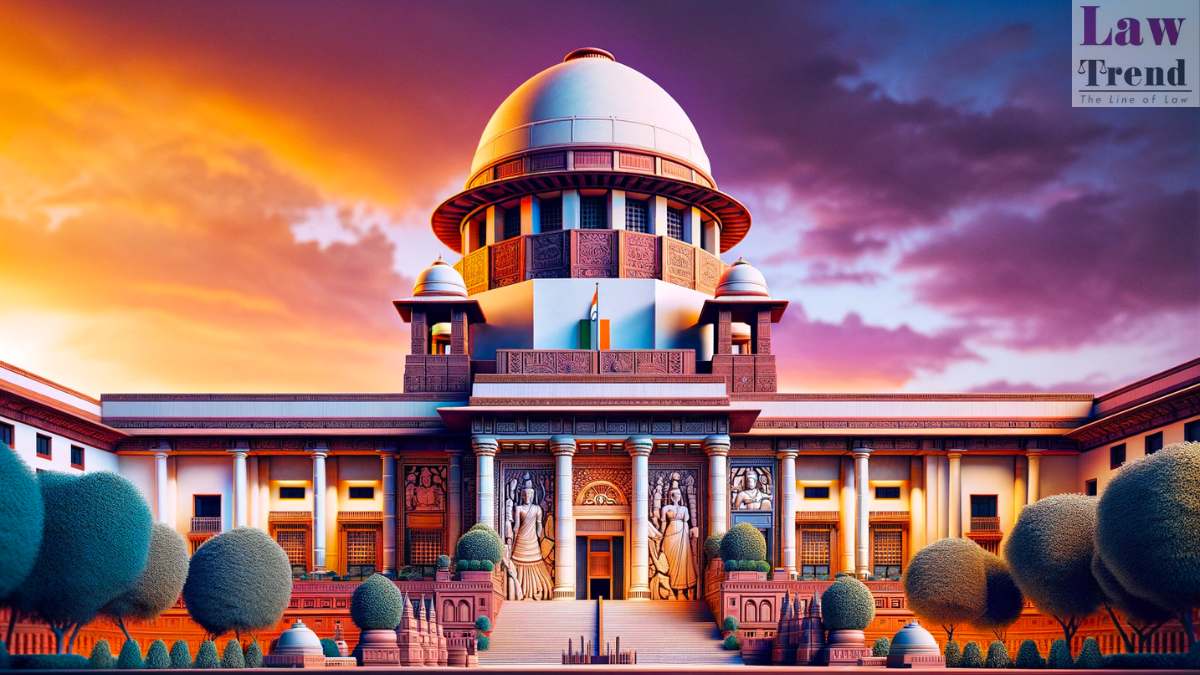
The Supreme Court of India, in a judgment delivered on February 25, 2026, has dismissed appeals challenging the hereditary pujari (priest) rights of a family at the Amogasidda temple in Karnataka. A bench comprising Justice Prashant Kumar Mishra and Justice K. Vinod Chandran held that the long-standing possession and consistent revenue entries in favor of the respondents outweighed a century-old decree cited by the appellants, whose own subsequent legal conduct invalidated their claims.
The core controversy in Ogeppa (D) v. Sahebgouda (D) (Civil Appeal Nos. 7181-7182 of 2016) involved a “protracted dispute spanning over a century” regarding the ancestral wahiwatdar pujari rights. These rights include performing puja for the deity Amogasidda, receiving offerings, and conducting the annual Jatra celebrations at a temple in Mamatti Gudda, Karnataka. The Supreme Court upheld the findings of the First Appellate Court and the High Court, confirming the respondents as the rightful hereditary priests.
Background of the Case
The dispute dates back to 1944 when the predecessors of the appellants filed a suit (O.S. No. 88/1944) for possession of the temple, which was dismissed in 1945. They appealed but eventually withdrew the suit with liberty to file a fresh one in 1946—a liberty they did not exercise for 36 years.
In 1982, the respondents filed O.S. No. 56/1982 seeking a declaration of their status as ancestral wahiwatdar pujari. The Trial Court initially ordered that both parties share the rights. However, the First Appellate Court later decreed the suit entirely in favor of the respondents. After a series of appeals, including a remand by the Supreme Court in 2003 regarding jurisdictional bars under the Bombay Public Trust Act, 1950, the High Court eventually dismissed the appellants’ claims in 2012, leading to the current appeals.
Arguments of the Parties
The appellants/defendants primarily relied on a decree from 1901 (O.S. No. 287/1901), which they claimed conferred pujari rights upon their ancestors. They argued that the revenue records cited by the respondents were insufficient to form the basis of a decree.
Conversely, the respondents/plaintiffs argued that they had been in continuous possession and performance of puja for generations. They supported their claim with Record of Rights (RTC) entries showing their ancestors held lands granted by the British Government for service to the temple.
The Court’s Analysis
The Supreme Court emphasized that Article 136 of the Constitution should be used sparingly, especially concerning concurrent findings of fact. Justice Mishra, writing the judgment, noted that the appellants’ reliance on the 1901 decree was undermined by their own actions:
“A party in settled possession does not sue for possession. The very institution of [the 1944] suit is a categorical admission by the appellants/defendants’ predecessor that possession of the suit temple was not with them at the relevant point in time.”
The Court further observed that when the appellants’ predecessors withdrew their 1944 suit and failed to file a fresh one for 36 years, the “inevitable inference” was that they had “reconciled itself to the factual reality on the ground.”
The Bench also highlighted significant evidentiary gaps in the appellants’ case:
- Revenue Records: The RTC reflected the names of the respondents’ ancestors. The appellants’ witness (D.W.1) admitted in cross-examination that the respondents cultivated the lands granted to the temple.
- Pleadings: The Court criticized the appellants’ written statement for being “reticent” on material particulars such as when they lost or regained possession.
- Evidence: The Court noted that oral evidence cannot substitute for missing pleadings, stating: “A case not made out in the pleadings cannot be erected on evidence alone.”
Decision
The Court concluded that the respondents had established their claim through consistent documentary evidence, revenue records, and testimony from independent witnesses and devotees.
“The concurrent findings of the First Appellate Court and the High Court reflect a correct and careful appreciation of this entire factual matrix. Hence, we find no perversity in the impugned judgment…”
The Supreme Court dismissed the Civil Appeals as being without merit, with no orders as to costs.
- Case Name: Ogeppa (D) Through LRs. and Others v. Sahebgouda (D) Through LRs. and Others
- Case Number: Civil Appeal Nos. 7181-7182 of 2016