

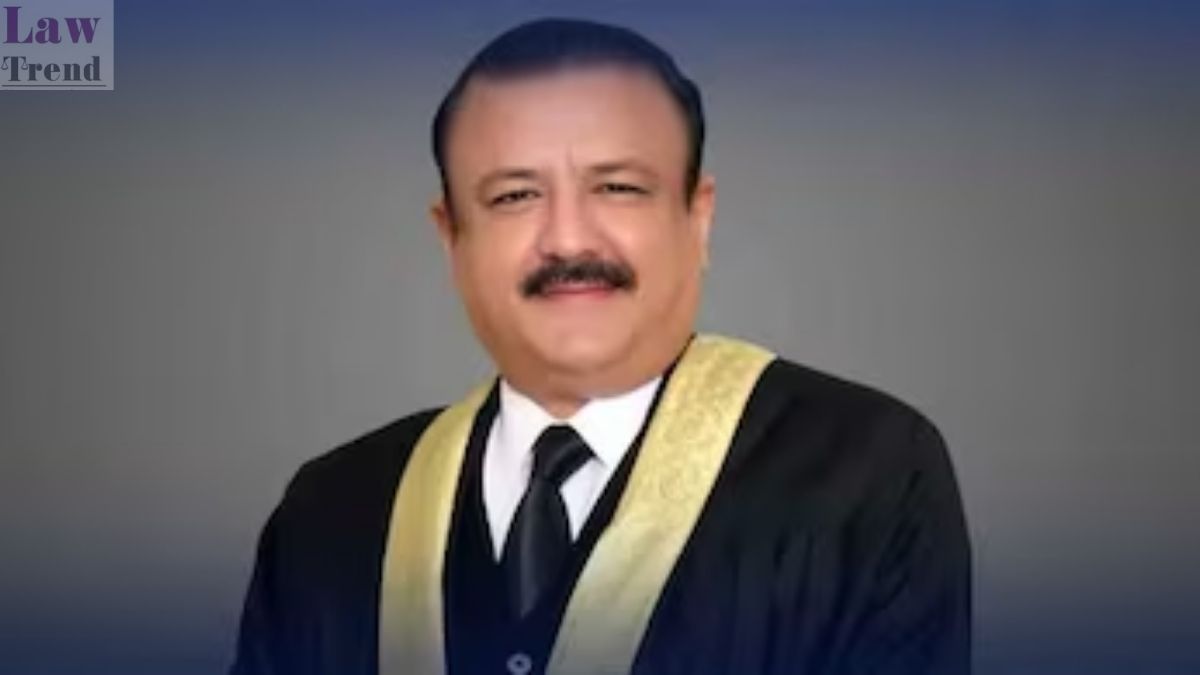
ISLAMABAD: In a shocking development that has rocked Pakistan’s judicial system, the Islamabad High Court (IHC) on Monday removed Justice Tariq Mehmood Jahangiri from the bench. The court ruled that his appointment was made “without lawful authority” after uncovering that his foundational law degree was obtained through severe academic fraud and impersonation.
In a detailed 116-page judgment, an IHC division bench comprising Chief Justice Sardar Muhammad Sarfraz Dogar and Justice Muhammad Azam Khan declared the former judge’s legal credentials “void ab initio.” The bench concluded that his subsequent elevation to the high court was a “legal nullity.”
The Background: Disciplinary Bans and Fake Identities
The court’s sweeping decision was based on damning records produced by the University of Karachi (KU) registrar, which revealed that Jahangiri’s academic history was marred by “fraud, impersonation and a deliberate attempt to circumvent a disciplinary ban.”
According to the factual findings documented in the judgment, Jahangiri initially appeared for his LL.B. Part-I examination in 1988 using a fake enrolment number. During these exams, he was caught utilizing unfair means. Consequently, the university debarred him for three years through a formal disqualification circular issued in 1989.
The Court’s Analysis: A “Course of Deliberate Misrepresentation”
Rather than serving out the three-year disciplinary ban, the bench noted that the former judge “chose a course of deliberate misrepresentation.”
The court detailed how he re-entered the examination system in 1990 under a slightly altered identity, “Tariq Jahangiri.” To execute this, he utilized an enrolment number that had originally been issued to an entirely different student, identified as Imtiaz Ahmad. The judicial inquiry further revealed that when he later appeared for his LL.B. Part-II examinations under his actual name, he did so utilizing yet another, third enrolment number.
The Decision: Academic Credentials Declared Invalid
The division bench heavily relied on testimonies from academic officials to finalize its ruling. Quoting the KU Controller of Examinations, the court observed that a university fundamentally issues only one unique enrolment number per degree programme. The official testified that it was “impossible” for a legitimate student to be allotted multiple enrolment numbers for the same degree course.
As a direct result of these administrative impossibilities and the confirmed use of a stolen enrolment number, the court declared Jahangiri’s mark sheets and final law degree entirely invalid.
In what the bench described as a particularly damaging revelation, the principal of Government Islamia Law College also submitted a statement informing the court that Mr. Jahangiri “was never admitted” to their institution.
Ultimately, the comprehensive 116-page ruling strips Tariq Mehmood Jahangiri of his judicial standing, setting a stark precedent regarding the vetting of foundational academic credentials within the higher judiciary.




