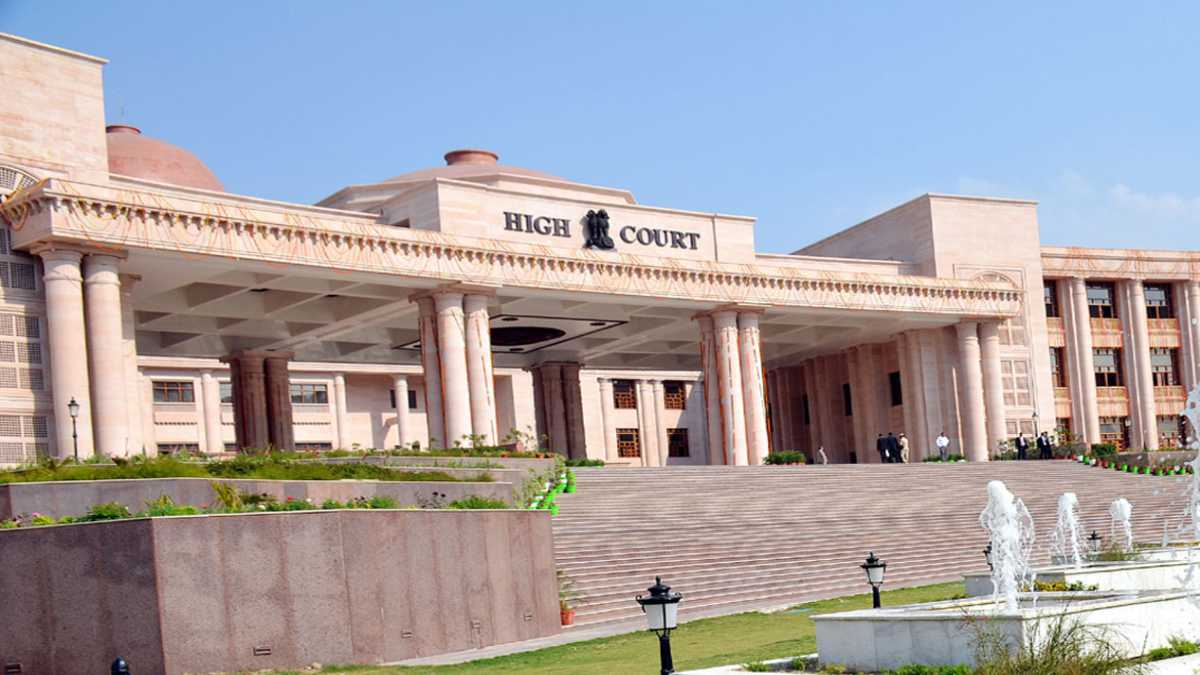
The Lucknow Bench of the Allahabad High Court has set aside the conviction and life imprisonment of Omkar Mishra, who was accused of murdering his wife in 2000. A Division Bench comprising Justice Rajnish Kumar and Justice Zafeer Ahmad observed that the prosecution failed to prove its case beyond reasonable doubt, noting significant contradictions in ocular evidence and the “falsehood” in the testimony of the complainant.
Background
The case originated from an incident on May 20, 2000. The complainant, Navin Kumar Shukla (the victim’s brother), alleged that his sister, a government school teacher, was harassed for dowry (specifically a Suzuki motorcycle) by the appellant and his family. He claimed that while his sister was returning from school on a ‘thelia’ (tricycle loader), the accused persons stopped her near Tara Talab and shot her at close range.
On March 27, 2012, the Additional Sessions Judge, Court No. 3, Sitapur, convicted Omkar Mishra under Section 302/34 of the IPC, sentencing him to life imprisonment. However, the trial court acquitted all other family members, including the appellant’s father, mother, and brothers, based on their pleas of alibi.
Arguments of the Parties
The appellant’s counsel argued that the conviction was based on unreliable evidence. They highlighted that the alleged eye-witness (the complainant’s uncle) was never produced in court. Furthermore, they contended that the ‘thelia’, the pellets, and the murder weapon were never recovered. The defense also pointed out that the deceased’s own statement in a previous dowry harassment case (Ext. Kha-4) made no mention of a demand for a Suzuki motorcycle.
The State (AGA) opposed the appeal, asserting that the eye-witnesses proved the prosecution’s case and that the injuries sustained by the deceased corroborated their accounts.
Court’s Analysis
The High Court scrutinized the testimonies of P.W.-1 (the complainant) and P.W.-2 (the thelia driver). The Bench found a material contradiction regarding who fired the second shot—P.W.-1 attributed it to the appellant’s brother (Sachidanand), while P.W.-2 attributed it to the father (Hari Shankar).
The Court noted with concern that the complainant had falsely testified that his parents were dead. P.W.-2, however, admitted that the complainant’s parents were alive and residing with him. The Bench observed:
“The testimony of such a person, who only to get his brother-in-law convicted by taking a plea of death of his parents, creates serious doubts about his testimony… if a person can state in his evidence on oath that his parents are not alive then he can do anything.”
Regarding the motive of dowry, the Court agreed with the trial court’s finding that the demand was not proved, especially since the appellant already owned a scooter and the deceased’s prior statement did not mention the motorcycle demand.
The Court cited the Supreme Court decision in Ram Laxman Vs. State of Rajasthan (2016) 12 SCC 389, noting that while a witness’s entire testimony isn’t discarded for one falsehood, if a witness is found “un-dependable and un-reliable,” their evidence cannot be used to sustain a conviction. It also referenced Yogarani Vs. State (2024), emphasizing the principle of parity:
“When there is similar or identical evidence of eyewitnesses against two accused by ascribing them the same or similar role, the Court cannot convict one accused and acquit the other.”
Decision
The High Court concluded that the prosecution’s story was clouded by “serious doubt” given that all other accused were acquitted on the same evidence while the appellant was singled out. The Bench held that the trial court’s conviction was based on “probabilities and assumption” rather than proof beyond reasonable doubt.
The appeal was allowed, the conviction was set aside, and the Court ordered the immediate release of Omkar Mishra.
Case Details:
- CaseTitle: Omkar Misra vs. State of U.P.
- Case No.: Criminal Appeal No. 546 of 2012