

IBC Overrides ‘Defunct’ Companies Act Schemes; Supreme Court Restores Insolvency Proceedings Against Corporate Debtor
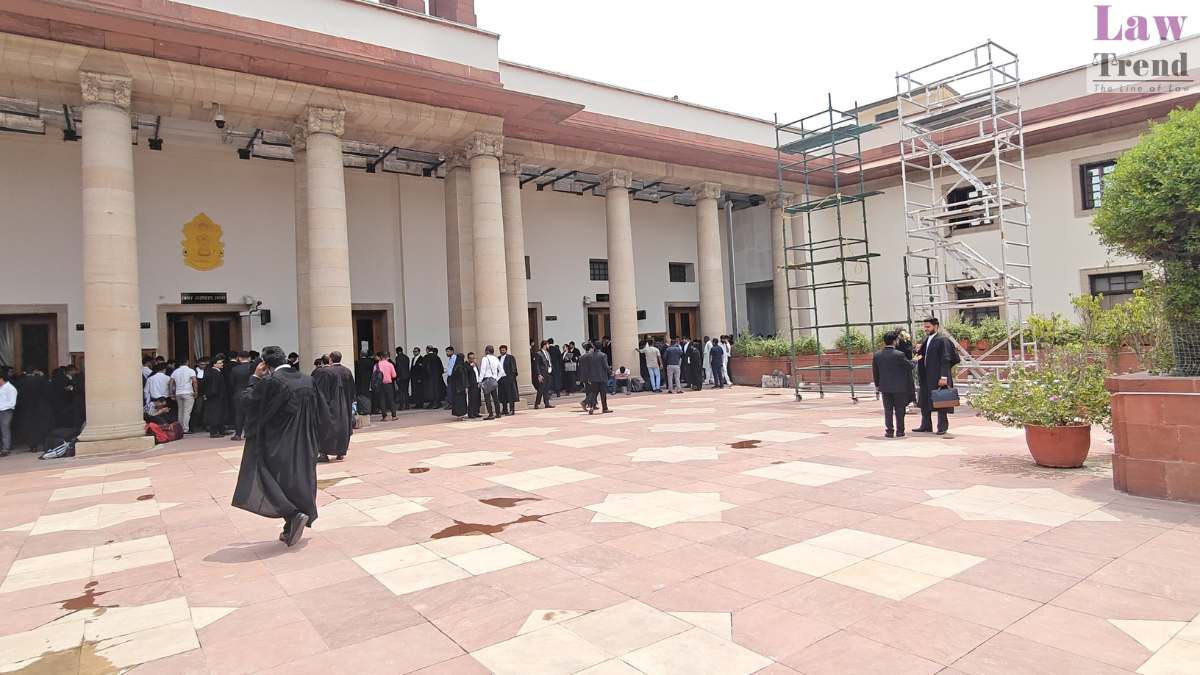

The Supreme Court of India has set aside an order of the National Company Law Appellate Tribunal (NCLAT) that had stayed insolvency proceedings against a Corporate Debtor due to a pending Scheme of Arrangement (SOA) under the Companies Act, 1956.

A Bench comprising Justice Sanjay Kumar and Justice K. Vinod Chandran held that “judicial discipline” cannot be used as a shield by “tardy litigators” to jeopardize public funds. The Court ruled that the overriding effect of the Insolvency and Bankruptcy Code (IBC), 2016, ensures that insolvency resolution takes precedence over redundant schemes under the older Companies Act.

Legal Issue and Outcome

The primary legal question was whether proceedings for a Scheme of Arrangement under Sections 391 to 394 of the Companies Act, 1956, pending before a High Court, should stall Corporate Insolvency Resolution Proceedings (CIRP) under Section 7 of the IBC.

The Court concluded that the SOA in question had become “defunct and inoperative” due to gross procedural delays and the overriding nature of Section 238 of the IBC. Consequently, the Court allowed the appeal filed by Omkara Assets Reconstruction Private Limited, set aside the NCLAT order, and restored the CIRP initiated by the Adjudicating Authority (NCLT).

Background of the Case

The dispute originated from term loans totaling ₹10.60 crore disbursed to Respondent No. 2 (the Corporate Debtor) in 1999 and 2000. Default commenced in January 2003. By the time the Stressed Assets Stabilization Fund (predecessor to the appellant) approached the NCLT, the debt had ballooned to over ₹154 crore.

READ ALSO  Political Leaders Must Foster Fraternity: Supreme Court Declines PIL on Guidelines for Speeches, Asks Petitioners to File Fresh Plea

While the bank sought CIRP under the IBC, the Corporate Debtor resisted, citing a Scheme of Arrangement that had been initiated before the Punjab and Haryana High Court as far back as 2008. Although the High Court had sanctioned the scheme in 2019, the appellant argued that the scheme was a “paper arrangement” that was never properly implemented or filed within statutory timelines.

Arguments of the Parties

Appellant (Omkara Assets Reconstruction): Senior Counsel Mr. Neeraj Kishan Kaul argued that the SOA was defunct because the respondent failed to move the “second motion” within the time prescribed under the Companies (Court) Rules, 1959. He emphasized that the IBC has an overriding effect via Section 238 and that the debt was undisputed. He contended that staying the IBC proceedings effectively “put the tottering industry back in the hands of the management which was responsible for its downfall.”

Respondents (Amit Chaturvedi & Ors.): Counsel Ms. Purti Gupta argued that the NCLAT order promoted judicial discipline. She maintained that since a scheme had been approved under the Companies Act with the initial consent of creditors, the management should not be unseated by an Interim Resolution Professional (IRP).

The Court’s Analysis

The Supreme Court conducted a meticulous review of the timelines and procedural mandates of the Companies Act and the IBC.

READ ALSO  Financial Crunch Cannot be a Valid Ground for the Employer to Defer Payment of Gratuity to a Retiring Employee: Calcutta HC

1. Procedural Lapses and Redundancy: The Court noted that the “second motion” for the SOA was filed nearly a year late, and the final sanction in 2019 came ten years after the initial motion. Furthermore, the order was not filed with the Registrar of Companies within the mandatory 30-day window.

“The statutory timelines have not been complied with… the SOA, the terms of which were as on the year 2008, would have thus become redundant and inoperative as of now.”

2. Mandatory Transfer of Proceedings: The Court observed that under the Companies (Transfer of Pending Proceedings) Rules, 2016, the case should have been transferred from the High Court to the NCLT, as it was not “reserved for orders” when the new rules came into effect.

3. Judicial Discipline vs. Financial Rectitude: The Bench delivered a sharp critique of using judicial discipline to stall economic recovery:

READ ALSO  Supreme Court Declines to Hear Sambhal Demolition Plea, Directs Petitioner to High Court

“Judicial discipline, though a corner stone of justice, equity and fairness… cannot be urged by tardy litigators engaged in fractious and opulent litigations aimed at jeopardizing public funds and putting the economy in a hostage situation.”

4. Primacy of IBC: Referring to A. Navinchandra Steels (P) Ltd. v. Srei Equipment Finance Ltd., the Court reiterated that Section 7 of the IBC is an independent proceeding.

“IBC is a special statute dealing with revival of companies that are in the red, winding up only being resorted to in case all attempts of revival fail.”

The Decision

The Court found “absolutely no reason” to sustain the NCLAT’s decision to keep the IBC application in abeyance. It restored the NCLT’s order initiating CIRP and vacated the interim direction that had allowed the erstwhile management to remain involved in day-to-day affairs. The IRP is now authorized to proceed with the insolvency resolution process as per the law.

  • Case Title: Omkara Assets Reconstruction Private Limited v. Amit Chaturvedi and Ors.
  • Case Number: Civil Appeal No. 11417 of 2025

Law Trend
Law Trendhttps://lawtrend.in/
Legal News Website Providing Latest Judgments of Supreme Court and High Court

Related Articles

Latest Articles

