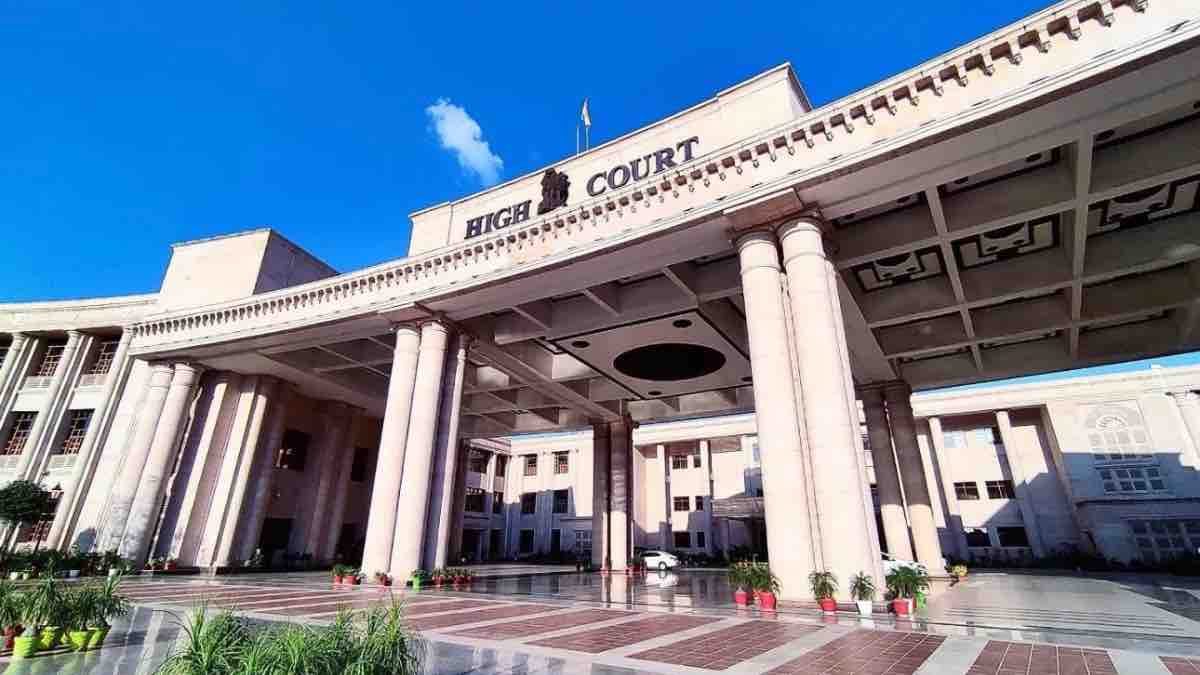
The High Court of Judicature at Allahabad, Lucknow Bench, has directed the State of Uttar Pradesh to pay ₹10 lakh as compensation to the mother of a minor who died by suicide in judicial custody. The Court held the State absolutely liable for the unnatural death and directed the government to frame guidelines for determining compensation in custodial death cases using a multiplier method similar to the Motor Vehicles Act, 1988.
Background of the Case
The petitioner’s minor son, Sukhvinder, was arrested on February 7, 2024, in execution of a warrant related to a 2016 criminal case registered under the Protection of Children from Sexual Offences (POCSO) Act and the Indian Penal Code (IPC). He was subsequently detained in District Prison Pilibhit.
On February 20, 2024, the petitioner was informed by prison authorities that her son had died in custody. The panchnama and post-mortem reports concluded that the cause of death was “asphyxia due to antimortem hanging,” indicating suicide by hanging from a toilet ventilator, with no external injuries found. Following an inquest report by the Judicial Magistrate under Section 176 CrPC (corresponding to Section 196 BNSS), the National Human Rights Commission (NHRC) directed a compensation of ₹3,00,000 to the nearest family member. Aggrieved by the State’s inaction and delay in releasing the compensation, the petitioner filed a writ petition seeking a writ of mandamus for adequate compensation and action against guilty officials.
Arguments of the Parties
Petitioner: The counsel for the petitioner argued that the minor was subjected to torture by prison police personnel due to the non-fulfillment of illegal demands, including a monthly extortion of ₹4,500, which ultimately led to his unnatural death. The petitioner further contended that the respondent authorities pressured the family to perform the last rites immediately and failed to disburse the promised compensation, thereby violating fundamental rights guaranteed under Articles 14 and 21 of the Constitution. To support the claim for compensation, the petitioner relied on several precedents, including Nilabati Behera v. State of Orissa, Re-Inhuman Conditions in 1382 Prisons, and Suo Motu Custodial Violence and Other Matters Relating to Prison Conditions (Meghalaya High Court).
Respondents: The State submitted that the death was a clear act of suicide with no material on record suggesting negligence, misconduct, or custodial violence by the authorities. The respondents stated that the government had already accorded approval for the NHRC-recommended ₹3,00,000 compensation. They explained that the delay in disbursement was due to the ongoing verification of the rightful next of kin and the pending receipt of budgetary allocation.
Court’s Analysis
The Division Bench, comprising Justice Shekhar B. Saraf and Justice Manjive Shukla, emphasized that a custodial death casts a strict onus upon the State and demands strict constitutional scrutiny.
“Custodial torture is a calculated assault on human dignity and whenever human dignity is wounded, civilisation takes a step backwards,” the Court observed. The Bench held that the State bears an absolute, non-delegable duty to ensure the safety of prisoners.
Relying on the International Committee of the Red Cross (ICRC) guidelines and the Supreme Court’s ruling in Re-Inhuman Conditions in 1382 Prisons, the Court distinguished between natural and unnatural deaths, holding that a suicide constitutes an intentional external injury and is therefore classified as an unnatural death for which the State is absolutely liable.
The Court noted that despite the absence of external injuries, the State failed to discharge its burden of proof. “The explanations offered by the respondents is neither cogent nor sufficient to displace the presumption of the death of the petitioner’s son eventuated in prision,” the Court stated.
To determine the Court’s authority to grant relief, the Bench referred to the Supreme Court rulings in Rudul Sah v. State of Bihar and Nilabati Behera v. State of Orissa, which established monetary compensation as an appropriate public law remedy for the infringement of the fundamental right to life. The Court also cited D.K. Basu v. State of West Bengal, reiterating that the objective of such compensation is to “apply balm to the wounds and not to punish the transgressor.”
While addressing the quantum of compensation, the Court examined a Meghalaya High Court judgment (Suo Motu Custodial Violence) that created age-based compensation categories. However, noting that this specific categorization had been stayed by the Supreme Court, the Bench observed that recent higher court precedents have consistently awarded ₹10 lakh for custodial deaths.
Furthermore, the Court outlined mandatory preliminary steps to be taken in all cases of custodial death, including immediate notification to the family, prompt preparation of a panchnama, mandatory video recording of the post-mortem, an immediate judicial inquest, and the prompt payment of initial NHRC-fixed compensation.
Decision
Allowing the writ petition, the High Court directed the respondents to pay a compensation of ₹10,00,000 (Rupees Ten Lakhs) to the legal heirs of the deceased within a period of three weeks.
In a significant directive, the Court ordered the State Government to “frame guidelines fixing compensation by adopting relevant and cogent parameters in awarding compensation in custodial death cases akin to the multiplier method based on age, income and dependants as available under the Motor Vehicles Act, 1988.”
The Court clarified that the awarded compensation is without prejudice to the petitioner’s right to pursue appropriate civil or criminal proceedings against the concerned officials.
- Case Title: Prema Devi v. State of U.P. Thru. its Prin. Secy. Home Deptt. Lko. and 5 others
- Case Number: WRIT-C No. 579 of 2025