

Sibling Points Applicable Only to Currently Enrolled Students, Not Alumni: Delhi High Court Upholds School’s Autonomy
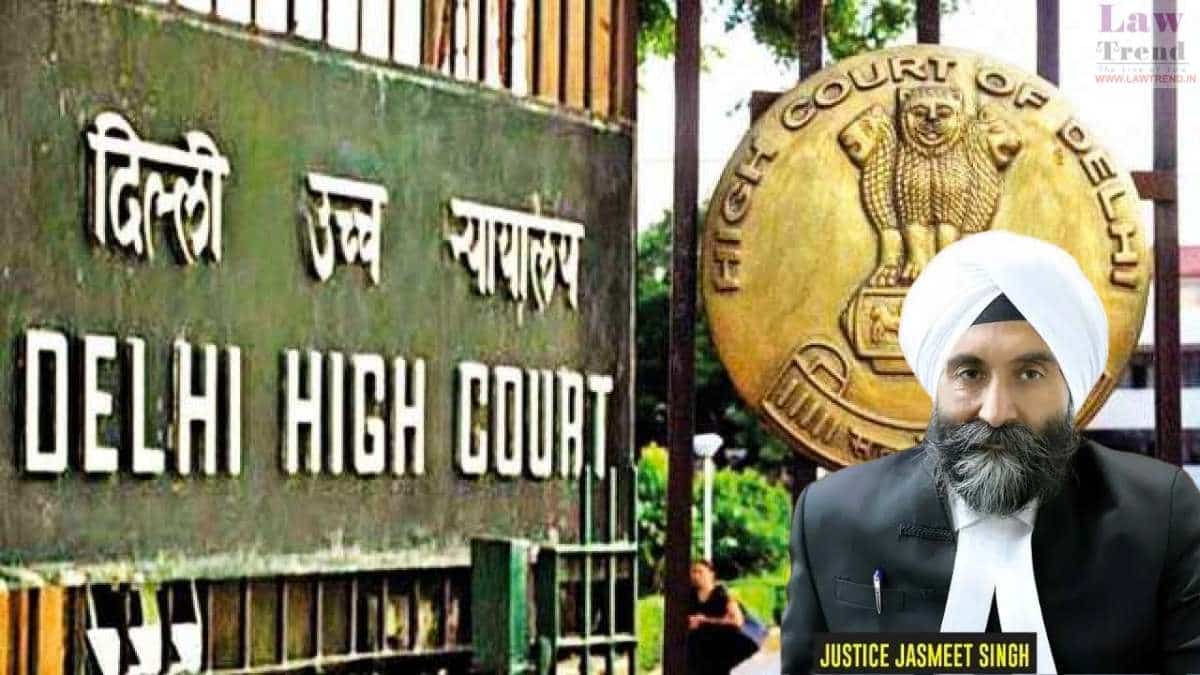

The Delhi High Court has dismissed a writ petition challenging the admission criteria of a private unaided school that restricted “sibling points” only to candidates whose siblings are currently enrolled in the institution. Justice Jasmeet Singh held that private schools enjoy maximum autonomy in formulating admission policies, and a distinction between siblings of existing students and siblings of alumni constitutes a reasonable classification.

The primary legal question before the Court was whether the admission criteria of Venkateshwar Global School (Respondent No. 3), which denies sibling points to applicants whose elder siblings have already graduated (alumni), is arbitrary or violative of Article 14 of the Constitution of India. The Court concluded that the criteria was clear, uniformly applied, and grounded in administrative convenience, thus refusing to interfere with the school’s internal management.

Background of the Case

The petitioner, Gauri Kansal (a minor), through her father, applied for admission to the pre-school class for the 2026-27 session. According to the school’s point system, she was allotted 60 points (50 for neighbourhood and 10 for being a girl child). The petitioner contended that the child should have received an additional 20 sibling points, totaling 70 points.

The claim for sibling points was based on the fact that the petitioner’s elder son, Master Maulik Kansal, was a student at the school and had passed out in 2020. The school rejected the request, stating that its criteria required the sibling to be an “existing student” and a “real brother or sister.” In this case, the elder son was an alumnus and the candidate was his half-sister (sharing a biological father but different biological mothers).

Arguments of the Parties

Petitioner’s Submissions: Counsel for the petitioner argued that the exclusion of siblings of former students is “manifestly arbitrary” and devoid of “intelligible differentia.” He contended that the objective of sibling points—recognizing a family’s association with the school—is fulfilled by alumni as well. It was further argued that the petitioner had a “legitimate expectation” based on their past association with the school and that the school, as an instrumentality of the State under Article 12, must act fairly. Reliance was placed on E.P. Royappa v. State of T.N. (1974) and Ayan Jorwal v. Govt. of NCT of Delhi (2023).

READ ALSO  Payment Under Resolution Plan Does Not Extinguish Liability of Principal Borrower: Supreme Court

Respondents’ Submissions: Senior Counsel for the school argued that as a private unaided institution, it has the fundamental right to manage its affairs under Article 19(1)(g). He emphasized that the criteria were pre-declared and transparent. The school justified the “existing student” requirement on grounds of “administrative and logistical convenience,” such as parent-teacher meetings and handling fee payments for multiple children attending the school simultaneously. The Directorate of Education (DoE) supported the school’s stance, noting that unaided schools have autonomy in formulating point systems.

Court’s Analysis and Observations

Autonomy of Private Schools: Referring to the landmark judgment in T.M.A. Pai Foundation v. State of Karnataka (2002), the Court observed that private unaided schools have “maximum autonomy” in day-to-day administration, including the admission of students. Justice Singh noted:

READ ALSO  Can an Accused be Convicted for Rape on the basis of Victim's Sole Testimony? Answers Supreme Court

“The school is free to form its own policy as far as the admission criteria is concerned. The same falls within the definition of ‘autonomy’ granted to unaided private schools…”

Reasonable Classification: The Court found that the distinction between siblings of current students and alumni was not whimsical.

“A line has to be drawn somewhere, the mere fact that line could have been drawn differently does not make the admission criteria arbitrary.”

The Court agreed with the school that “logistical convenience” provided a “rational nexus with the object sought to be achieved.”

Literal Interpretation and Judicial Restraint: The Court refused to “artificially expand” the meaning of “existing student” to include alumni. It held that interpreting the criteria beyond its plain terms would amount to an “expansion of scope of judicial interpretation” which is not permissible. The Court cited Master Aditya Singh v. St. Marks Sr. Secondary School (2019) and Miss Aahana v. Sanskriti School (2021) to reinforce that courts should not interfere if the criteria are reasonable and applied uniformly.

Legitimate Expectation: The Court rejected the plea of legitimate expectation, noting that the condition was “pre-declared and uniformly applied.” It observed:

READ ALSO  PayPal moves HC against order holding it as payment system operator under money laundering law

“What is sought by the petitioner is not protection of an existing expectation, but creation of a new right.”

Final Decision

The Court dismissed the writ petition, stating it could not substitute its own views for those of the school management. However, noting the petitioner’s positive past experience with the institution, the Court added a sympathetic closing:

“The respondent No. 3 is requested to consider the case of the petitioner sympathetically and provide admission, if it can be so done.”

  • Case Title: Gauri Kansal (Minor) through Father Anil Kansal v. Govt. of NCT Delhi & Ors.
  • Case No.: W.P. (C) 1649/2026

Law Trend
Law Trendhttps://lawtrend.in/
Legal News Website Providing Latest Judgments of Supreme Court and High Court

Related Articles

Latest Articles

