

Extra-Judicial Confession and Uncorroborated Recovery Insufficient for Conviction: Allahabad HC Acquits Man After 20 Years
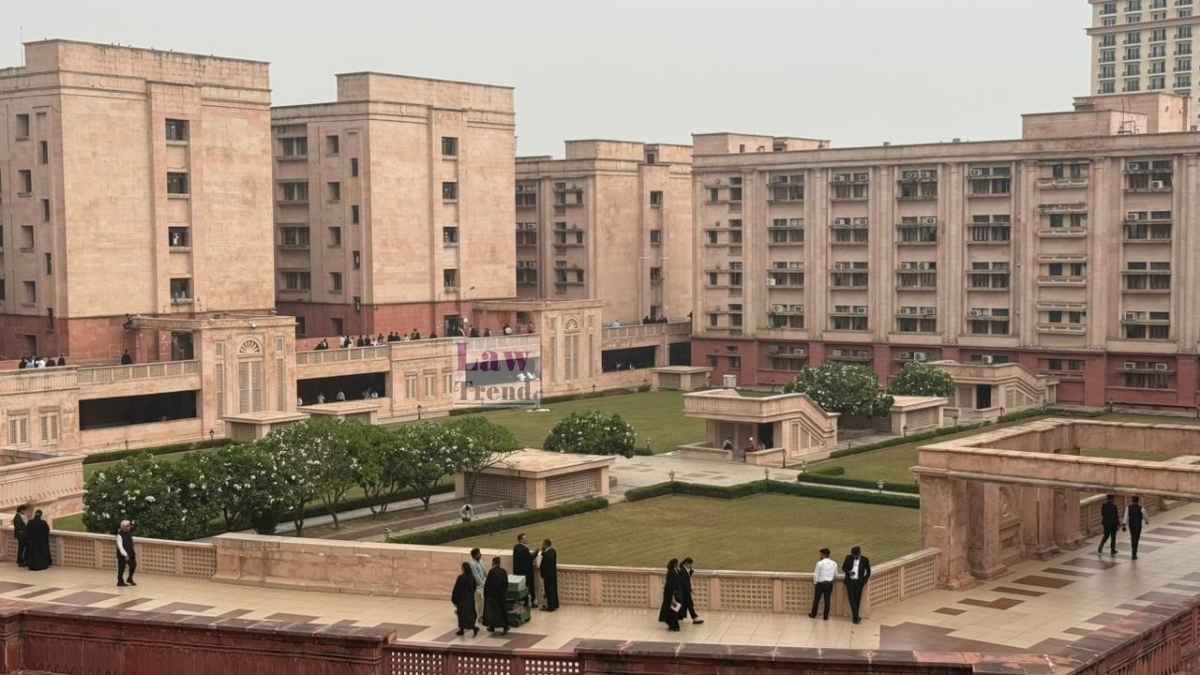

The Allahabad High Court (Lucknow Bench) has set aside the conviction and life imprisonment of a man accused of murdering his parents and brother in 2006. The Division Bench, comprising Justice Rajnish Kumar and Justice Zafeer Ahmad, acquitted the appellant, ruling that the prosecution failed to establish a complete chain of circumstantial evidence required to prove guilt beyond a reasonable doubt.

The Court observed that extra-judicial confessions are weak evidence requiring strict scrutiny and that the mere recovery of weapons, unsupported by independent witnesses, cannot sustain a conviction.

Case Background

The appeal challenged the judgment dated December 15, 2007, passed by the Sessions Judge, Balrampur, in Sessions Trial No. 48 of 2006. The appellant, Shiv Pujan Verma, was convicted under Section 302 of the Indian Penal Code (IPC) for the murders of his father Raghunath, mother Kamla, and brother Munshi.

The prosecution’s case began with a written report filed by Mangal Prasad Verma (the appellant’s son) on January 17, 2006, stating that his grandfather, grandmother, and uncle had been murdered by unknown persons during the night. Although the FIR was registered against unknown individuals, the investigation later focused on Shiv Pujan Verma.

The police claimed that during interrogation, the appellant confessed to the crime and led them to the recovery of an axe and a danda (stick) from a heap of sugarcane leaves. The prosecution relied heavily on an extra-judicial confession allegedly made by the appellant to one Ram Chhabiley (PW-2) and the recovery of the weapons.

Arguments

READ ALSO  FIRs Filed in Different Police Stations Cannot Be Transferred by Invoking Powers U/Sec 407 CrPC; Only Cases Can Be Transferred From Court to Other: Karnataka HC

The counsel for the appellant, Sri Rajiva Dubey, argued that the conviction was based on conjectures. He submitted that there were no eyewitnesses to the occurrence and that the prosecution’s case rested substantially on the testimony of PW-2, which was unreliable. It was further argued that independent witnesses to the recovery of the weapons had turned hostile, and the appellant was falsely implicated.

Learned A.G.A. for the State opposed the appeal, contending that the chain of circumstances was complete. The State argued that the recovery of the murder weapons at the appellant’s instance, coupled with the extra-judicial confession and a property dispute acting as a motive, established his guilt.

Court’s Analysis and Observations

Writing the judgment for the Bench, Justice Zafeer Ahmad meticulously dissected the circumstantial evidence.

1. On Extra-Judicial Confession: The Court examined the evidentiary value of the extra-judicial confession allegedly made to PW-2. Citing the Supreme Court’s decision in Sahadevan v. State of T.N. (2012), the Bench reiterated that such confessions are weak evidence and must be examined with greater care.

The Court found the testimony of PW-2 unreliable, noting that he did not hold any position of authority or a relationship of trust that would prompt a voluntary confession. Furthermore, PW-2’s conduct of maintaining silence after hearing about a triple murder was termed “inconsistent with ordinary human behaviour.”

READ ALSO  Most Serious and Diabolic Offence Against a Minor Girl: Allahabad HC Upholds Conviction of Man Who Mutilated Private Part of a Girl

2. On Recovery of Weapons: Regarding the recovery of the axe and danda under Section 27 of the Evidence Act, the Court noted that the independent witnesses, PW-3 (Mahendra Nath) and PW-4 (Guddan), turned hostile and denied witnessing any recovery. They claimed their signatures were obtained on blank papers.

The Court held that a recovery based solely on a police statement without independent corroboration does not inspire confidence. Referencing Raja Naykar v. State of Chhattisgarh (2024), the Bench observed:

“Mere recovery of blood-stained weapon, even bearing the same blood group as the victim, is insufficient to prove the charge of murder unless the recovery is convincingly linked to the crime and forms part of a complete and unbroken chain of incriminating circumstances.”

3. Circumstantial Evidence and the ‘Panchsheel’ Principles: The Court applied the “five golden principles” (panchsheel) regarding circumstantial evidence laid down in Sharad Birdhichand Sarda v. State of Maharashtra (1984). The Bench found that the prosecution failed to prove a complete chain of events that would exclude every hypothesis except the guilt of the accused.

“The circumstances relied upon by the prosecution neither stand firmly proved nor form a continuous and unbroken chain. They do not point exclusively towards the guilt of the appellant, nor do they exclude other reasonable hypotheses consistent with his innocence,” the Court stated.

4. On Motive: While acknowledging the existence of a property dispute, the Court clarified that motive alone cannot be the sole basis for conviction. Citing Mahendra Singh & Ors. v. State of Madhya Pradesh (2022), the Bench held:

READ ALSO  अनुच्छेद 12 के तहत निगम एक 'राज्य' है, इसलिए वह संविदात्मक विवादों में भी निष्पक्ष और उचित तरीके से कार्य करने के लिए बाध्य है: इलाहाबाद हाईकोर्ट

“Motive can only be an additional link in a proved chain of circumstances; it cannot by itself take the place of proof.”

Decision

The High Court concluded that the Trial Court had erred in placing reliance on weak and uncorroborated evidence. The Bench held that the prosecution failed to prove the charge beyond a reasonable doubt and that the appellant was entitled to the benefit of the doubt.

“In criminal law, even a single reasonable doubt is sufficient to entitle the accused to an acquittal,” the Court remarked.

The appeal was allowed, and the judgment and order of the Sessions Judge, Balrampur, were set aside. The Court acquitted Shiv Pujan Verma of all charges and directed his immediate release.

Case Title: Shiv Pujan Verma v. State of U.P.

Case Number: Criminal Appeal No. 79 of 2008 

Law Trend
Law Trendhttps://lawtrend.in/
Legal News Website Providing Latest Judgments of Supreme Court and High Court

Related Articles

Latest Articles

