

Supreme Court Directs Regularization of Income Tax Department Casual Workers, Rules Tribunal and High Court Erred in Applying ‘Umadevi’ Judgment
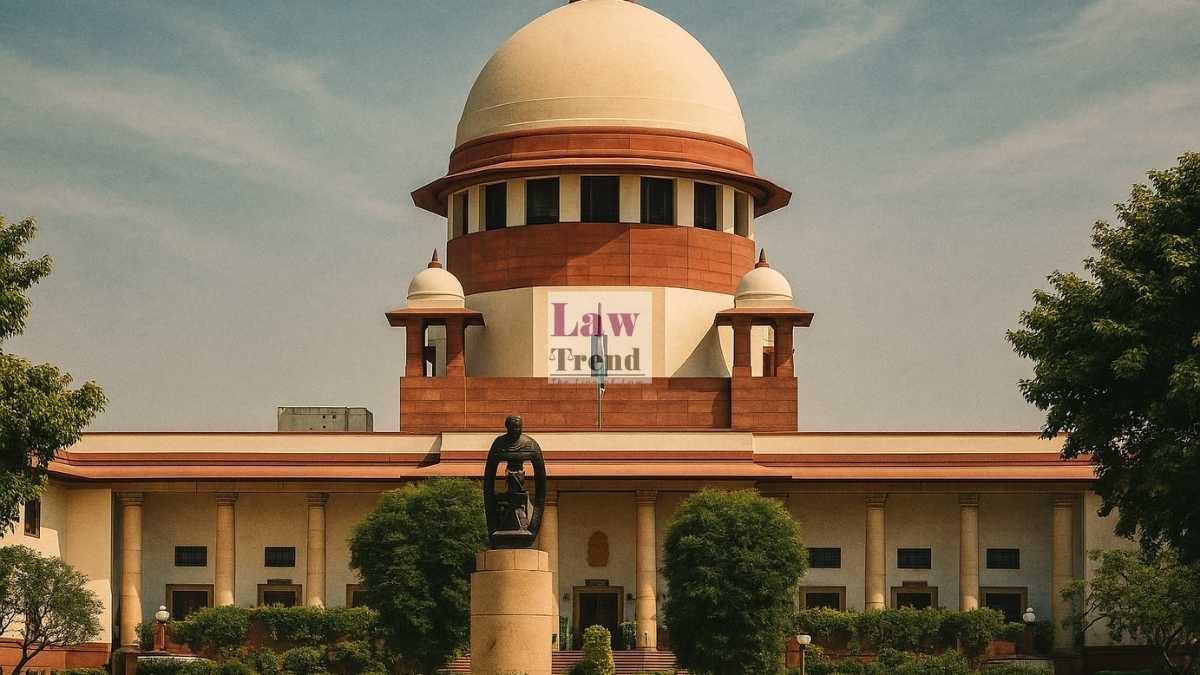

The Supreme Court has set aside a judgment of the Madhya Pradesh High Court and directed the regularization of casual workers employed by the Income Tax Department, Gwalior. The Bench, comprising Justice J.K. Maheshwari and Justice Atul S. Chandurkar, held that the appellants were entitled to regularization on the ground of parity with similarly situated employees who had already been granted relief by the Apex Court in previous judgments.

Background of the Case

The appellants, having registered with the Employment Exchange, were engaged as casual workers (Sweepers, Cooks, Watermen, etc.) in the Office of the Commissioner of Income Tax, Gwalior, between 1993 and 1998. Seeking temporary status and subsequent regularization, they made representations to the Department. When these requests were not accepted, they approached the Central Administrative Tribunal (CAT), Jabalpur Bench.

The Tribunal, vide judgment dated May 13, 2015, rejected their claim. It held that the appellants did not fulfill the criteria laid down by the Constitution Bench in Secretary, State of Karnataka and Ors. Vs. Umadevi (3) and Ors. (2006), specifically the requirement of having rendered regular service for ten years as on April 10, 2006.

Aggrieved by the Tribunal’s decision, the appellants moved the High Court of Madhya Pradesh. The High Court, by its judgment dated August 26, 2019, declined to interfere with the Tribunal’s adjudication and dismissed the writ petition. Consequently, the appellants approached the Supreme Court.

Submissions of the Parties

The appellants contended that their names were sponsored through the Employment Exchange and they were engaged after due interviews. They argued that the Department’s move to outsource their work via Circulars in 2011 and 2012 indicated the perennial nature of the work.

READ ALSO  Whether Sec 243 CrPC Bars IO to Appear as Witness For Accused in Cross Case Where Accused is Complainant? Answers MP HC

Crucially, the appellants submitted that they were similarly situated to the casual workers in the case of Ravi Verma and Ors. Vs. Union of India and Ors. (2018), whose services were regularized pursuant to the Supreme Court’s directions. They relied on the judgment in Jaggo Vs. Union of India and Ors. (2024), arguing that their engagement was merely “irregular” and not “illegal.”

The Union of India (Respondent) opposed the plea, maintaining that the appellants did not satisfy the eligibility criteria under the Umadevi judgment regarding ten years of continuous service as of April 10, 2006. The Department argued that there were no sanctioned posts available at Gwalior and that the work was subsequently outsourced on a contractual basis.

Supreme Court’s Observations and Analysis

The Supreme Court examined the “List of Daily Wages Worker Working CIT Charge Gwalior as on 31.10.2005” provided in the convenience compilation. The Court noted that the list included the names of the appellants in the Ravi Verma case alongside the names of the present appellants.

Since the services of the workers in the Ravi Verma case were regularized following the Court’s order dated March 13, 2018, the Bench observed:

READ ALSO  Juvenile Justice Board Has No Power to Review Its Own Decisions or Alter Stance in Subsequent Proceedings: Supreme Court

“The present appellants are, therefore, similarly situated as the appellants in Ravi Verma and Ors… The Income Tax Department could not have discriminated in the matter of regularizing the services of similarly situated employees.”

The Court also referred to the recent decision in Raman Kumar and Ors. Vs. Union of India and Ors. (2023), where similar relief was granted.

Furthermore, the Bench placed significant reliance on the law laid down in Jaggo Vs. Union of India and Ors. (2024), quoting the following observation regarding the misapplication of the Umadevi judgment:

“It is regrettable that its [Umadevi] principles are often misinterpreted or misapplied to deny legitimate claims of long-serving employees… refusal regularization simply because their original terms did not explicitly state so, or because an outsourcing policy was belatedly introduced, would be contrary to principles of fairness and equity.”

READ ALSO  Pension Schemes Floated by the State Government Are Delegated Beneficial Legislation & Ought to be Interpreted Widely: SC  

The Court held that the Tribunal was not justified in denying relief by relying on Umadevi, and the High Court erred in affirming that decision.

Decision

The Supreme Court allowed the appeal and set aside the High Court’s judgment dated August 26, 2019.

Justice Atul S. Chandurkar, writing for the Bench, ordered:

“The services of the appellants be regularized from 01.07.2006 on the same terms as made applicable in Ravi Verma and Ors. (supra) as well as in Raman Kumar and Ors. (supra). The benefits be released in favour of the appellants within a period of three months from today.”

The Court further clarified that the applicants in Interim Application No. 42233/2020, who were impleaded as party respondents, are also entitled to the same reliefs. No order was made as to costs.

Case Details:

Case Title: Pawan Kumar & Ors. v. Union of India & Ors.

Civil Appeal No.: Arising out of SLP (C) No. 29214 of 2019

Bench: Justice J.K. Maheshwari and Justice Atul S. Chandurkar

Law Trend
Law Trendhttps://lawtrend.in/
Legal News Website Providing Latest Judgments of Supreme Court and High Court

Related Articles

Latest Articles

