

Discretionary Power U/s 482 CrPC Not to be Exercised When Remedy of Discharge is Already Pursued by Petitioners: Supreme Court
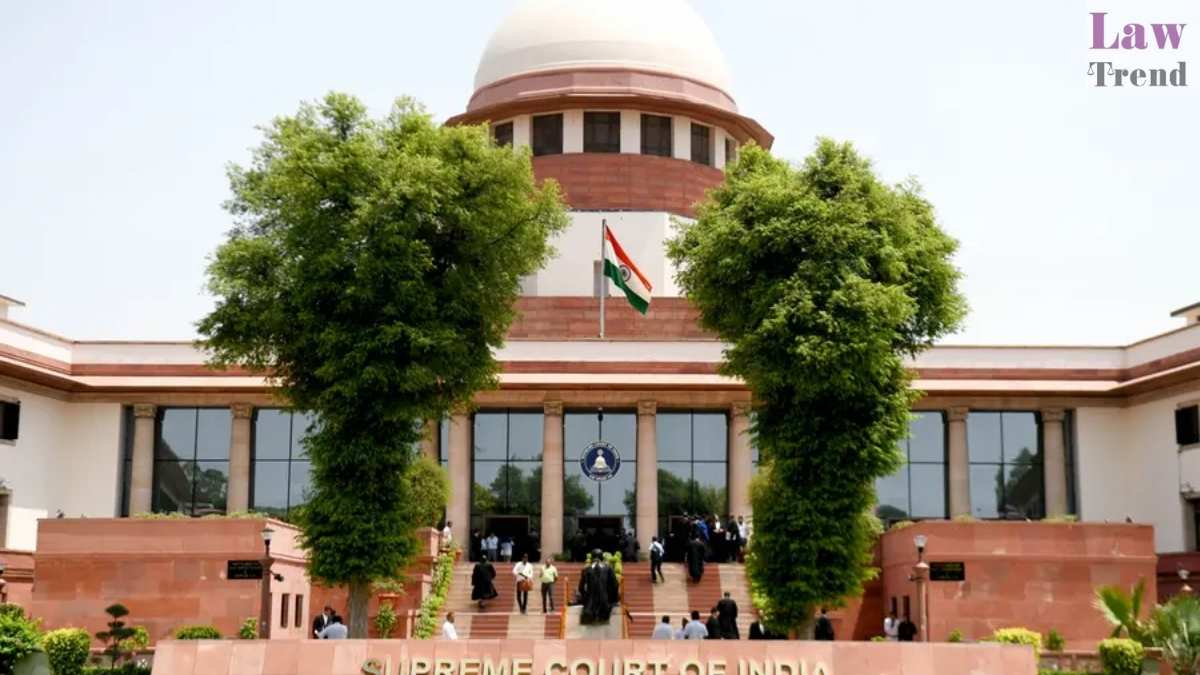

The Supreme Court of India has refused to interfere with a High Court order involving a petition filed under Section 482 of the Code of Criminal Procedure (Cr.P.C.), noting that the petitioners had “consciously on their own” pursued a discharge application before invoking the High Court’s discretionary jurisdiction.

A Bench comprising Justice M.M. Sundresh and Justice Nongmeikapam Kotiswar Singh dismissed the Special Leave Petition filed by Deepak Ananth and others against a judgment of the Bombay High Court dated December 8, 2025.

Background

The matter reached the Apex Court via a Special Leave Petition (Crl.) No. 731/2026, arising out of CRLA No. 1197/2023 passed by the Bombay High Court. The petitioners had initially filed an application seeking discharge from the criminal proceedings. While that application was still pending, they subsequently moved the High Court under Section 482 of the Cr.P.C., which grants the High Court inherent powers to quash proceedings to prevent abuse of process or to secure the ends of justice.

Arguments of the Parties

The learned counsel appearing for the petitioners sought relief by placing reliance on the Supreme Court’s decision in Vijay & Ors. v. State of Maharashtra & Anr. (2017) 13 SCC 317. The counsel argued that the High Court should have exercised its powers under Section 482 notwithstanding the availability of other remedies.

Court’s Analysis and Observations

Upon hearing the counsel, the Supreme Court distinguished the cited precedent from the facts of the current case. The Bench observed:

READ ALSO  [Order VII Rule 11 CPC] Court Cannot Reject the Plaint by Reading Few Lines, Plaint has to be Read as a Whole, Rules Supreme Court

“In our considered view, the above case Vijay & Ors. has got no application to the present case of the petitioners, as it was a case dealing with a situation where the provisions of Section 482 of the Code of Criminal Procedure, 1973 (for short ‘Cr.P.C.’) ought to have been exercised by the High Court, notwithstanding the availability of other remedy.”

The Court highlighted the procedural choices made by the petitioners in the present instance, noting:

“In the case on hand, the petitioners, consciously on their own, have first filed an application for discharge and during the pendency of the said application have subsequently filed an application under Section 482 of the Cr.P.C. which is a discretionary power.”

Decision

The Court concluded that there was no reason to interfere with the impugned order of the Bombay High Court. However, to ensure that the legal rights of the petitioners regarding their discharge application remained protected, the Bench clarified:

READ ALSO  Sexual Offences Against Children Must Be Dealt with Stringently, No Leniency Under POCSO: Chhattisgarh High Court

“However, we make it clear that the order passed by the High Court or the order passed by us will have no bearing on the challenge made to the order which had rejected the discharge application.”

The Special Leave Petition was accordingly disposed of, along with any pending applications.

Case Details:

  • Case Title: Deepak Ananth & Ors. v. The State of Maharashtra & Anr.
  • Case Number: SLP (Crl.) No. 731/2026
  • Coram: Justice M.M. Sundresh and Justice Nongmeikapam Kotiswar Singh

READ ALSO  Allahabad High Court Imposes ₹10 Lakh Cost on Catholic Diocese, UP Govt for Illegally Depriving Man of Property for 32 Years
Ad 20- WhatsApp Banner

Law Trend
Law Trendhttps://lawtrend.in/
Legal News Website Providing Latest Judgments of Supreme Court and High Court

Related Articles

Latest Articles

