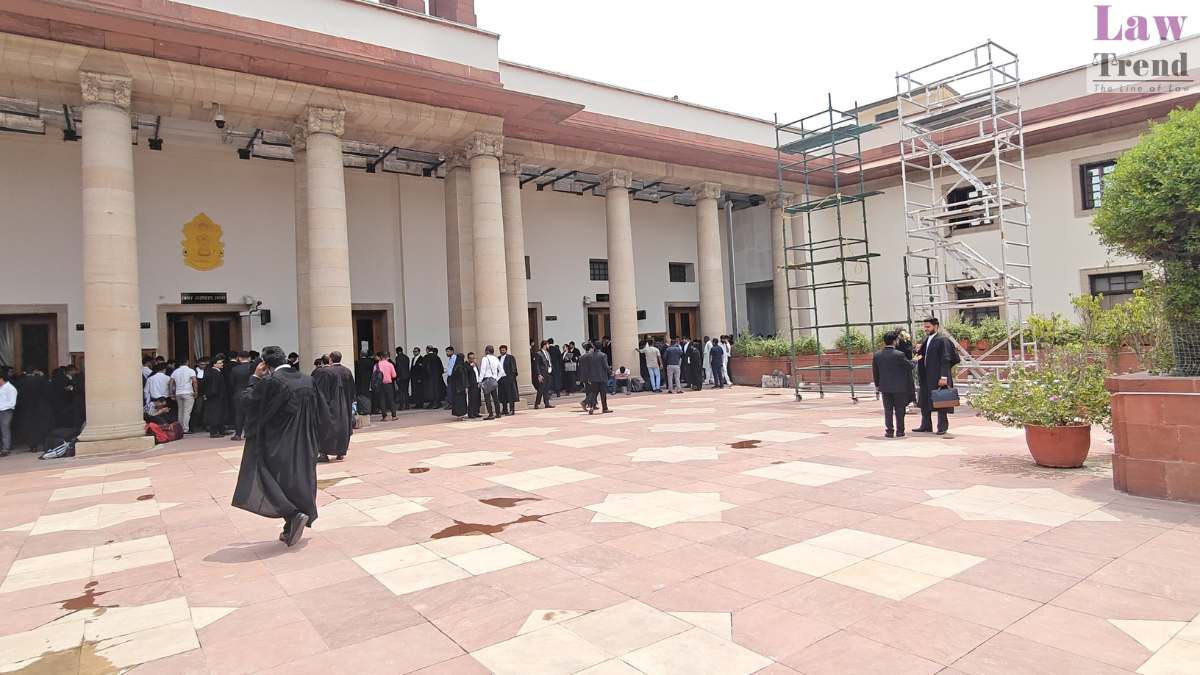
The Supreme Court of India has dismissed a civil appeal regarding a property dispute, ruling that a suit for recovery of possession cannot succeed if the plaint lacks material pleadings regarding the alleged date of dispossession and the basis of the claim.
The Bench, comprising Justice Pankaj Mithal and Justice S.V.N. Bhatti, observed that for a relief of perpetual injunction or recovery of possession, the plaintiff must prove actual possession or provide specific details regarding when and how possession was lost.
Case Background
The appeal arose from a judgment dated July 24, 2010, by the High Court of Himachal Pradesh in RSA No. 221 of 1998.
The original suit (Case No. 496 of 1990) was filed by Sham Sunder (now deceased and represented by legal heirs) before the Sub Judge 1st Class, Una. The plaintiff initially sought a perpetual injunction restraining the defendants from interfering with his possession of agricultural land measuring 8 Kanals 05 Marlas in Village Lohara, Tehsil Amb, District Una. Later, the plaint was amended to include a prayer for the recovery of possession.
The plaintiff claimed to be the owner/co-owner of the land. The first defendant, Soma Devi (since deceased), contested the suit, asserting that she was in possession of the suit schedule. She claimed that her father-in-law, as the Karta of the family, had granted her the right of enjoyment of the land in lieu of maintenance following the death of her husband, Roshan Lal. She argued that this right had ripened into absolute ownership.
Procedural History
- Trial Court: By a judgment dated June 20, 1992, the Trial Court dismissed the suit.
- First Appellate Court: The Additional District Judge, Una, allowed the plaintiff’s appeal on April 8, 1998.
- High Court: In the Second Appeal, the High Court set aside the First Appellate Court’s order. The High Court held that Soma Devi’s limited interest acquired in lieu of maintenance had automatically ripened into absolute ownership under Section 14(1) of the Hindu Succession Act, 1956.
Arguments Before the Supreme Court
Mr. Mohit D. Ram, appearing for the appellants (plaintiffs), contended that the plaintiff’s name was entered in the revenue record and that he was entitled to a share in the property. He argued that the alternative prayer for recovery of possession should have been entertained as the first defendant failed to establish her plea regarding the grant of land for maintenance.
Conversely, Mr. Govind Goel, counsel for the respondents, argued that the plaintiff failed to prove possession. He submitted that the plaintiff did not plead or prove how the claim for recovery of possession was maintainable in a suit filed in 1990 without establishing when possession was lost.
Supreme Court’s Observations
The Supreme Court scrutinized the requirements for granting a perpetual injunction and recovery of possession. The Court noted that for a perpetual injunction, the plaintiff must prove actual possession on the date of filing the suit.
Regarding the claim for recovery of possession, the Court outlined essential conditions that must be met in the pleadings:
- Entitlement.
- Manner of entitlement.
- Specifics on the date and mode of dispossession.
- The nature of possession claimed by the defendant and why it is illegal.
The Bench observed that in the present case, “these pleadings are completely absent.”
Reliance on Precedent
The Court referred to the judgment in Maria Margarida Sequeira Fernandes v. Erasmo Jack de Sequeira (2012) 5 SCC 370, which mandates that pleadings must contain sufficient particulars. The Court quoted the precedent:
“The person averring a right to continue in possession shall, as far as possible, give a detailed particularised specific pleading along with documents to support his claim and details of subsequent conduct which establish his possession.”
The Court reiterated that pleadings must specifically address who the owner is, the date of entry into possession, and the basis of the claim.
Decision
The Supreme Court held that the plaint was “bereft of the required details on the alleged date of dispossession and the basis on which recovery of possession is prayed for.”
The Bench criticized the First Appellate Court for fastening the burden on the defendant while ignoring the deficiencies in the plaintiff’s case.
“In the absence of material pleadings and evidence, the suit of plaintiff is rightly dismissed,” Justice S.V.N. Bhatti wrote for the Bench.
Consequently, the Civil Appeal was dismissed, and the impugned judgment of the High Court was upheld, though primarily on the grounds of evidentiary and pleading deficiencies regarding possession.
Case Details:
- Case Title: Kanta and Others v. Soma Devi (Dead) Through LR. and Others
- Case Number: Civil Appeal No. 8451 of 2011 (2026 INSC 133)
- Bench: Justice Pankaj Mithal and Justice S.V.N. Bhatti