

CJM Lacks Power to Transfer Cases on Party’s Application; Only Sessions Judge Empowered Under BNSS/CrPC: Allahabad HC
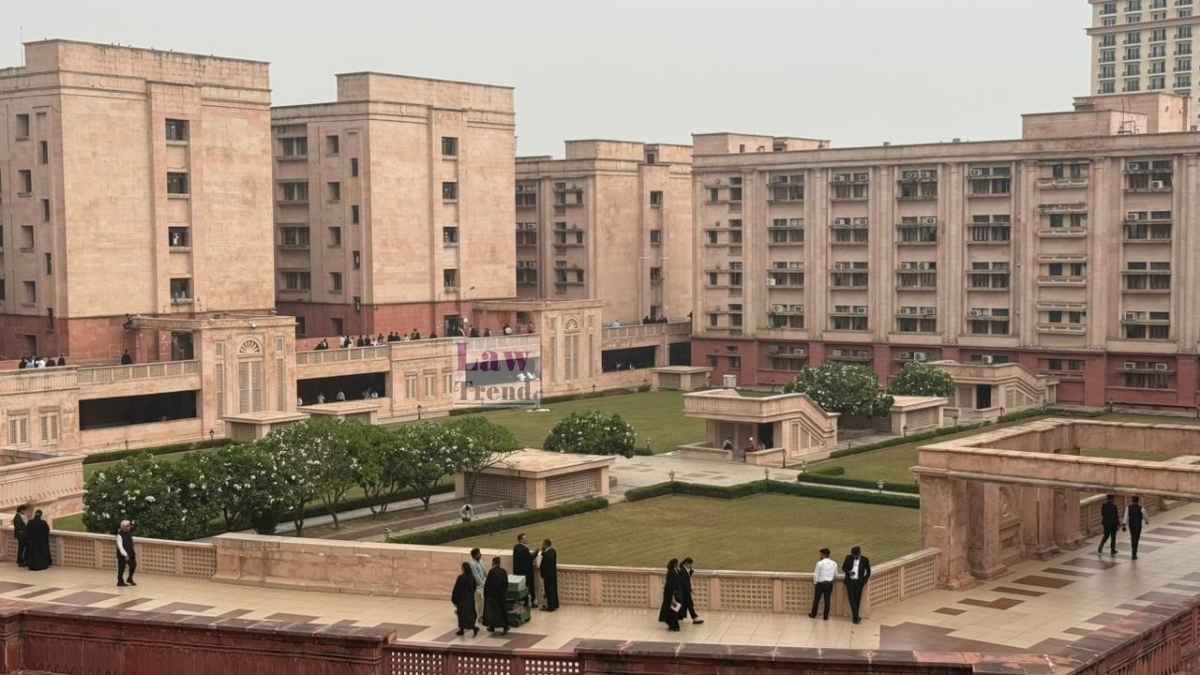

The Lucknow Bench of the Allahabad High Court has ruled that the Chief Judicial Magistrate (CJM) does not possess the statutory authority to transfer a criminal case from one court to another upon an application moved by a party.

The Bench of Justice Tej Pratap Tiwari held that the power to transfer cases is vested exclusively in the Sessions Judge, the High Court, and the Supreme Court under the Bharatiya Nagarik Suraksha Sanhita (BNSS) and the Code of Criminal Procedure (CrPC). Consequently, the Court set aside a transfer order passed by the CJM, Lucknow, terming it as being without jurisdiction.

Factual Background

The petition was filed by Nitesh Rastogi under Section 528 of the BNSS, challenging an order dated October 10, 2025, passed by the CJM, Lucknow. By the impugned order, the trial of Criminal Case No. 6148/2022 (State vs. Bijendra Pal Singh and other) was transferred from the court of Judicial Magistrate 1st (A.T.S.), Lucknow, to the court of Additional Chief Judicial Magistrate 1st, Lucknow.

The case originated from an FIR lodged against Bijendra Pal Singh and Rajiv Singh for alleged misappropriation of gold jewellery worth approximately Rs 3.20 crore. Following the investigation, a charge sheet was filed, and cognizance was taken by the trial court in February 2022.

During the pendency of the trial, the accused persons moved an application for transfer of the case before the Sessions Judge, Lucknow, which was rejected. Subsequently, they filed another transfer application before the CJM, Lucknow. Acting on a report sought from the Judicial Magistrate, the CJM passed the impugned order transferring the case.

READ ALSO  सीबीआई की विशेष अदालत ने पूछा, गिरफ्तार बंगाल के मंत्री को जेल में अंगूठी पहनने की अनुमति कैसे दी गई?

Submissions of the Parties

Counsel for the applicant, Mr. Amit Jaiswal and Mr. Ambrish Singh Yadav, argued that Section 408 of the CrPC (corresponding to Section 448 of the BNSS) confers the power of transfer exclusively upon the Sessions Judge. They contended that no such equivalent power is vested in the CJM. Reliance was placed on several judgments, including Radhey Shyam vs. State of U.P. and Sudesh Chhikara vs. State (Govt. Of NCT of Delhi).

The applicant further argued that the transfer application filed before the CJM was not supported by an affidavit, violating mandatory statutory requirements as laid down in Dipak Babaria vs. State of Gujarat.

Conversely, the learned A.G.A. and counsel for the opposite parties submitted that the CJM has administrative and supervisory authority under Section 15 of the CrPC to distribute business among subordinate Magistrates. They argued that the power to withdraw and reassign cases flows from such control and was exercised to secure the ends of justice.

Court’s Analysis

Justice Tiwari examined the scheme of the BNSS and CrPC, specifically Section 15 (Subordination of Judicial Magistrates), Section 410 (Withdrawal of cases), and Sections 407/408 (Power of High Court/Sessions Judge to transfer cases).

READ ALSO  Private Complaint Against Notary for his Official Act Not Maintainable

The Court observed:

“The scheme of powers relating to transfer of criminal cases demonstrates the legislative intent with sufficient clarity. Under these provisions, the authority to transfer criminal cases has been explicitly conferred upon the Supreme Court, the High Court, and the Court of Session.”

The Court further noted:

“A careful reading of the statutory framework makes it evident that the Chief Judicial Magistrate (CJM) has not been vested with any power to transfer criminal cases. The hierarchy and subordination prescribed under the Code clearly establish that the CJM is subordinate to the Sessions Judge.”

Referring to the judgment in Sudesh Chhikara v. State (NCT of Delhi) (2025) and A. K. Singh v. Virendra Kumar Jain (1999), the Court clarified the distinction between administrative withdrawal of cases and judicial transfer:

“Section 410… jurisdiction of the Chief Judicial Magistrate is administrative in nature. It is to keep equilibrium of cases amongst the various Magistrates working under him… This provision does not empower a Chief Judicial Magistrate to exercise power of transfer on complaint by one of the parties. For that, the remedy to the aggrieved party is under section 408… exercised by the Sessions Judge.”

The Court also referred to the Circular Orders of the High Court of Judicature at Allahabad, noting that any distribution of work or change therein by the CJM requires the prior approval of the District Judge. The Court found that in this case, neither was prior approval taken nor was the Sessions Judge informed.

Decision

The High Court held that the CJM, Lucknow, acted beyond the scope of jurisdiction. The Court emphasized that the transfer application had already been rejected by the Sessions Judge, a fact ignored while passing the impugned order.

READ ALSO  धारा 311 CrPC | केवल वकील का परिवर्तन गवाहों को वापस बुलाने का आधार नहीं हो सकता: इलाहाबाद हाईकोर्ट

Setting aside the order dated October 10, 2025, the Court allowed the petition.

Notably, observing that such a practice is prevalent in district courts, the Court issued a directive to the registry:

“Delving into the importance of the issue raised in the instant matter and taking note of the grave fact that such practice is being followed by most of the District Courts across the State of Uttar Pradesh, the learned Registrar General of this Court is directed to issue an appropriate circular in this regard.”

Case Details:

Case Title: Nitesh Rastogi vs. State of U.P. Thru. Addl. Chief Secy./Prin. Secy. Home Lko. and 2 others

Case Number: Application U/s 482 No. 9472 of 2025

Bench: Hon’ble Justice Tej Pratap Tiwari

Counsel for Applicant: Amit Jaiswal, Ambrish Singh Yadav

Counsel for Opposite Party: G.A., Durgesh Kumar Shukla, Pt. S. Chandra, Arvind K. Tripathi

Law Trend
Law Trendhttps://lawtrend.in/
Legal News Website Providing Latest Judgments of Supreme Court and High Court

Related Articles

Latest Articles

