

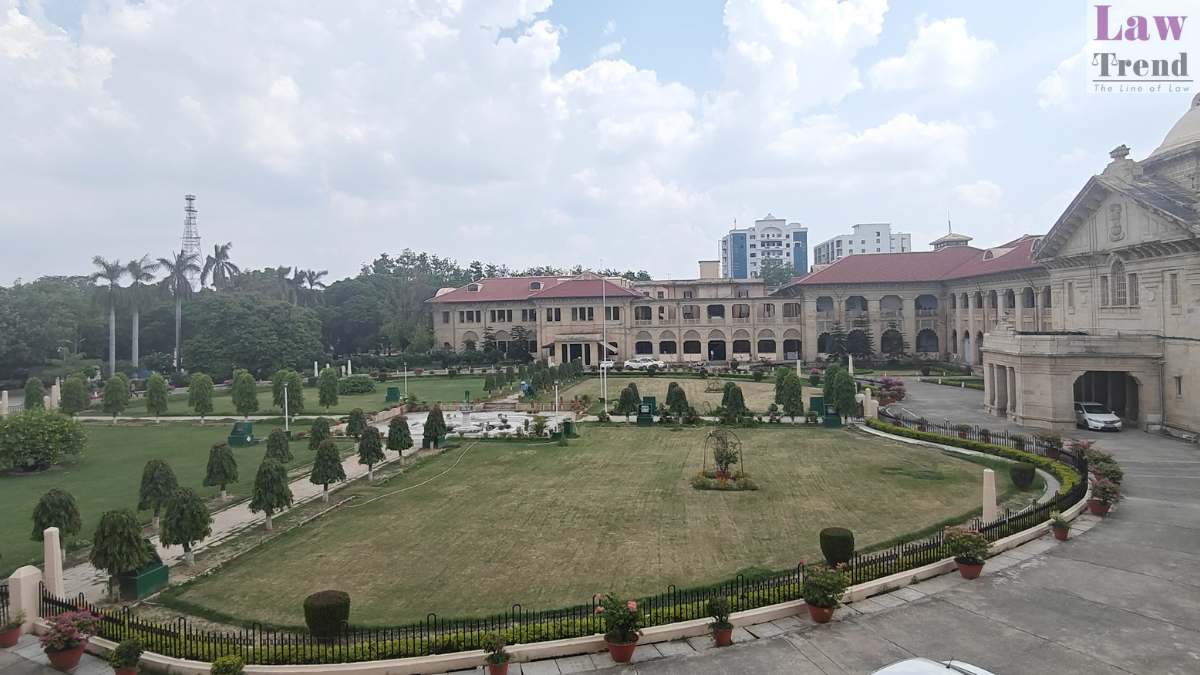
The Allahabad High Court has granted bail to a Tamil Nadu resident, Dev Sahayam Deniyal Raj, accused of leading a group involved in alleged unlawful religious conversions in Mirzapur, Uttar Pradesh. The court considered the nature of the accusations and available evidence before granting relief, without commenting on the merits of the case.
The Allahabad High Court has granted bail to Dev Sahayam Deniyal Raj, a resident of Tamil Nadu, who was arrested in connection with a case of alleged unlawful religious conversion under the Uttar Pradesh Prohibition of Unlawful Conversion of Religion Act, 2021.
The bail was granted by Justice Ashutosh Srivastava, who noted in the order that a case for bail was made out considering the nature of allegations, the severity of punishment in case of conviction, the nature of supporting evidence, and the reasonable apprehension of witness tampering.
Raj was arrested on September 30, 2025, along with co-accused Paras, and both were lodged in jail since. They were booked under Sections 3 and 5(1) of the 2021 anti-conversion law.
According to the police, Raj was the leader of a gang allegedly involved in converting economically and socially weaker individuals, particularly from tribal communities, to Christianity. He was accused of organising ‘healing prayer meetings’ and offering financial assistance as inducement for conversion. The police claimed that his group had already converted around 70 individuals and was planning to convert another 500 at the time of his arrest.
During his interrogation, Raj reportedly stated that he was appointed as the “field in-charge” by the Indian Missionaries Society, Tamil Nadu, and had been working in the area since July 2025. He allegedly coordinated with eight other missionaries, who were paid salaries, allowances, and given funds for preaching.
These missionaries, according to the police, used sewing and embroidery training programs for women as a front to engage them with church activities, eventually leading to religious conversion.
However, Raj’s counsels argued that he was innocent and had been falsely implicated. They contended that the FIR was lodged by a third party, Indrasan Singh, who was neither an aggrieved individual nor a relative of any alleged victim. Therefore, they argued, the initiation of the prosecution lacked legal sustainability.
The counsel also pointed out that nothing incriminating was recovered from Raj’s possession.
The High Court, while allowing the bail plea, clarified that it was not commenting on the merits of the prosecution case. It directed that Raj be released on bail, subject to conditions to be set by the trial court.




