

Gift Deed Can Be Annulled Under Senior Citizens Act Even Without Express Maintenance Clause If Implied Obligation of Care is Breached: Chhattisgarh HC
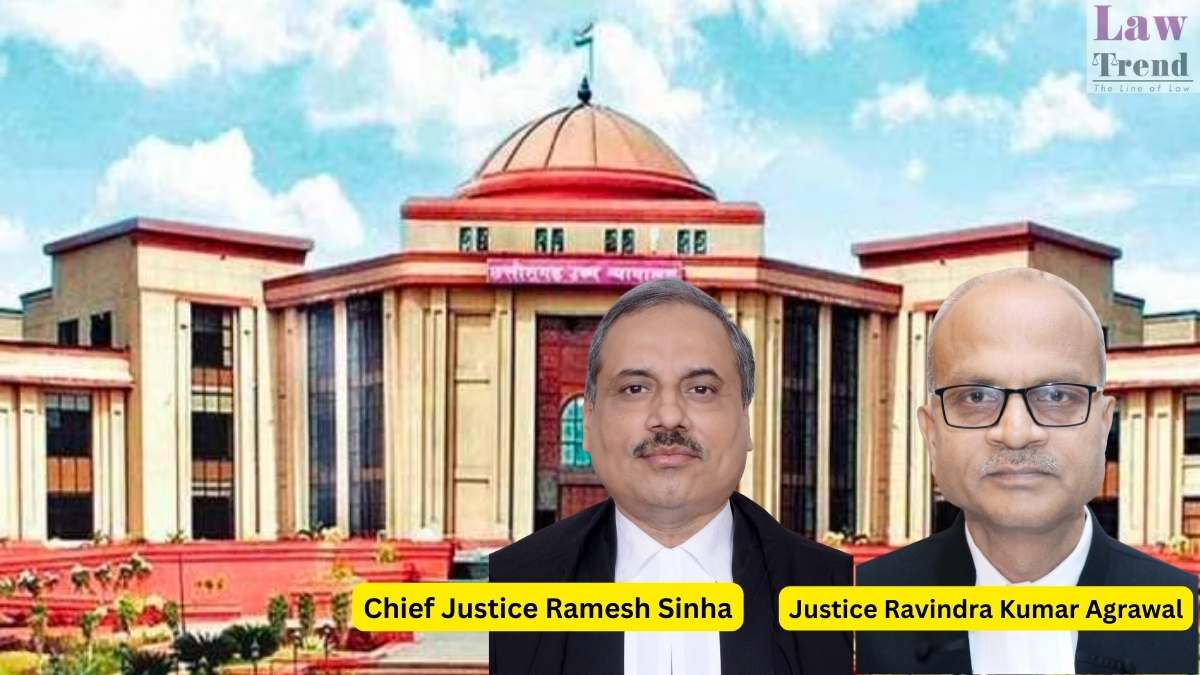

The High Court of Chhattisgarh has held that a gift deed executed by senior citizens in favor of a relative can be annulled under Section 23 of the Maintenance and Welfare of Parents and Senior Citizens Act, 2007 (the Act, 2007), even in the absence of an express maintenance clause in the deed. The Division Bench ruled that where the surrounding circumstances and subsequent conduct establish an implied obligation of care that is breached, the transfer can be declared void.

The Division Bench, comprising Chief Justice Ramesh Sinha and Justice Ravindra Kumar Agrawal, dismissed a writ appeal filed by a nephew and his relative, upholding the orders of the Maintenance Tribunal and the Single Judge which had declared the gift deed null and void.

Background of the Case

The case pertains to a property dispute involving Sureshmani Tiwari (83) and his wife Smt. Lata Tiwari (80), residents of Bilaspur. The elderly couple, who have three daughters but no son, executed a gift deed on April 28, 2016, in favor of their nephew, Ramkrishna Pandey (Appellant No. 1). The gift was made out of love and affection and the assurance that the nephew would take care of them during their lifetime.

However, the senior citizens alleged that after the execution of the deed, the appellants subjected them to severe harassment and torture. They contended that the appellants withdrew money from their accounts, threatened to evict them, locked them out of the ground floor, disconnected electricity and water supplies, and even physically assaulted them. Consequently, the elderly couple was compelled to leave their home and shift to an old-age home run by the Social Welfare Department.

The senior citizens approached the Maintenance Tribunal – Sub-Divisional Officer (Revenue) under Sections 5 and 23 of the Act, 2007. The Tribunal, vide order dated September 12, 2024, allowed the application, declared the gift deed null and void, and directed the appellants to vacate the house. The Appellate Tribunal (Collector) subsequently dismissed the appeal filed by the nephew. A writ petition challenging these orders was also dismissed by the Single Judge on January 20, 2026, leading to the present writ appeal.

READ ALSO  Any Physical Contact with Victim’s Genitalia Constitutes Penetrative Sexual Assault Under POCSO Act: Kerala High Court

Arguments of the Appellants

Senior Advocate Mr. Rajeev Shrivastava, appearing for the appellants, argued that the invocation of Section 23(1) of the Act was “wholly misconceived.” He submitted that the registered gift deed dated April 29, 2016, was absolute, unconditional, and silent on any obligation of maintenance. Relying on the Supreme Court judgment in Sudesh Chhikara v. Ramti Devi, he argued that Section 23 can only be invoked where a transfer is expressly conditional upon providing maintenance.

The appellants further contended that:

  • The senior citizens were financially independent as they received pensions and owned other properties.
  • The Maintenance Tribunal proceedings were vitiated by a lack of proper inquiry and violation of Section 7 regarding the tribunal’s constitution.
  • The allegations of harassment were retaliatory in nature due to other property disputes.

Arguments of the Respondents

Mr. Vikrant Pillay, counsel for the senior citizens, argued that the Act is a beneficial legislation meant to protect senior citizens from neglect and exploitation. He submitted that the obligation to maintain need not always be reduced to a written clause in the gift deed but can be implied from the “surrounding circumstances, conduct of parties and the very nature of the transaction.”

He highlighted that the respondents were forced to live in an old-age home due to the appellants’ hostile conduct, which constituted a breach of the conditions implicit in the transfer. Reliance was placed on the Supreme Court judgments in Urmila Dixit v. Sunil Sharan Dixit and Ajay Singh v. Khacheru.

Court’s Observations and Analysis

The Division Bench rejected the technical objections raised by the appellants regarding the constitution of the Tribunal and the financial status of the senior citizens. Citing the Supreme Court’s rulings in Urmila Dixit and Ajay Singh, the Court observed that “mere receipt of pension or ownership of some property does not disentitle a senior citizen from invoking the jurisdiction of the Maintenance Tribunal when the factual matrix discloses neglect, harassment or denial of basic amenities.”

Addressing the core issue of whether an express condition is required in the gift deed, the Court referred to the law laid down in Sudesh Chhikara, clarifying that the obligation to maintain a senior citizen “need not always be incorporated as an express recital in the gift deed and can be inferred from the surrounding circumstances.”

READ ALSO  No Criminal Case, where Employee absolved in Disciplinary Proceedings?

The Court noted:

“The record in the present case clearly establishes that respondents Nos. 2 and 3 were subjected to such neglect and were compelled to leave their own house and reside in an old-age home, thereby justifying initiation of proceedings under the Act, 2007.”

The Bench affirmed the findings of the lower authorities that the gift was executed with a “legitimate expectation” that the nephew would continue to care for the donors. The subsequent denial of residence and basic amenities was held to be a breach of such obligation.

“The submission that Section 23(1) of the Act, 2007 can be invoked only when the gift deed contains an express written condition of maintenance is untenable… The subsequent conduct of the appellants in denying residence and basic amenities constitutes breach of such obligation, warranting annulment of the gift deed under Section 23(1) of the Act,” the Court held.

READ ALSO  When an Alternate Efficacious Remedy is Available Through Statutory Appeal, HC Does Not Invoke Writ Jurisdiction to Decide the Matter, Which Can Be Decided in Appeal: J&K&L HC

Decision

The High Court dismissed the writ appeal, affirming the orders passed by the Maintenance Tribunal, the Appellate Tribunal, and the learned Single Judge. The Court concluded that the impugned orders were lawful, reasoned, and in consonance with the object of the Act, 2007. The interim orders were vacated, and no order as to costs was made.

Case Details

  • Case Title: Ramkrishna Pandey & Another vs. State of Chhattisgarh & Others
  • Case Number: WA No. 103 of 2026
  • Coram: Chief Justice Ramesh Sinha and Justice Ravindra Kumar AgrawalCounsel for Appellants: Mr. Rajeev Shrivastava, Senior Advocate assisted by Mr. Akshat Tiwari and Ms. Sakshi Dewangan
  • Counsel for Respondents: Mr. Priyank Rathi (Govt. Advocate) and Mr. Vikrant Pillay

Law Trend
Law Trendhttps://lawtrend.in/
Legal News Website Providing Latest Judgments of Supreme Court and High Court

Related Articles

Latest Articles

