

Courts Must Refrain from Conducting Mini-Trial at Section 11 Stage; Inquiry Limited to Prima Facie Existence of Arbitration Agreement: Chhattisgarh HC

The High Court of Chhattisgarh has held that the scope of enquiry at the stage of appointment of an arbitrator is strictly limited to the scrutiny of the prima facie existence of the arbitration agreement, and nothing else. The Court emphasized that referral courts must refrain from conducting a “mini trial” or entering into disputed factual questions that fall within the arbitral domain.

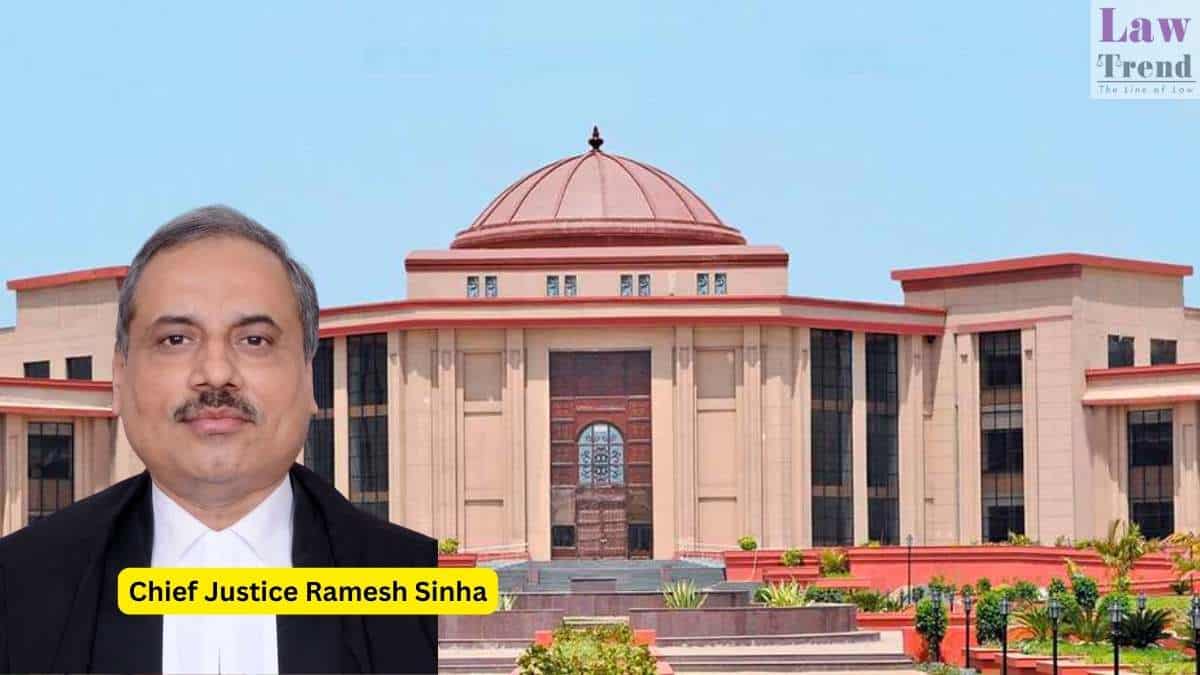
Chief Justice Ramesh Sinha made these observations while allowing an arbitration request filed by M/s Tata Projects Ltd and appointing former Supreme Court Judge, Justice S. Ravindra Bhat, as the Sole Arbitrator to adjudicate disputes arising out of the Bharat-Net Project.

Background of the Case

The dispute stems from a Master Services Agreement (MSA) executed on July 18, 2018, between Tata Projects Ltd (the Applicant) and the Chhattisgarh Infotech Promotion Society (CHIPS – Respondent No. 1). The Applicant, leading a consortium, was awarded the contract for the implementation of the Bharat-Net Project Phase-II in Chhattisgarh, aiming to provide broadband connectivity to Gram Panchayats. The total contract value was approximately Rs. 3056 Crores.

According to the Applicant, the implementation phase faced significant delays due to impediments attributable to the Respondents. Consequently, the Applicant terminated the MSA via notice dated April 24, 2025, effective from May 2, 2025. Following the termination, the Applicant issued a Notice of Arbitration on May 8, 2025, nominating an arbitrator. The Respondents failed to appoint a second arbitrator within the statutory period, prompting the Applicant to approach the High Court under Section 11(6) of the Arbitration and Conciliation Act, 1996.

READ ALSO  Section 14A of SC/ST Act Overrides General Provisions of Appeal under CrPC: Gujarat HC

Arguments Raised

Mr. Tushad Cooper, Senior Advocate for the Applicant, argued that the Respondents committed fundamental breaches, including non-payment of dues and unilateral imposition of penalties. He submitted that since the existence of the arbitration clause was admitted, the dispute should be referred to arbitration, and all other objections should be decided by the tribunal.

Mr. Abhishek Sinha, Senior Advocate for CHIPS, raised several preliminary objections to the maintainability of the application:

  1. Statutory Bar (‘Works Contract’): The dispute arises from a “works contract” under Section 2(i) of the Chhattisgarh Madhyastham Adhikaran Adhiniyam, 1983. Therefore, it falls under the exclusive jurisdiction of the State Arbitration Tribunal, barring proceedings under the 1996 Act.
  2. Lack of Authority: The Applicant filed the application unilaterally without express authorization from other consortium members (M/s Tata Communications Transformation Services Limited and M/s Dinesh Engineers Limited).
  3. Non-Arbitrability due to Fraud: The Respondents alleged that the Applicant committed serious fraud, forgery, and cheating during the execution of the works, rendering the dispute non-arbitrable.

Court’s Observations and Analysis

The primary question before the Court was whether it should adjudicate the preliminary objections regarding jurisdiction and fraud at the referral stage or leave them for the Arbitral Tribunal.

1. Scope of Enquiry Limited to Prima Facie Existence Chief Justice Ramesh Sinha relied on the “Head Note” principle derived from recent Supreme Court precedents, firmly establishing the boundaries of the Court’s jurisdiction under Section 11. The Court held:

The scope of enquiry at the stage of appointment of Arbitrator is limited to the scrutiny of prima facie existence of the arbitration agreement, and nothing else. The Courts must refrain from conducting a mini trial or entering into disputed factual questions that fall within the arbitral domain.

2. Rejection of Mini-Trial for Objections Referencing the Supreme Court’s decision in SBI General Insurance Co. Ltd. v. Krish Spinning, the Court noted that ex-facie frivolity and dishonesty in litigation are aspects that the arbitral tribunal is equally, if not more, capable of deciding. The Court observed that if the referral court attempts to decide complex issues like the nature of the contract (whether it is a ‘works contract’ under the 1983 Act) or allegations of fraud, it would amount to conducting a prohibited mini-trial.

READ ALSO  Live-in Relationships Continue as a “Stigma” in Indian Culture: Chhattisgarh HC

3. Tribunal Competent to Decide Jurisdiction and Fraud The Court clarified that the Arbitral Tribunal is the preferred first authority to determine all questions of non-arbitrability.

  • On ‘Works Contract’ Objection: The Court held that whether the dispute pertains to a “works contract” under the State Act of 1983 is a matter to be adjudicated in the arbitration proceedings.
  • On Fraud: Relying on Deccan Paper Mills Co. Ltd. v. Regency Mahavir Properties, the Court reiterated that disputes are not rendered non-arbitrable merely because there are allegations of fraud or criminal overtones.
READ ALSO  Minimum Wages Act Cannot Be the Only Factor in Determining the Compensation Payable to the Claimants in Motor Accidents: P&H HC

Decision

Applying the principle that the Court must not enter into disputed factual questions, the High Court allowed the application. The Court appointed an independent Sole Arbitrator to resolve the dispute, granting liberty to both parties to raise all grounds, including the preliminary objections regarding jurisdiction and fraud, before the Arbitrator.

The Court ordered:

“In view of above, Hon’ble Mr. Justice S. Ravindra Bhat, a retired Judge of the Hon’ble Supreme Court of India, is appointed to act as the Sole Arbitrator to resolve the dispute between the parties.”

The arbitration proceedings are to be held in Raipur, Chhattisgarh, as per the agreement.

Case Details:

  • Case Title: M/s Tata Projects Ltd v. Chhattisgarh Infotech Promotion Society & Ors.
  • Case Number: ARBR No. 28 of 2025
  • Judge: Chief Justice Ramesh Sinha
  • Counsel for Applicant: Mr. Tushad Cooper, Senior Advocate with Ms. Shrishti Kumar and Mr. Abhishek Vinod Deshmukh.
  • Counsel for Respondents: Mr. Abhishek Sinha, Senior Advocate with Mr. Rishabh Garg; Mr. S.S. Baghel (Govt. Advocate); Mr. Ramakant Mishra (DSG).

Law Trend
Law Trendhttps://lawtrend.in/
Legal News Website Providing Latest Judgments of Supreme Court and High Court

Related Articles

Latest Articles

