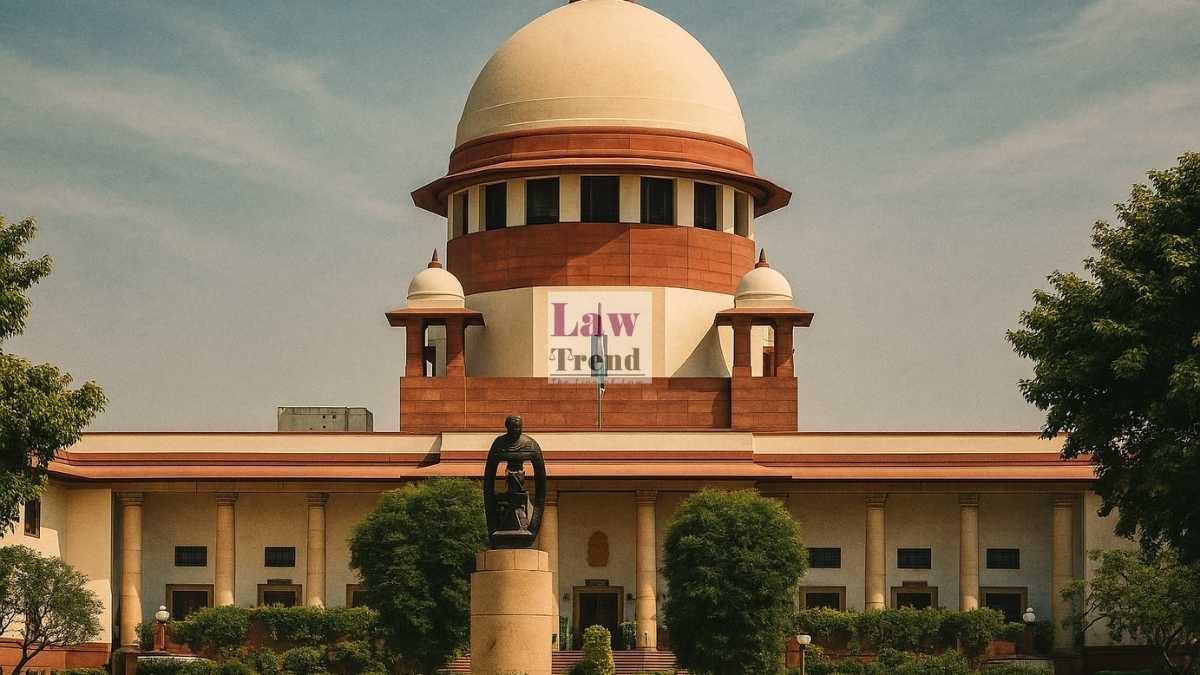
The Supreme Court has ruled that state legislation regarding the appointment of a Vice-Chancellor cannot override the University Grants Commission (UGC) Regulations, 2018, which are traceable to Entry 66 of List I of the Constitution. The Court affirmed the Madras High Court’s decision declaring Section 14(5) of the Puducherry Technological University Act, 2019 (PTU Act) ultra vires for failing to include a UGC nominee in the Search-cum-Selection Committee.
However, exercising its extraordinary powers under Article 142 of the Constitution, the Bench comprising Justice Vikram Nath and Justice Sandeep Mehta permitted the appellant, Dr. S. Mohan, to continue as Vice-Chancellor until the end of his tenure or until a successor is appointed, citing his academic credentials and the need to prevent an administrative vacuum.
The appeals challenged the judgment of the Madras High Court dated December 19, 2023, which set aside Dr. S. Mohan’s appointment as Vice-Chancellor of Puducherry Technological University. The High Court had held that the composition of the Search-cum-Selection Committee under the PTU Act was inconsistent with Regulation 7.3 of the UGC Regulations, 2018. While the Supreme Court upheld the legal finding that the appointment process was vitiated due to non-compliance with UGC norms, it modified the relief to allow Dr. Mohan to complete his term, noting that he was a meritorious candidate with no allegations against his integrity.
Background of the Case
The Puducherry Technological University was established under the PTU Act, 2019. Section 14(5) of the Act prescribed the composition of the Search-cum-Selection Committee for appointing the Vice-Chancellor. This committee included nominees of the Chancellor, the Government, and the Board of Governors but did not include a nominee of the Chairman, UGC.
A Search-cum-Selection Committee was constituted on January 20, 2021, comprising the Director of IIT Delhi, a Professor from IIT Madras, and the Secretary to the Government (Higher & Technical Education), Puducherry. Based on their recommendation, Dr. S. Mohan was appointed as the first Vice-Chancellor on December 17, 2021, for a five-year tenure.
Writ petitions were filed before the Madras High Court challenging the appointment and the validity of Section 14(5) of the PTU Act. The petitioners argued that the exclusion of a UGC nominee violated Regulation 7.3 of the UGC Regulations, 2018. The High Court allowed the petitions, declaring the provision ultra vires and setting aside the appointment, though it allowed Dr. Mohan to continue temporarily.
Arguments of the Parties
The Appellant’s Submissions: Senior Advocate Nidhesh Gupta, appearing for Dr. Mohan, argued that the PTU Act had received Presidential assent, which should validate the legislation under Article 254(2) of the Constitution despite any inconsistency with central laws. He contended that the appointment of a Vice-Chancellor falls under Entry 25 of List III (Concurrent List) relating to university governance, not Entry 66 of List I (Union List) which pertains to “standards.”
The appellant further distinguished the case from Gambhirdan K. Gadhvi v. State of Gujarat, arguing that Dr. Mohan was fully qualified, whereas the Vice-Chancellor in Gambhirdan lacked mandatory eligibility. It was also argued that the University did not receive UGC grants.
The Respondents’ Submissions: The respondents contended that the legislative field regarding the coordination and determination of standards in higher education is exclusively occupied by Parliament under Entry 66 of List I. Citing Gujarat University v. Krishna Ranganath Mudholkar, they argued that the power to coordinate standards is absolute.
It was submitted that the UGC Regulations are mandatory and any deviation renders the appointment process invalid. They argued that the Presidential assent to the PTU Act was not specific to the repugnancy with UGC Regulations, rendering the protection under Article 254 inapplicable.
Court’s Analysis
Supremacy of UGC Regulations The Supreme Court reiterated the settled legal position that while States have legislative competence over education under Entry 25 of List III, this power is subject to Entry 66 of List I. The Court observed:
“The UGC Regulations, 2018 trace their source to Entry 66 of List I… On that anvil, the PTU Act was required to operate in strict conformity with Regulation 7.3 of the UGC Regulations, 2018… Consequently, Section 14(5) of the PTU Act, to the extent it prescribes a composition of the Search-cum-Selection Committee contrary to the mandate of the UGC Regulations, 2018, has to be declared ultra vires.”
Illegality of the Selection Committee The Court noted two specific violations:
- Absence of UGC Nominee: The Committee lacked a nominee of the Chairman, UGC, which is mandatory under Regulation 7.3.
- Conflict of Interest: The inclusion of the Secretary (Higher & Technical Education) violated the requirement that members “shall not be connected in any manner with the concerned University.” The Court noted that the Secretary, being the Pro-Chancellor and a former member of the Governing Body, stood “directly connected with the University, thereby giving rise to a clear conflict of interest.”
Inapplicability of Article 254 (Repugnancy) The Bench clarified that the doctrine of repugnancy under Article 254 applies only when both Central and State legislations operate within the Concurrent List (List III). Since the UGC Act falls under List I and the PTU Act under List III, the Court held:
“Undeniably, in the present case, the Central legislation occupies a field exclusively reserved for the Parliament under List I, and consequently the question of testing or determining repugnancy, or of curing the same by recourse to Article 254(2), does not arise at all.”
Decision
The Supreme Court affirmed the High Court’s judgment regarding the illegality of the Search-cum-Selection Committee’s constitution. However, regarding the removal of the appellant, the Court took a compassionate view.
Noting that Dr. Mohan was found meritorious, has served for four years without complaint, and that his removal would cause “grave stigma” and “avoidable disruption,” the Court exercised its jurisdiction under Article 142.
“We… direct that the appellant shall continue to hold the post of Vice-Chancellor till the end of his normal tenure or till a new Vice-Chancellor is selected in accordance with law, whichever is earlier.”
The Court also clarified that the Union Territory Legislature remains empowered to amend the PTU Act to bring it in conformity with UGC Regulations.
Case Details:
- Case Title: Dr. S. Mohan v. The Secretary to the Chancellor, Puducherry Technological University & Ors.
- Case No: Civil Appeal No(s). 54-55 of 2025
- Coram: Justice Vikram Nath and Justice Sandeep Mehta